Greece Destination Wedding Photography: What the Islands Actually Require
White architecture against deep blue water, sun dropping into an open horizon, stone terraces holding the last warmth of the evening. These images feel familiar even without context.
Greece is one of those destinations that already exists in the visual imagination before the trip is planned.
That visual clarity is part of its appeal. The reality of a wedding day, however, is shaped just as much by heat, wind, ferry schedules, and the pace at which light moves across the islands.
Greek Islands and Mainland Visual Choices
Greece does not behave as a single visual landscape. Each island and region carries its own rhythm, and the choice between them quietly shapes how the entire day unfolds.
Santorini: Caldera Light and Vertical Composition
Whitewashed structures descend toward the caldera, creating depth that feels almost architectural in its own right.
For photography, the island offers an unusually clean composition with very little intervention. Oia and Imerovigli are defined by white surfaces, sharp lines, volcanic texture, and an open horizon that anchors the frame.
Crowds are part of the planning reality here. During peak season, popular viewpoints fill quickly, which is why early hours often provide more flexibility for portrait coverage.
By late afternoon, attention shifts toward the caldera and the light moving across it. Sunset is an ideal moment for the ceremony, when the light works in favor of every part of the setting.
The caldera faces west, so the last hour of light brings direct exposure across the architecture. Stone turns into gold, water shifts into copper tones, and shadows stretch across terraces in a gradual shift of color and shadow.
Movement across Santorini almost always takes longer than expected. Stairs, narrow paths, and changes in elevation slow every transition, so timing requires more attention than distance.
Tip:
Early scouting often shapes the final frames more than the location choice. Extra time between spots helps avoid delays during transitions.
Mykonos: Wind, Movement, and Editorial Energy
Mykonos has a different tempo. Where Santorini is still and architectural, Mykonos feels more dynamic and horizontal. Narrow streets, whitewashed facades, windmills, and coastal edges create a fashion-driven visual language.
The Meltemi wind introduces movement into everything, from dresses and veils to hair and table settings. Working with it usually produces stronger imagery than trying to control it. Static posing often feels heavier here, while movement carries more clarity in the frame through walking, turning, passing through space.
When the wind increases, sheltered courtyards and private villas take over as the structure of the day, especially for ceremony flow and guest comfort.
In Mykonos, conditions shape aesthetics as much as location. Styling and fabric choices become part of the final visual outcome.
Tip:
Wind is a constant here. A single protected corner within a venue often solves more than changing the entire location.
Crete: Landscape Depth and Natural Warmth
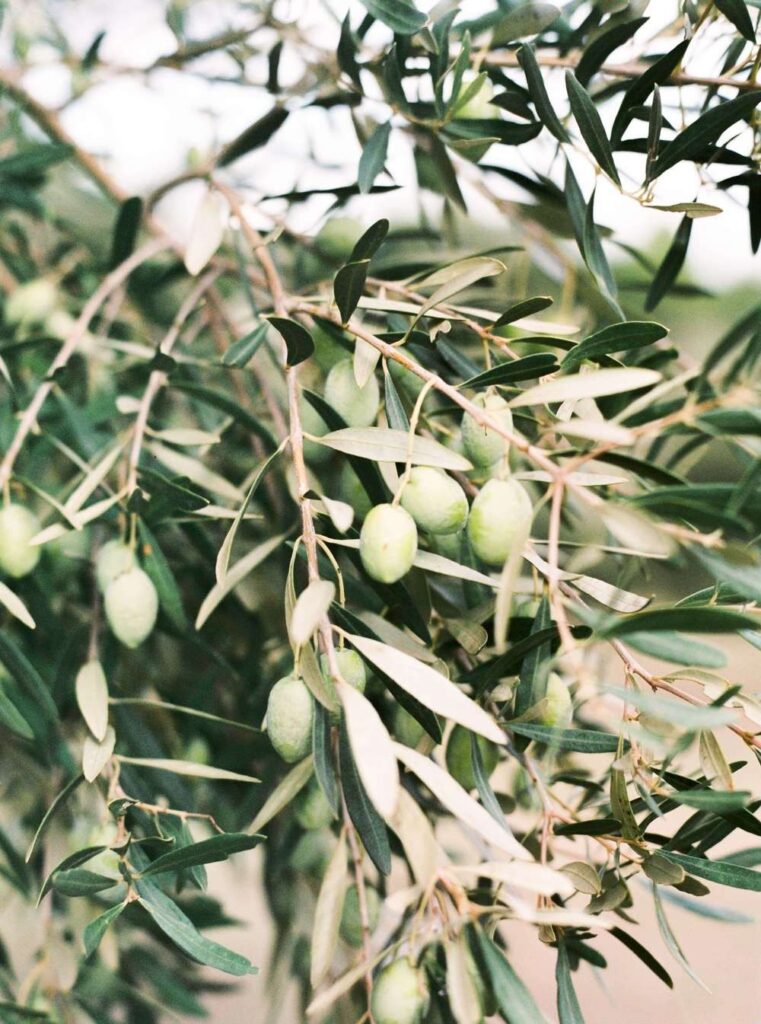
Crete holds more variation than other Greek islands. Mountains sit close to olive groves, Venetian harbors, vineyards, and long stretches of coastline within a single landscape.
For couples drawn to broader visual storytelling, the island moves away from a single defining view. Crete wedding photography feels grounded, with more texture and depth than the Cyclades.
In Chania and along the surrounding coast, colors sit closer together, shaped by olive greens, weathered stone, terracotta, and muted blue tones.
Multi-day celebrations fit easily into this rhythm. Different parts of the weekend can unfold in different settings without the need to constantly move between locations.
Returning to the same courtyard, olive grove, or coastal path at different hours often builds stronger continuity than adding new places. Light carries more variation than location.
Tip:
Planning within the same space across the day usually creates more depth than expanding the itinerary.
Athens and the Mainland: Architecture and Control
Athens, the Peloponnese, and surrounding regions provide access to ancient architecture, neoclassical buildings, and historic venues without ferry dependency or inter-island timing risks.
Stone facades, courtyards, columns, and historic estates create visual depth through layered architecture and historical texture.
For couples prioritizing predictability, mainland Greece simplifies planning. Transport is more stable, vendor coordination is more direct, and schedules are less exposed to weather shifts.
Movement between locations stays straightforward. This often leads to fuller timelines, where adding more stops becomes easy to overdo. In practice, spacing between key moments shapes the final imagery more than expanding the route.
Tip
Pauses between structured parts of the day help maintain a stronger visual rhythm than continuous movement.
Sunset Timing and Ceremony Planning in Greece
Sunset arrives differently across the Greek season: June and July hold light until roughly 8:30 to 9:00 pm, September brings it closer to 7:30 pm, and October moves it toward 6:45 pm.
Across the Cyclades, the transition into sunset is compressed. The strongest change in light usually sits within a 20 to 30 minute window before sunset, when tone and direction shift quickly enough to define the entire visual outcome of the day.
This is the moment most couples anchor their ceremony around. Starting too early places the key exchange in flat light. Starting too late moves it outside the strongest color window. The timing sits directly between these two limits.
Santorini is the clearest example of this shift.
With an open western horizon, light moves directly across white surfaces and holds intensity briefly before fading into blue hour. For this reason, ceremonies are often scheduled close to sunset to stay inside the strongest light window.
Portraits are usually placed earlier in softer afternoon light, when movement is easier and space is less compressed. The ceremony then flows into sunset, followed by reception as light transitions into blue hour.
Tip: in Greece, the most reliable timeline is built backwards from sunset. Once the ceremony time is fixed, everything else in the day is arranged around it.
Wind, Heat, and Guest Comfort
Comfort during a wedding celebration depends on how heat, wind, and sun exposure are managed.
Across July and August, temperatures on the Greek islands often reach 35–40°C. Direct sun reduces flexibility for portraits and limits how long outdoor coverage can continue comfortably, especially in open coastal or stone environments.
Late afternoon ceremonies remain the most consistent structure across destinations. Earlier hours are typically reserved for preparation, indoor movement, or short outdoor coverage when light conditions are still workable.
Shade is important. Covered terraces, pergolas, and indoor-to-outdoor transitions provide comfort while introducing variation in light across different parts of the story.
Hydration points, shaded seating, and brief pauses between activities influence how guests experience celebration. Comfort shapes interaction, and interaction defines how moments unfold in front of the camera.
Wind across the Cyclades remains a constant planning factor. On Mykonos and Santorini, the Meltemi affects sound, florals, fabric, and decor. Sound systems require stability, lightweight installations require secure positioning, and floral design needs to account for wind from the outset.
Local vendors typically design with these conditions in mind.
Photo and Film Coverage for Island Logistics
Movement between islands runs through ferries and small domestic flights, both tied to fixed schedules that can shift during peak summer periods. Travel time is part of the structure of coverage planning.
Equipment transport defines what is possible on location. Camera gear, lighting, and film setups require secure handling between sites. On smaller islands, access often narrows to footpaths or small vehicles, which limits load capacity and affects how mobile a team can remain during the day.
On-site access shapes production choices. Steep approaches, restricted vehicle entry, or protected pathways naturally lead to lighter setups and more flexible shooting methods.
Santorini demands precise timing discipline. Caldera-facing areas concentrate light into short sunset windows, while blue hour reflections and early morning stillness exist only briefly at peak intensity. Missing these windows changes both tone and continuity across coverage.
Film coverage in Greece adds environmental context through movement and sound. Waves against volcanic rock, courtyard audio, and village activity at dusk expand the visual record beyond still imagery.
Planning follows light direction, access conditions, and transport sequencing. Experienced teams align start times with seasonal light shifts and confirm venue access in advance to avoid compressing key moments.
Planning Your Greece Wedding?
We would be honored to help you create beautiful memories of your celebration through photography and film, and be there with you throughout the journey.
How to Protect the Emotional Story
Technical excellence and location knowledge create a strong foundation, but they do not determine what makes a wedding feel personal.
The images couples return to most often are usually built around interaction. A glance during preparation, a conversation between family members, a quiet moment after the ceremony, or an unexpected reaction during dinner often carries more meaning than the landscape surrounding it.
Pacing plays a significant role in creating space for these moments. Constant movement between locations compresses the day and reduces opportunities for observation. Time spent within a scene often contributes more to emotional depth than adding another backdrop to the schedule.
Preparation, ceremony, cocktails, dinner, and dancing all contain different parts of the story. Coverage that moves through the day without interruption allows relationships, reactions, and unplanned exchanges to become part of the final narrative alongside the setting.
Wedding planning matters, as do logistics and structure.
Still, a wedding is, above all, about the couple, their emotions, the quiet tenderness they share throughout the day, and the memories they create together.
What to Prepare Before Your Greece Wedding Inquiry
Clarity before the first conversation usually leads to stronger recommendations and a more efficient planning process. The environment you feel most connected to is often the best starting point.
Season is equally influential. It affects light, temperature, crowd density, venue availability, and travel logistics. Dates that appear similar on a calendar can produce very different conditions on location.
Guest count helps define the practical structure of the celebration. Transportation, accommodation distribution, movement between venues, and timeline planning all become easier to evaluate when approximate numbers are known early.
Photography and film priorities also shape planning decisions. The amount of coverage desired, the importance of portraits, documentary moments, or film production all influence how the day is structured.
References outside the wedding industry are often the most useful. Architecture, fashion editorials, hotels, restaurants, interiors, and travel imagery usually communicate atmosphere and personal taste more clearly than wedding mood boards alone.
The more clearly these elements are defined at the beginning, the easier it becomes to identify suitable locations, build a realistic timeline, and create a celebration that feels consistent from start to finish.
If you are comparing Greece with other European settings, our Italy wedding venues and photography guide and France wedding venues and photography guide can help you compare light, logistics, and visual style.

FAQ
Which Greek island is best for wedding photos?
There is no single answer. Santorini offers structured caldera views and strong sunset light. Mykonos brings movement and energy. Crete offers landscape variety and softer tones. Athens and the mainland provide architectural depth and logistical stability. The right choice depends on how the day is meant to feel.
How should we plan photos around sunset in Greece?
Sunset shifts from late evening in summer to earlier hours in autumn. The most important period is the final 20 to 30 minutes before sunset, when light changes fastest. Most timelines are built around late afternoon portraits followed by ceremony and reception moving into blue hour.
Is Greece suitable for multi-day weddings?
Yes. Multi-day celebrations work well because each part of the weekend carries a different light and atmosphere. Welcome dinners and post-wedding sessions add narrative depth.
Do we need a local wedding photographer in Greece?
Not strictly. However, familiarity with islands, wind patterns, and light direction improves timing and efficiency across the day.
Let Us Help You Shape Your Greek Wedding Story in Imagery
If you are exploring wedding venues and building your shortlist, share your plans with us.
We can translate each location into a clear photo and film coverage approach based on light, structure, and the flow of your weekend.
You can reach out through the contacts page, or explore our gallery and portfolio to see how different regions of Greece translate into visual storytelling.