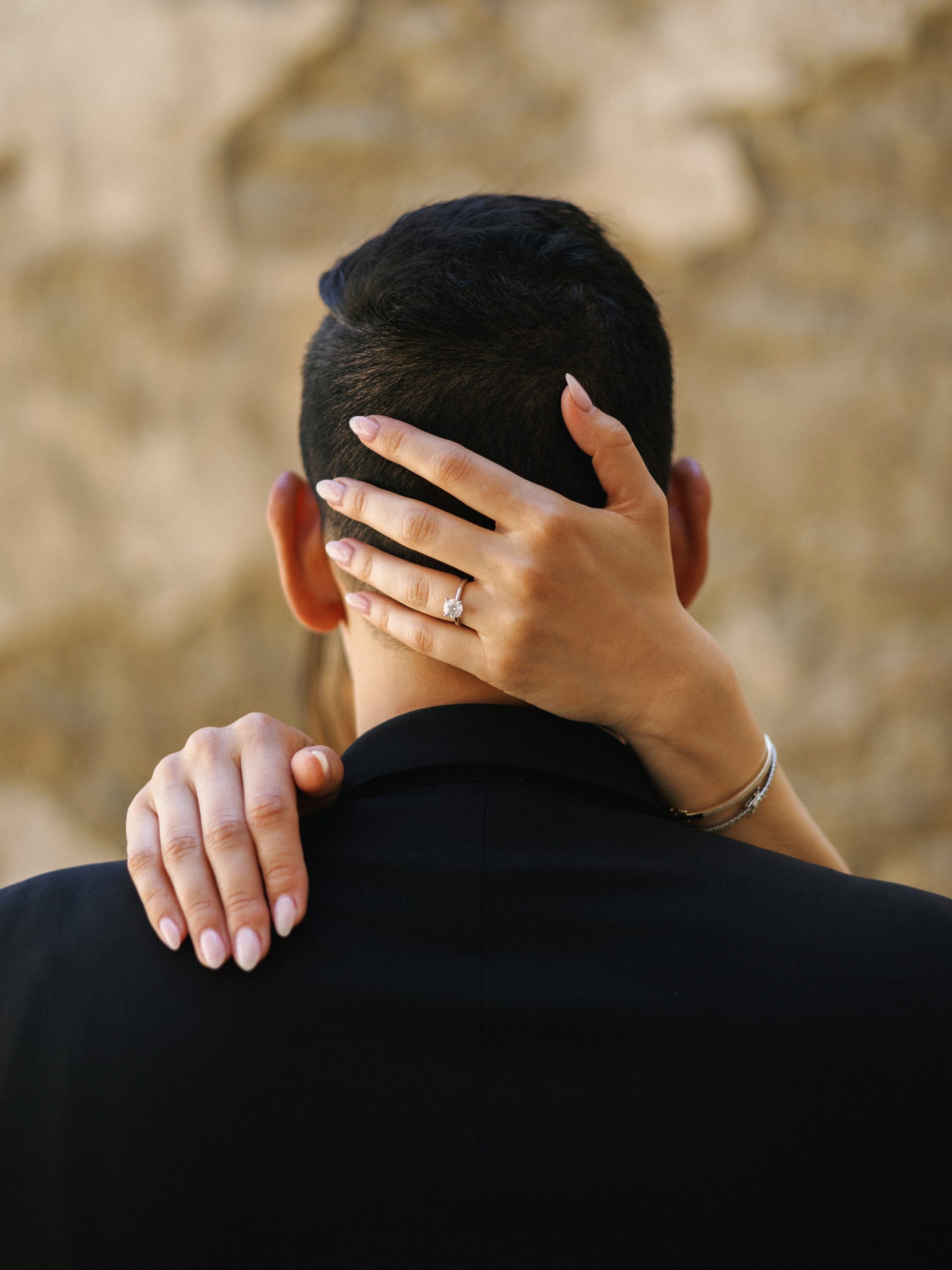
The Wardrobe Should Belong to the Setting
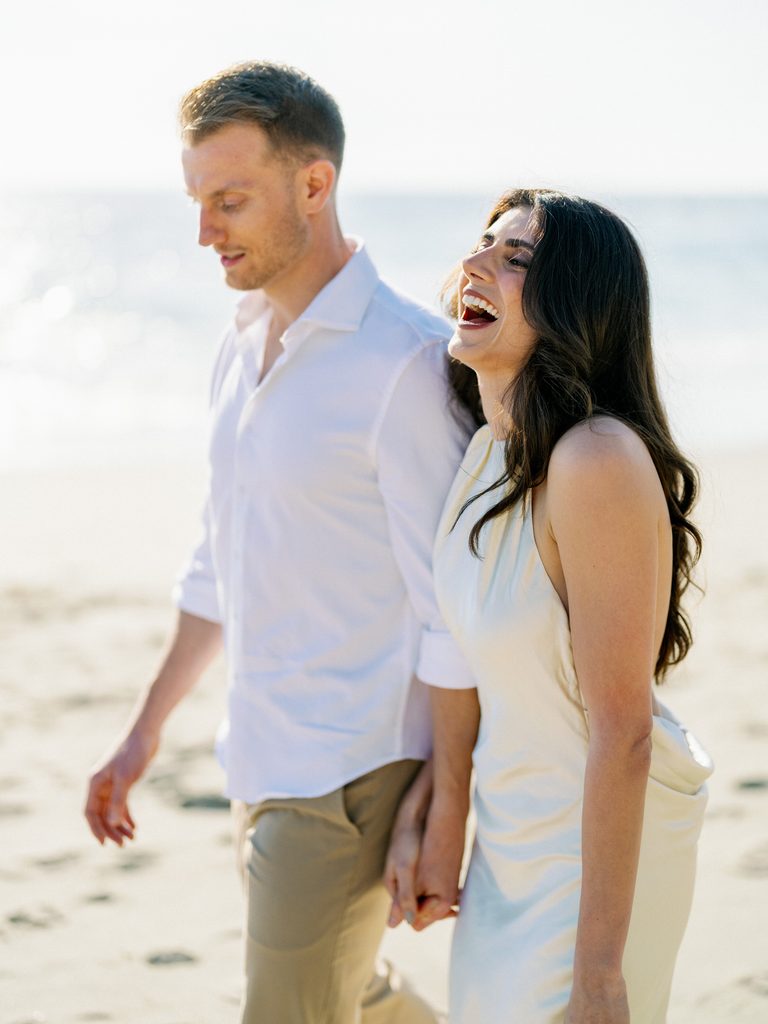
Engagement photographs feel more natural when the wardrobe has a clear relationship with the setting, season, and way the couple plans to move through the session. A tailored outfit can suit an architectural city setting, while softer fabrics and relaxed layers may feel more at home in a garden, on the coast, or in the countryside.Season also influences the weight, texture, and layering of the clothing. Summer calls for lighter fabrics and breathable pieces, while fall and winter create room for coats, knits, jackets, and other layers that add depth to the photographs.
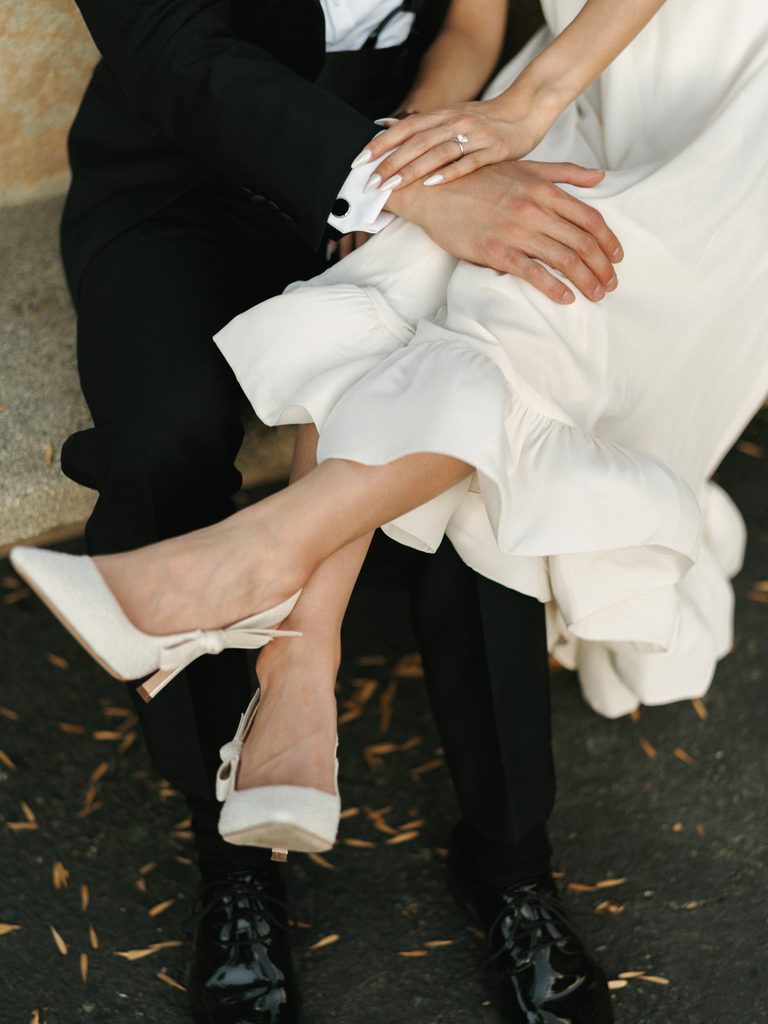
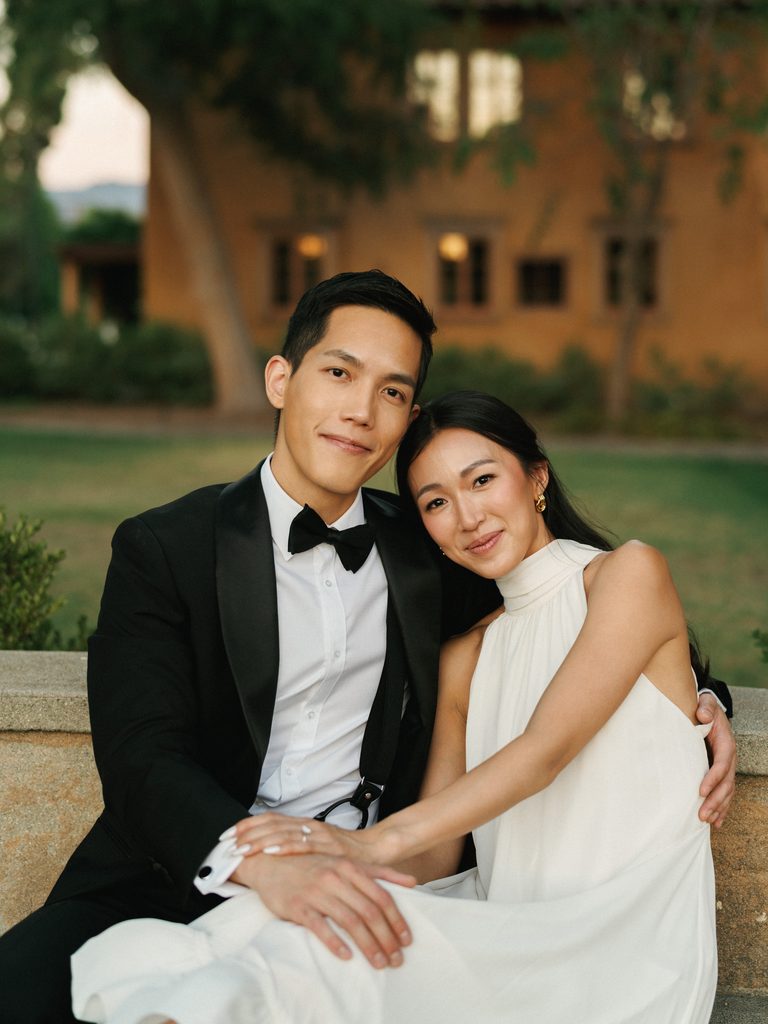
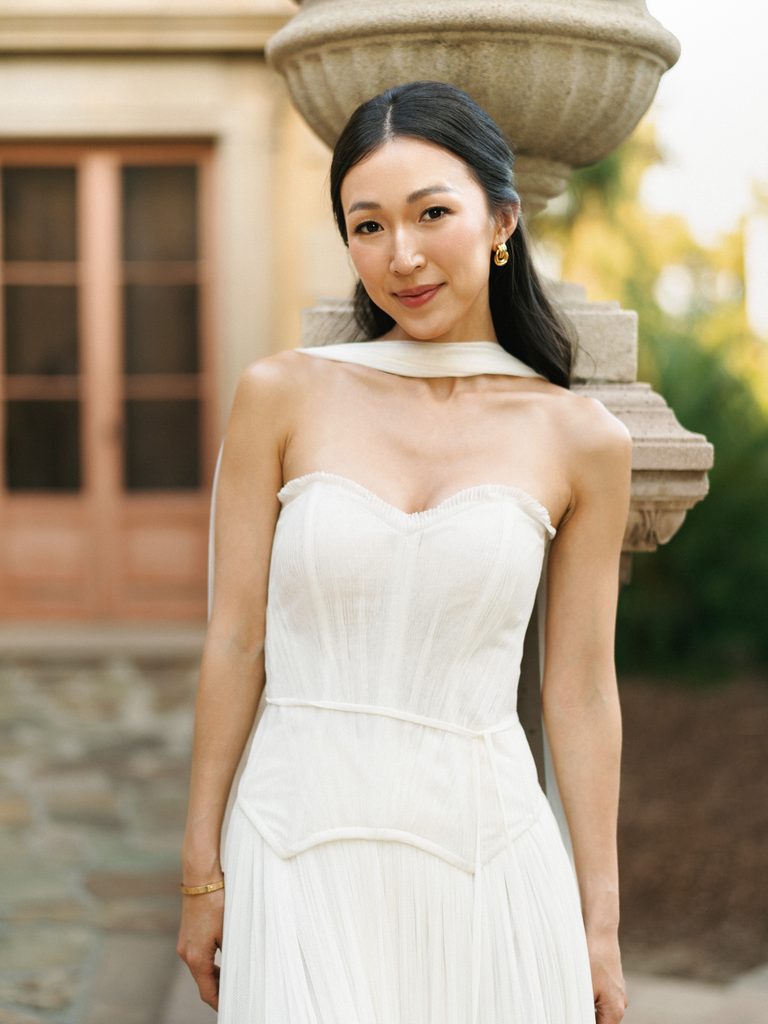
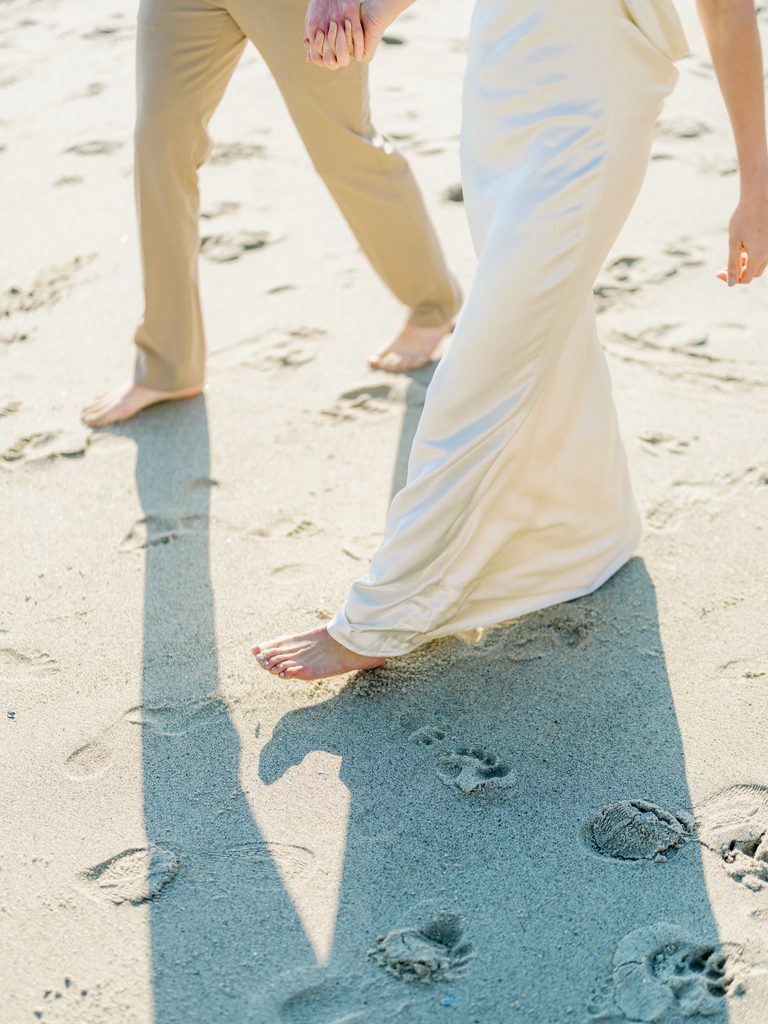
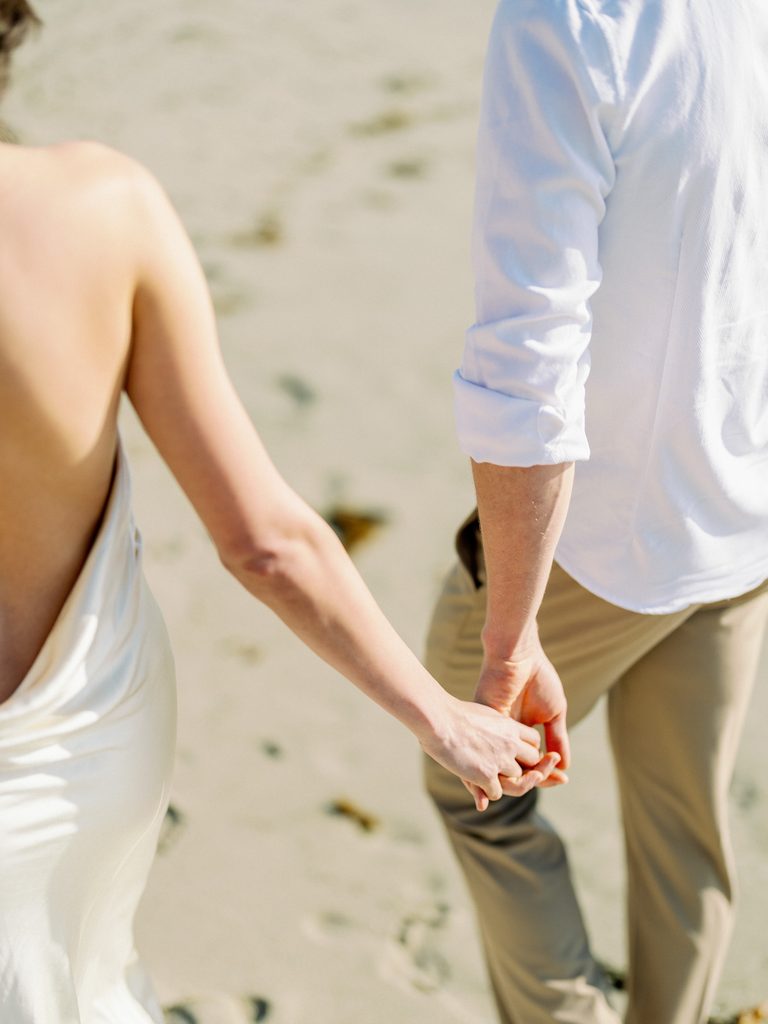
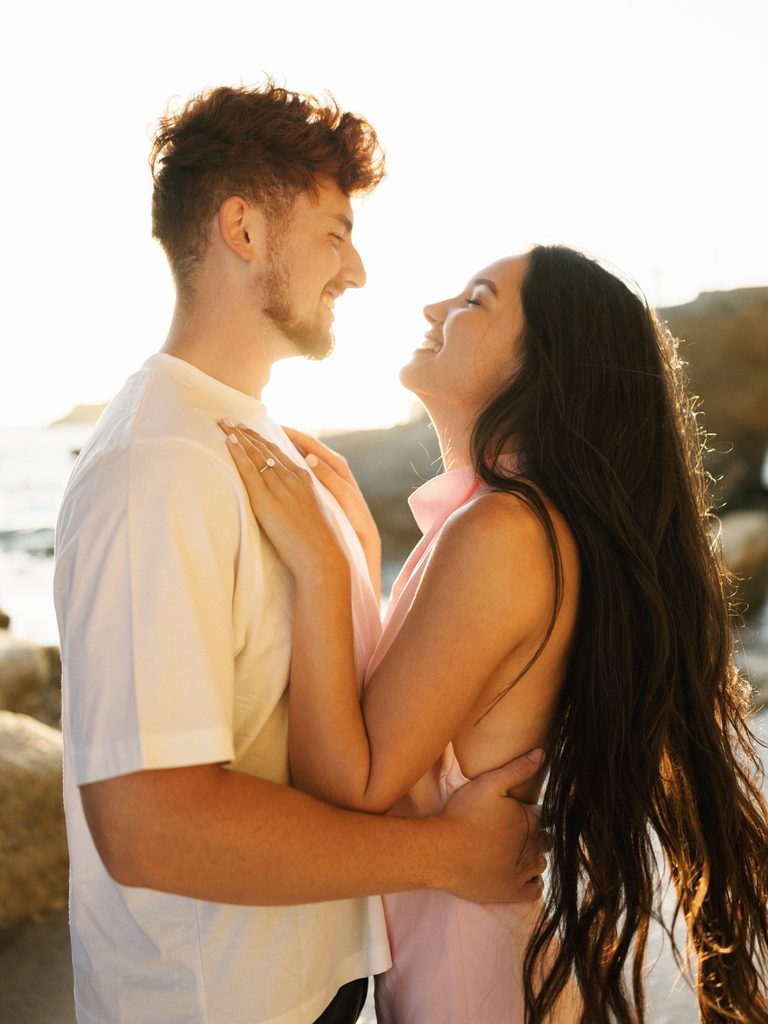
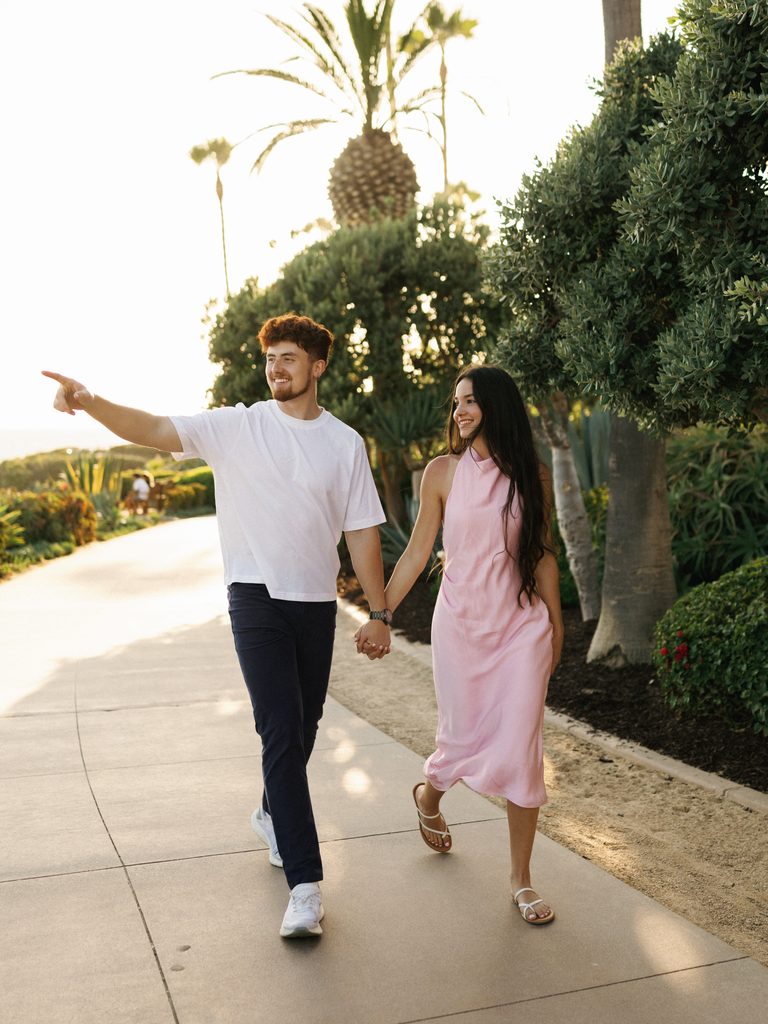
Movement is part of the wardrobe as well. A dress with some fluidity, an open jacket, or a soft layer can bring dimension to photographs taken while walking or moving between locations. The clothes should still feel like something the couple would naturally choose to wear, with the setting and season shaping the final combination.
Coordinating Colors, Patterns, and Personal Style
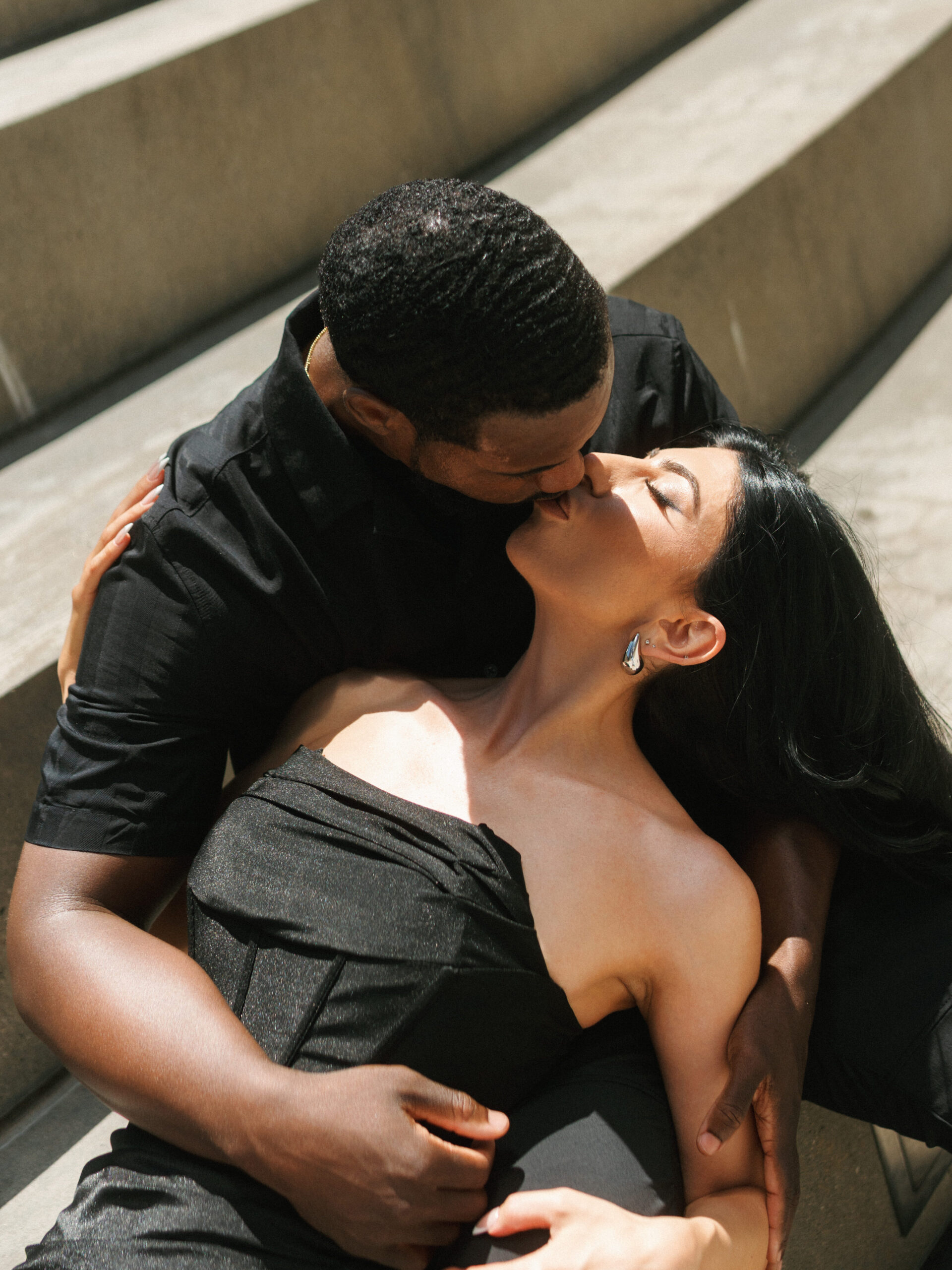
Engagement outfits can coordinate closely or match intentionally. Some couples prefer two distinct looks connected by color and texture, while others enjoy complementary pieces or matching details. Both approaches can work well when the relationship between the outfits feels deliberate.
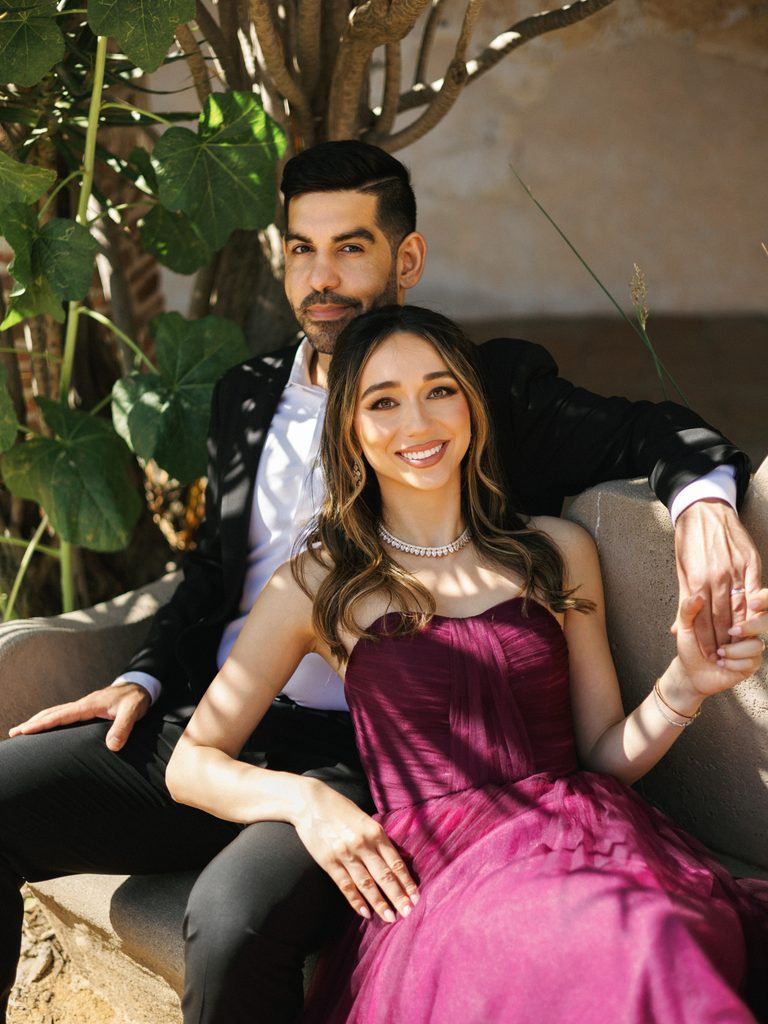
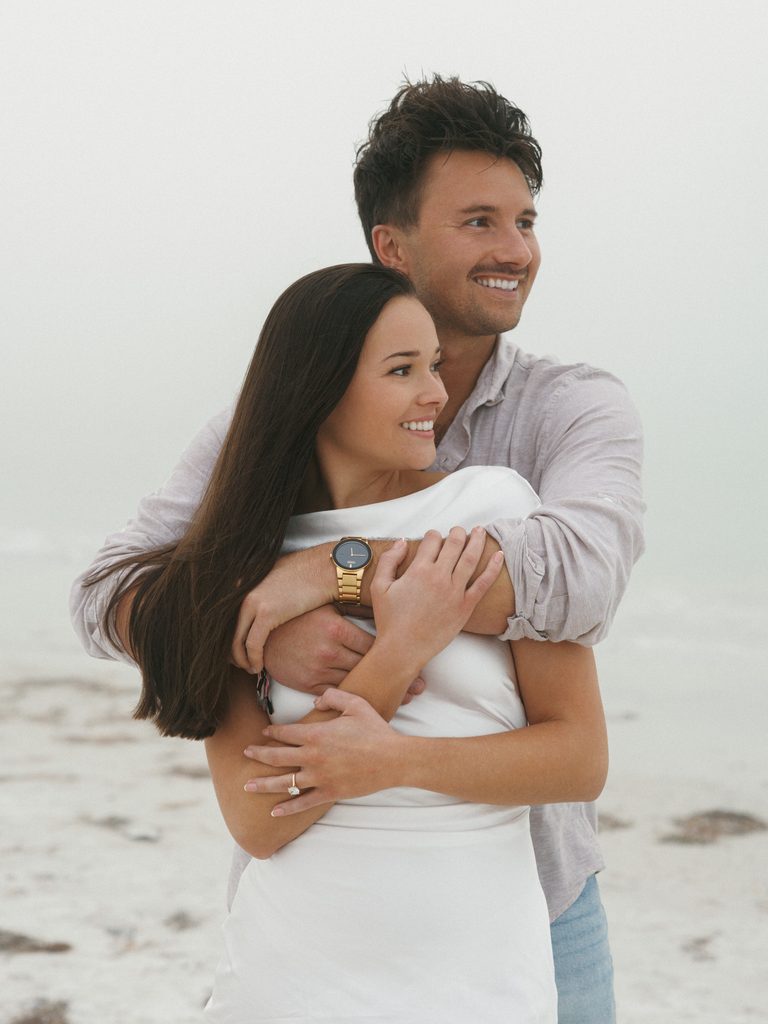
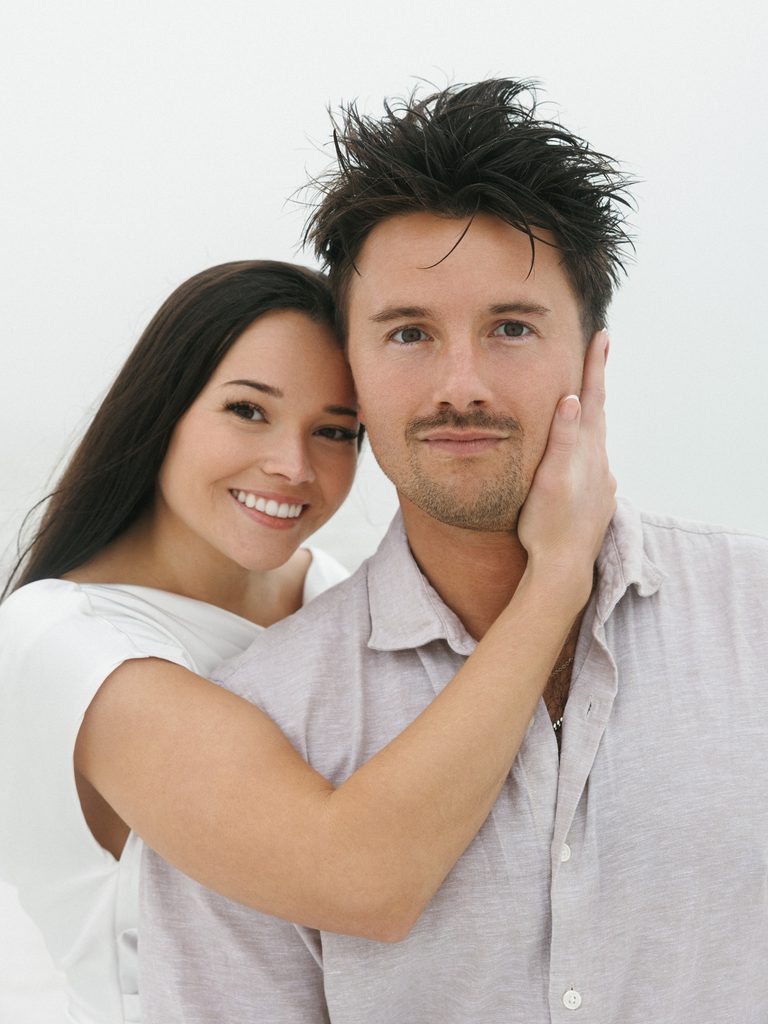
A shared color palette is one way to connect two different looks. The outfits can use different shades from the same color family, or one partner can pick up a color that appears as an accent in the other person’s clothing. Matching pieces can create the same connection through identical sweaters, coordinated tailoring, matching denim, or a shared pattern.
Personal style can remain distinct within either approach. One partner may prefer a dress while the other wears trousers and a jacket, or both may choose similarly formal pieces in different silhouettes. Accessories can also link the outfits through a shared color, material, or style detail.
The setting and season can influence how closely the outfits are coordinated. A formal city session may suit two tailored looks with a defined color relationship, while a relaxed outdoor session can accommodate softer textures and greater variation between the pieces.
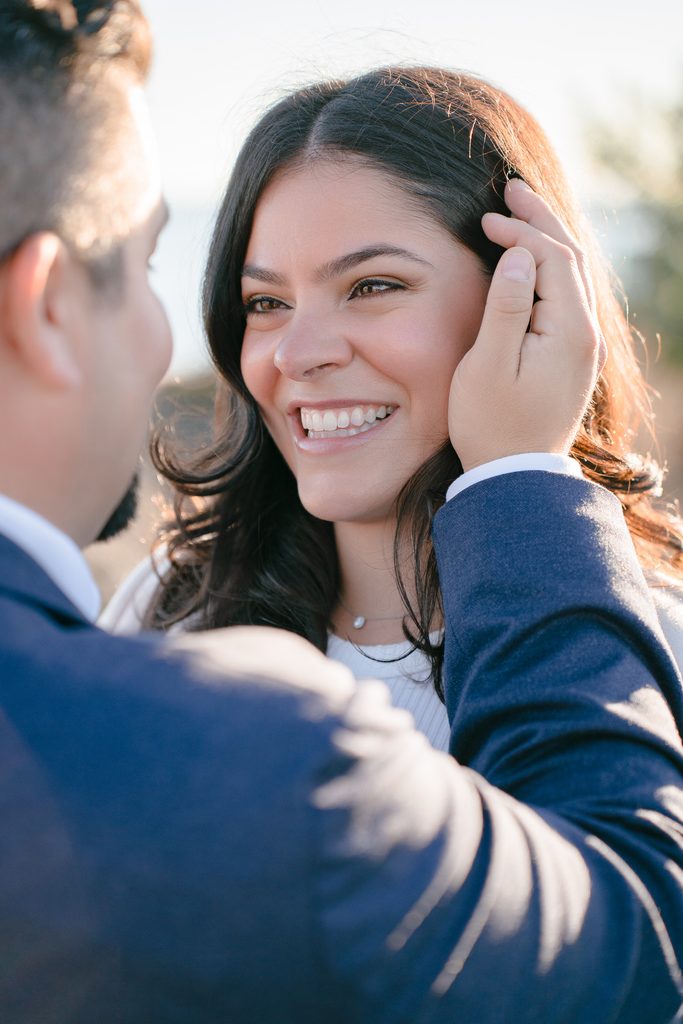
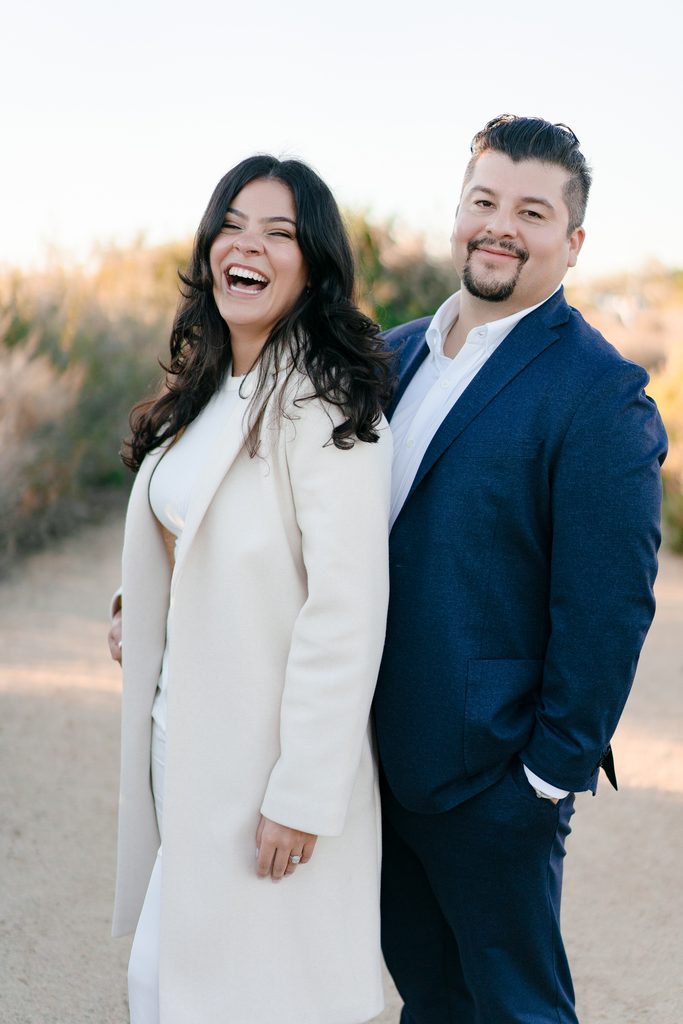
Color, Contrast and Skin Tone
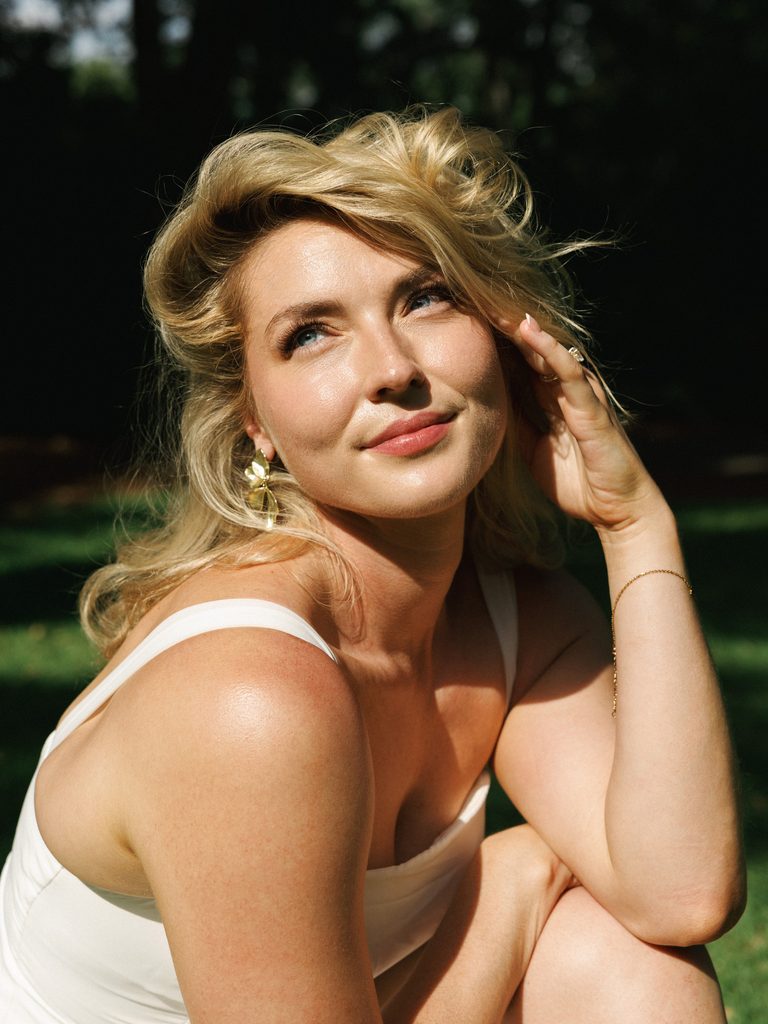
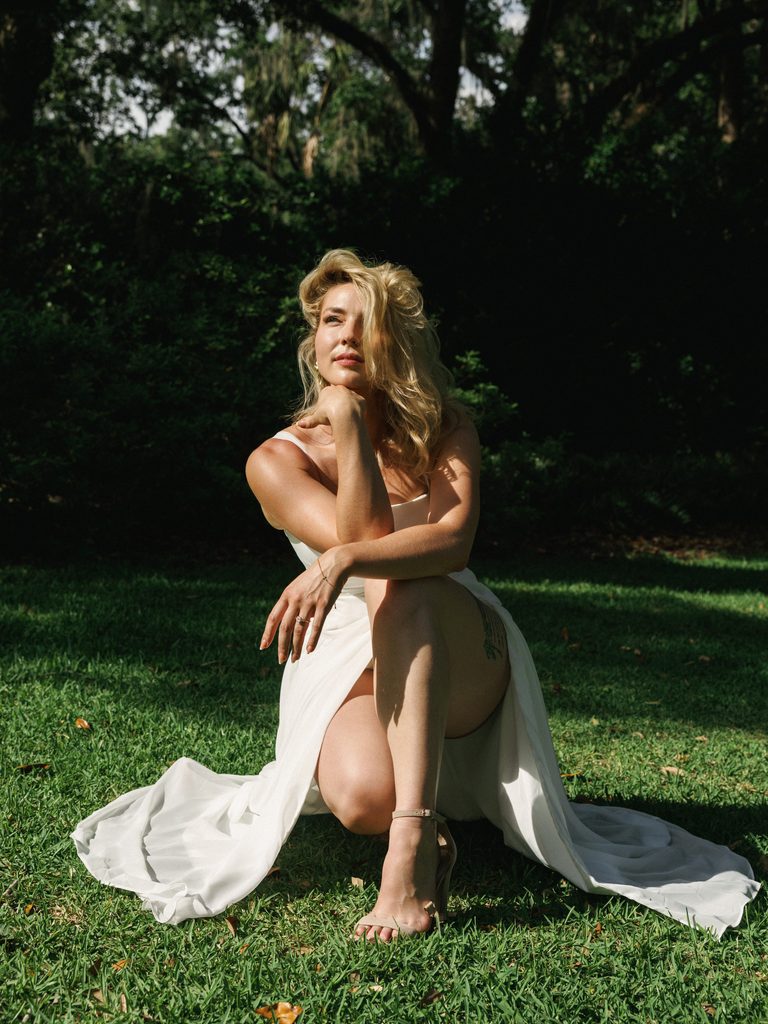
The colors of the outfits work alongside the colors already present in the setting. A wooded landscape, golden field, or stone architecture has its own palette, which can pair naturally with muted earth tones, creams, deeper neutrals, or other shades that sit comfortably within the surroundings. A quieter setting, such as a plain architectural backdrop or open beach, leaves more room for richer or more distinctive colors.
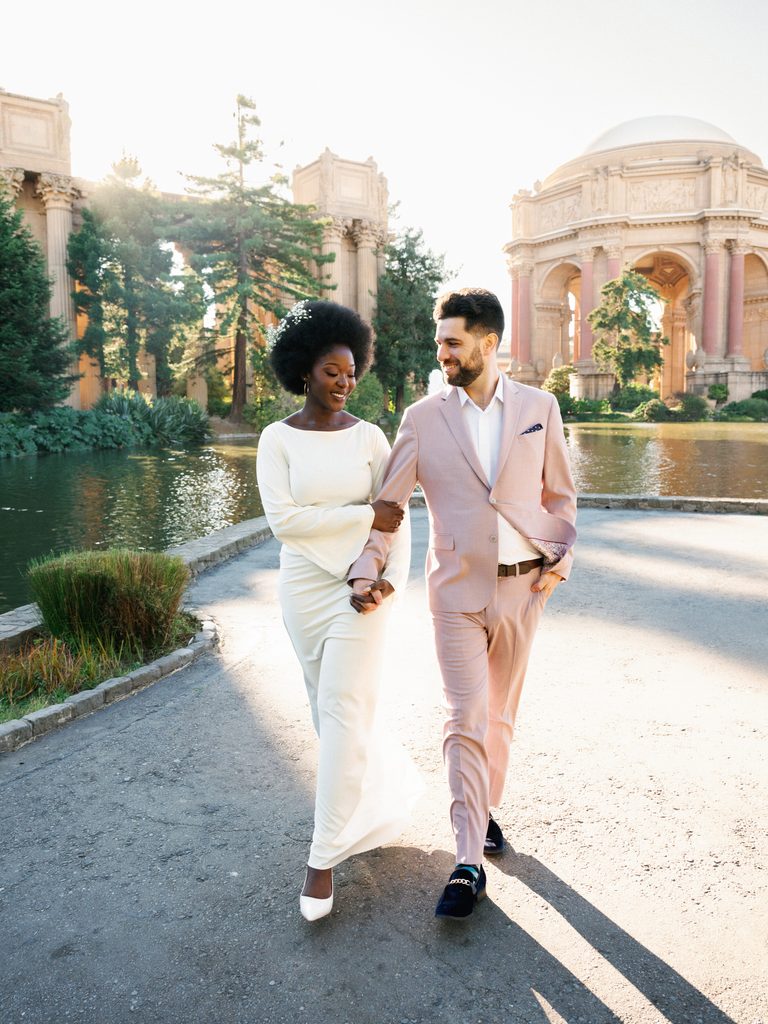
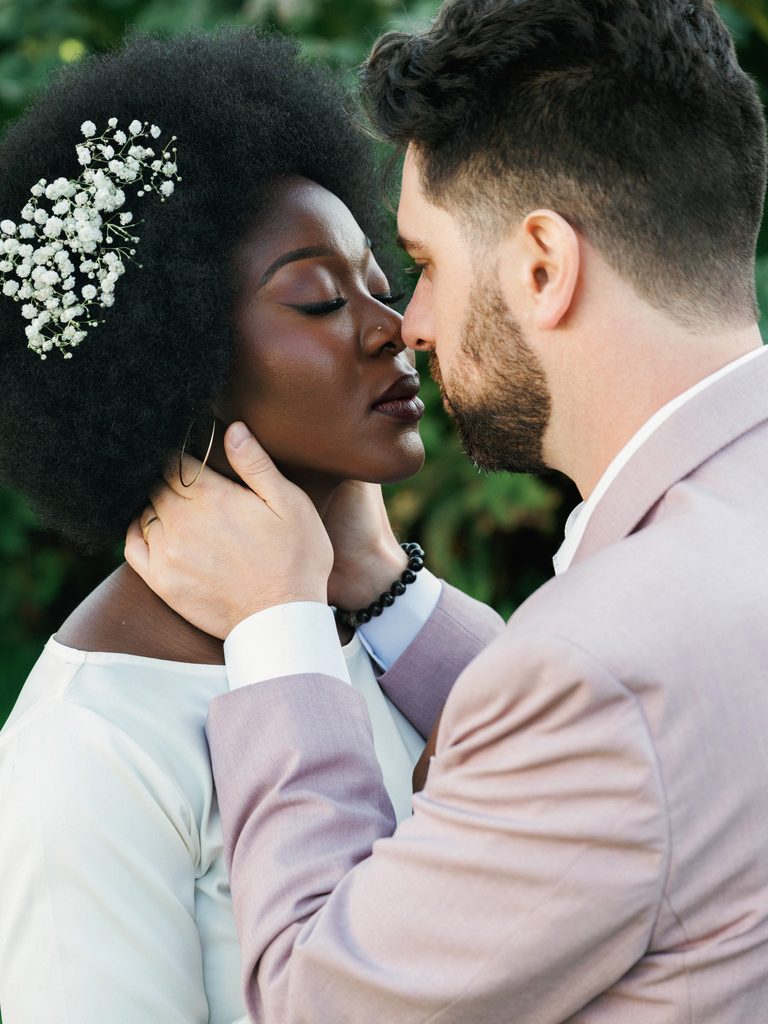
Contrast helps keep the outfits defined against the background. Clothing that sits too closely to the surrounding tones can lose separation in the frame, while a difference in lightness or color temperature can give the image more definition without relying on bright or highly saturated shades.
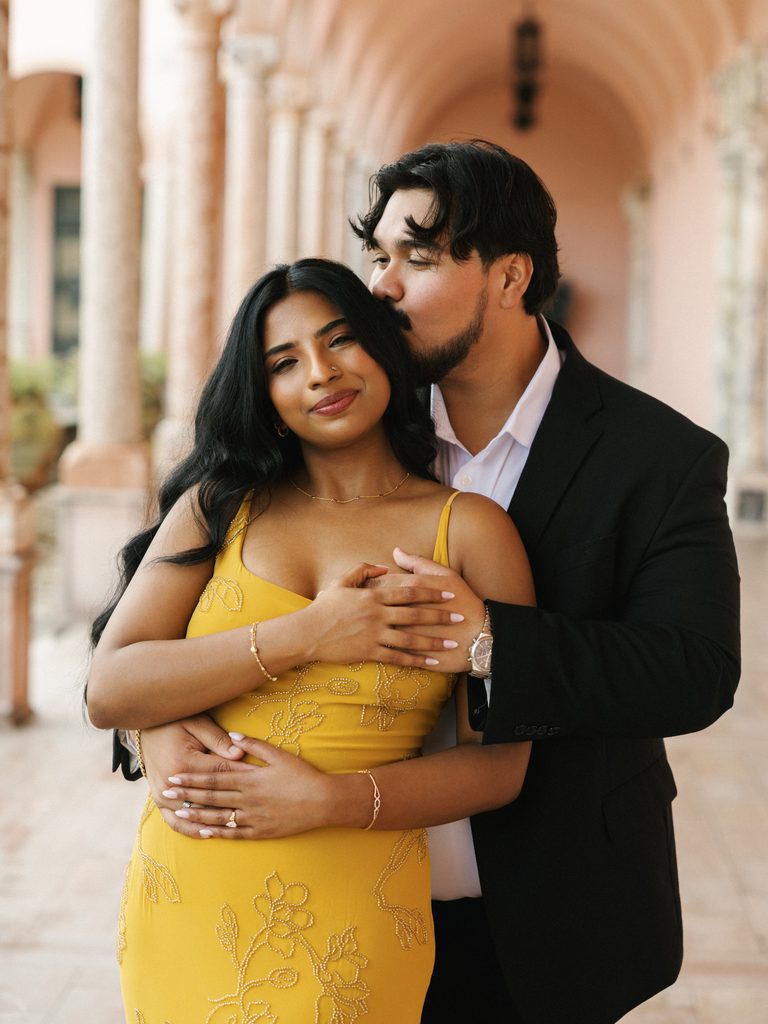
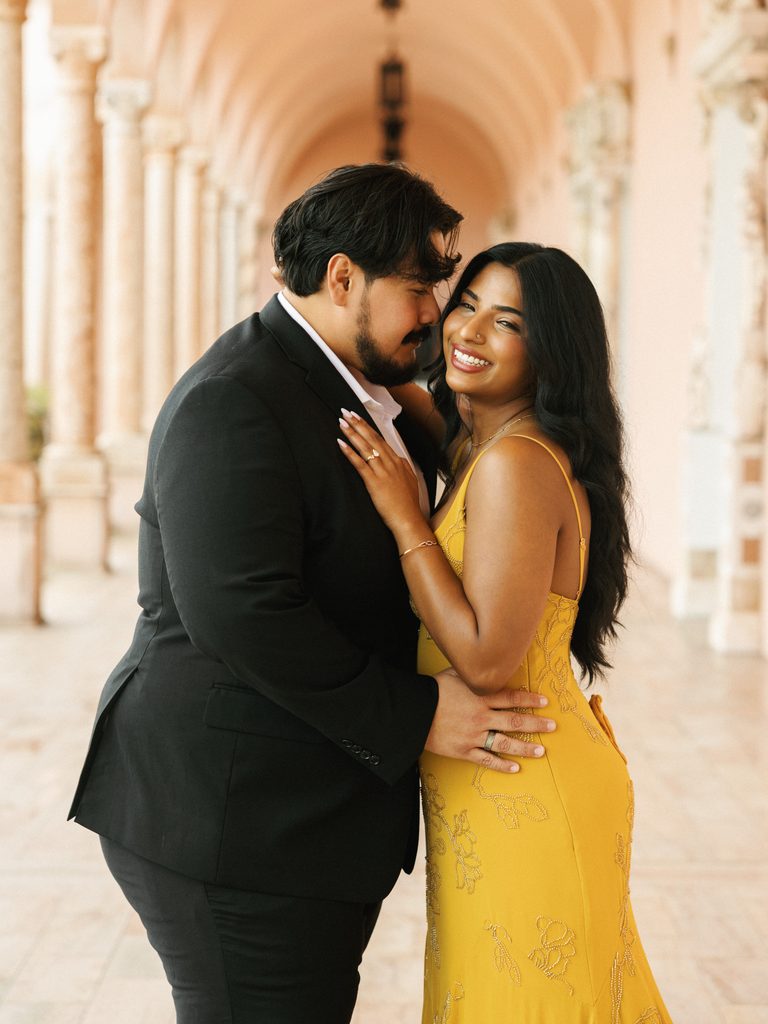
Skin tone is another consideration, particularly with colors worn close to the face. The same shade can appear different on each person, so colors should be considered in natural daylight before the session. This is especially useful when one partner’s outfit is built around a strong or unusual color.
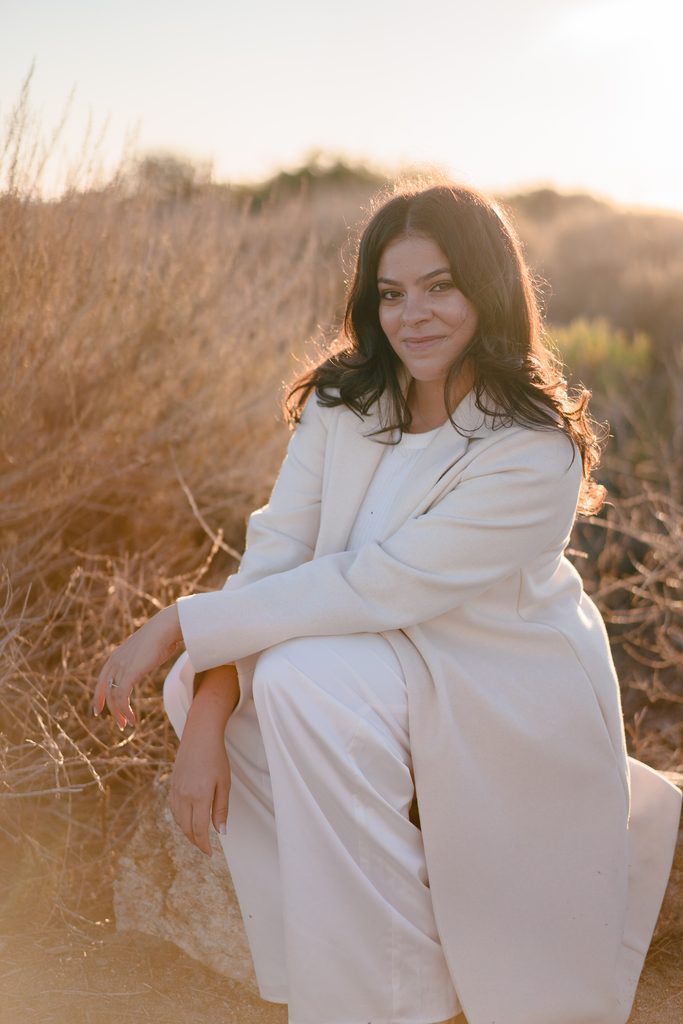
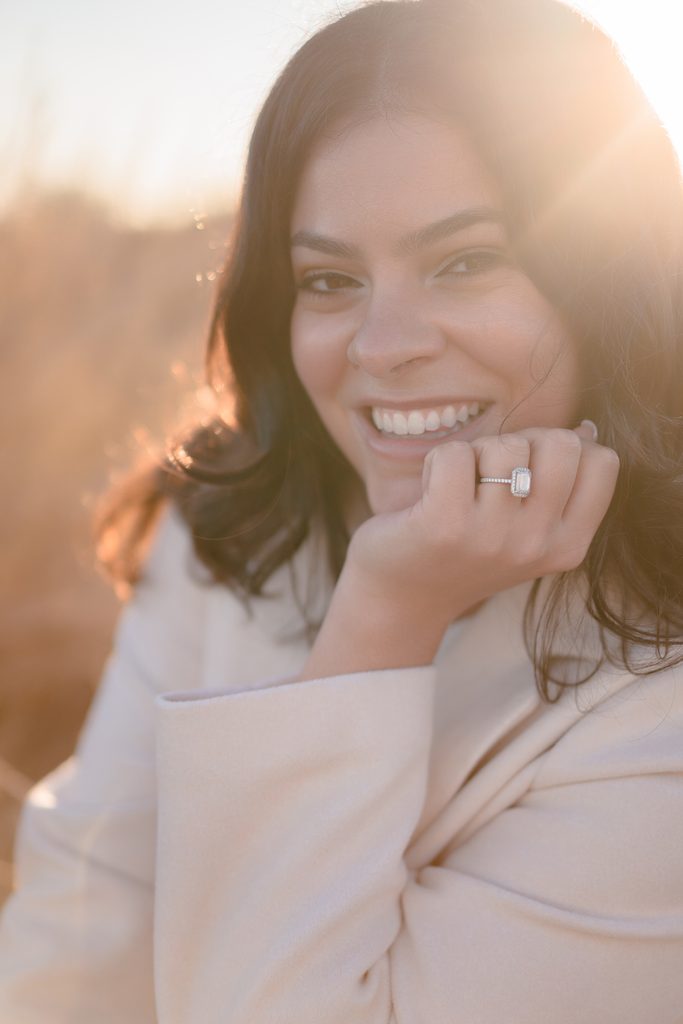
Texture, Layers and Movement
Texture gives an outfit depth in photographs, especially when the color palette is restrained. Fine fabrics, heavier weaves, embroidery, pleats, and other surface details can add interest while keeping the overall look polished.
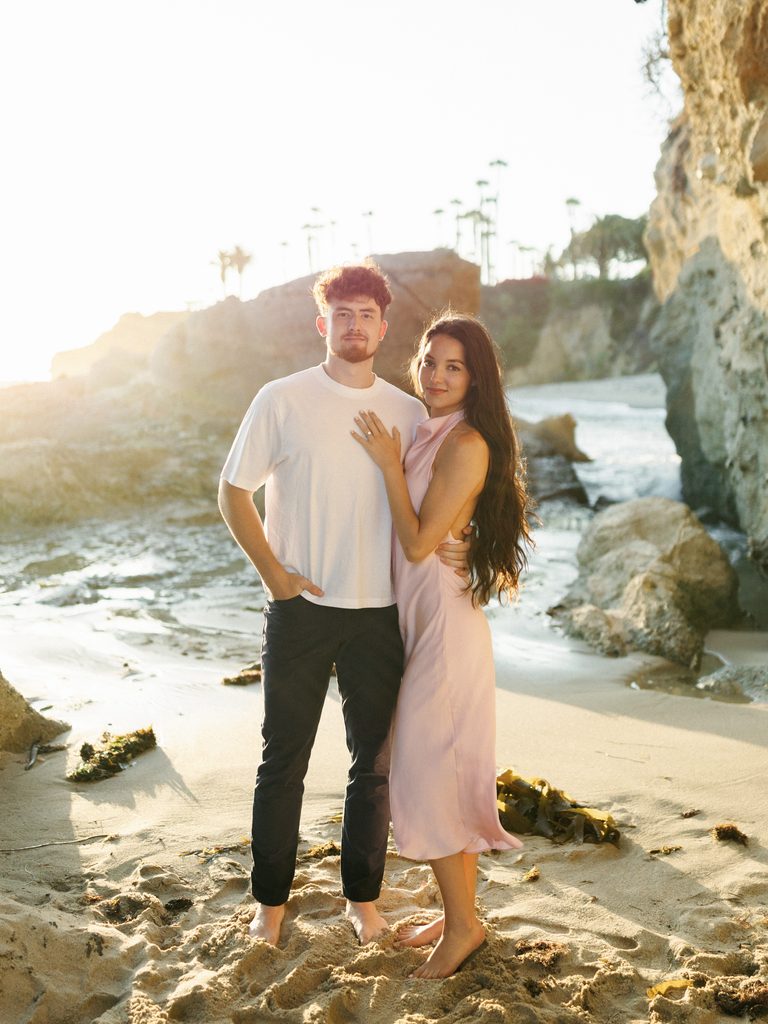
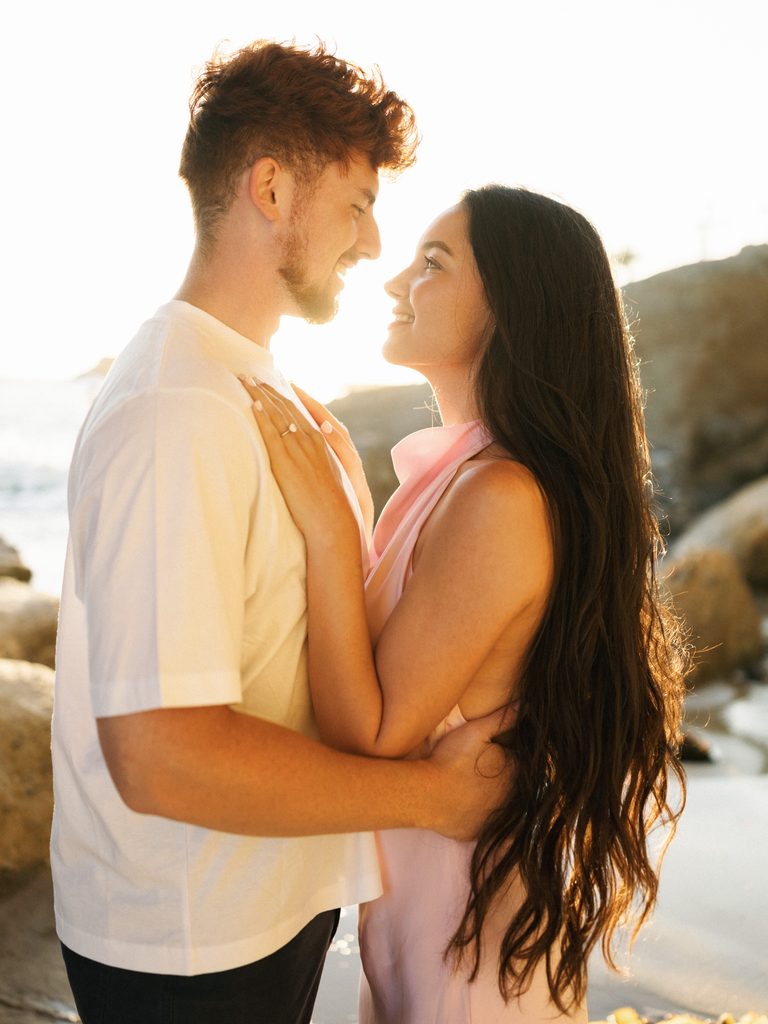
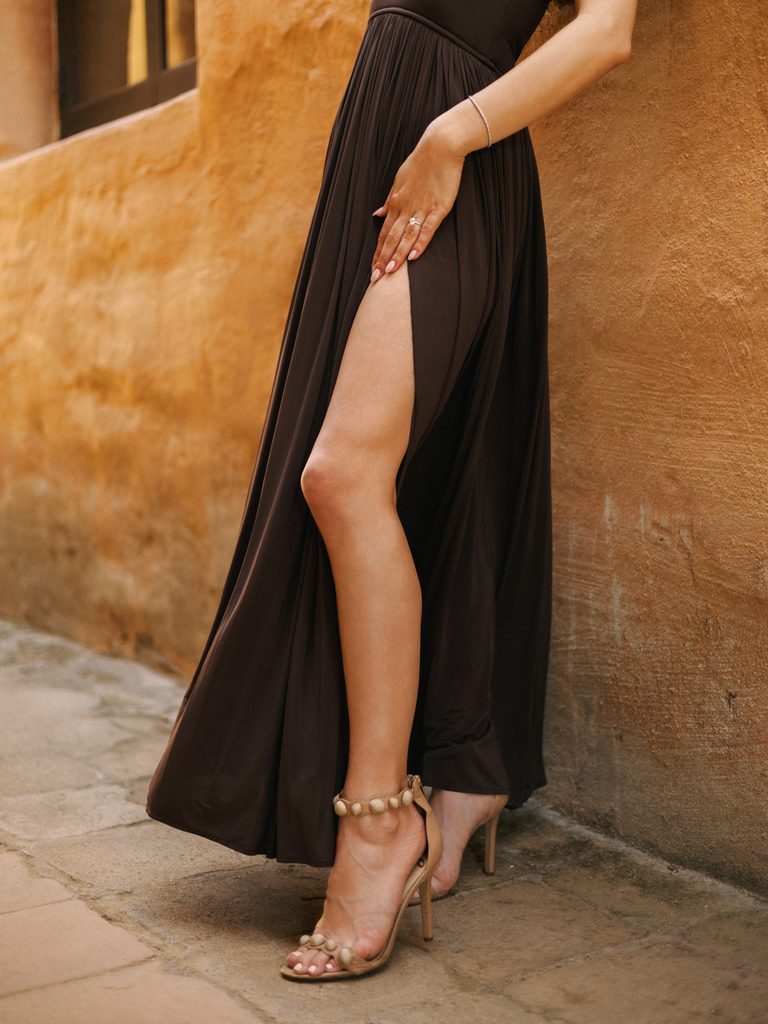
Layers give the wardrobe more range. Adding or removing a piece can change the silhouette and give the same look a different feel as the session progresses. Movement matters when the photographs are made while walking, turning, or interacting. Clothing that moves naturally tends to photograph differently from a piece with a very fixed structure. The way the fabric falls, holds its shape, and responds to movement is worth considering when choosing the outfit.
See Real Weddings in Our Gallery
Browse real celebrations photographed and filmed by Dreamwood across locations, cultures, venues, and styles.
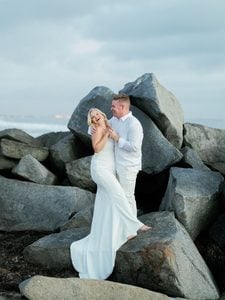
Santa Cruz Cliffs, San Diego, CA.
Formal Versus Casual Second Looks
Building two looks into an engagement session adds variety to the final gallery and gives the couple more flexibility if the setting or weather changes during the session. A common combination is one polished, formal outfit and one more relaxed look, creating a noticeable change in mood without requiring two separate locations.
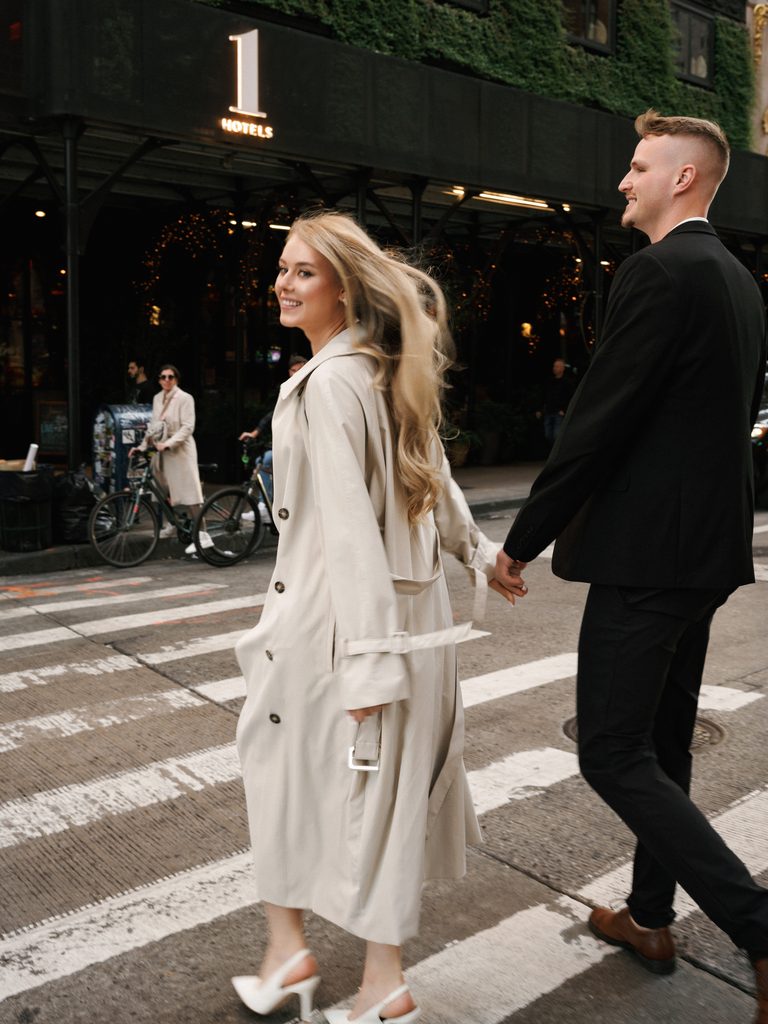
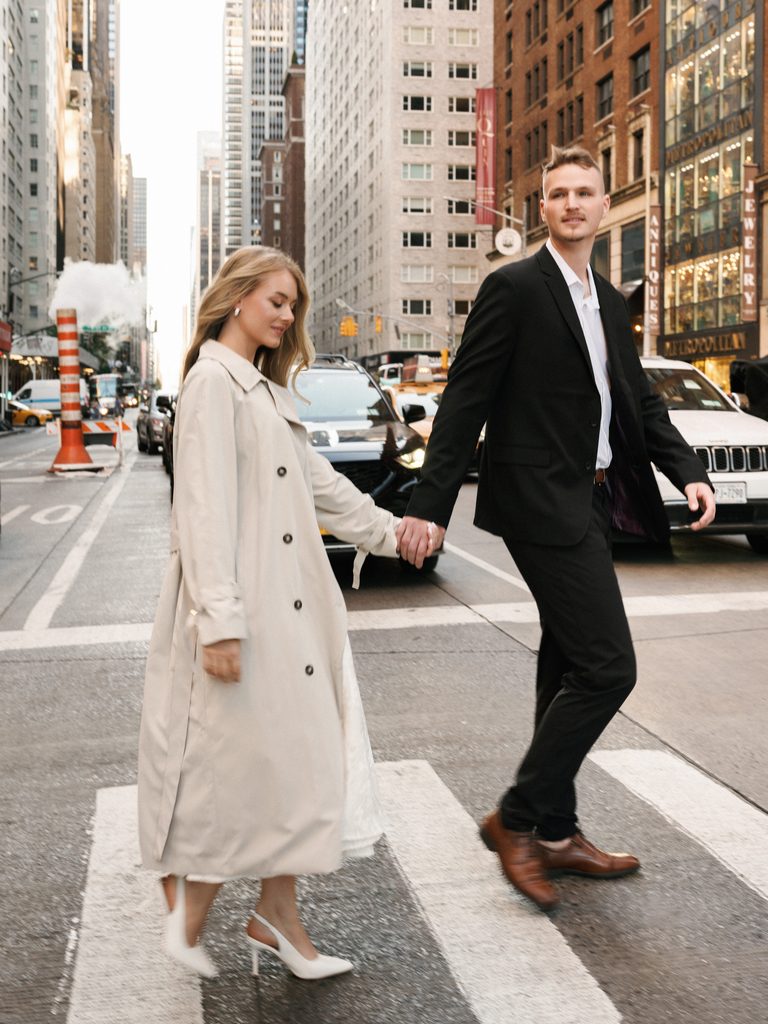
The formal look can suit a structured setting or the golden-hour portion of the session, while the second look can feel more relaxed for walking, sitting, or moving through a less formal part of the setting. The contrast can come through the level of formality, silhouette, or styling, depending on how different the couple wants the two looks to feel.
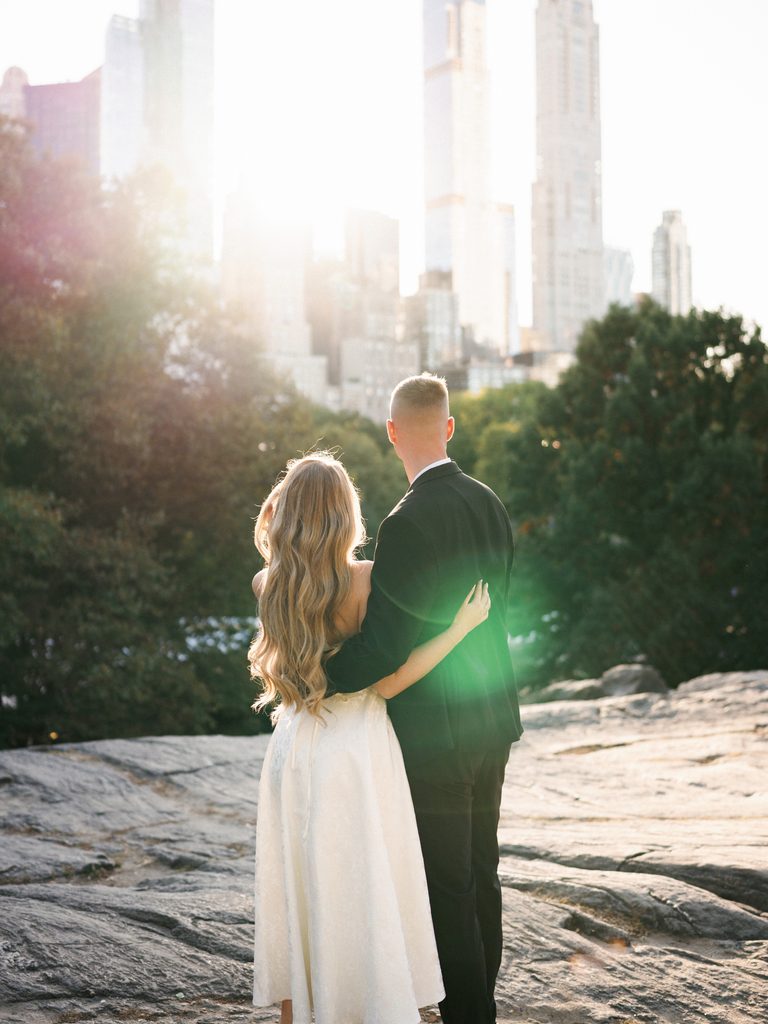
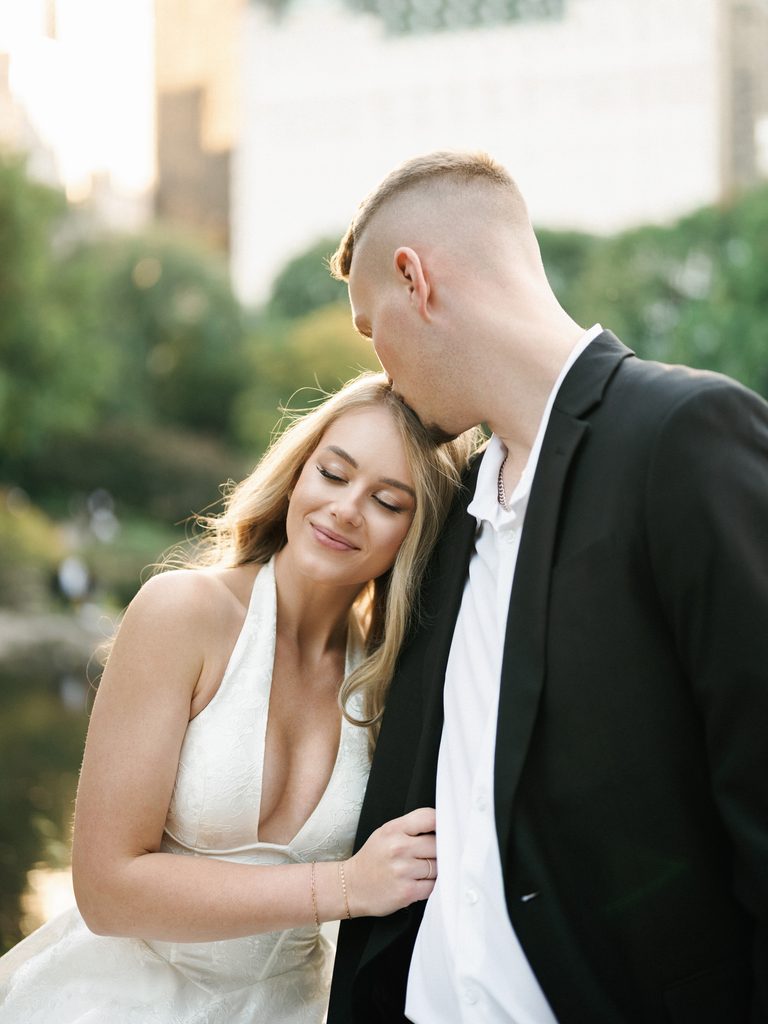
The outfit change should also be considered when planning the session. A private dressing room, suite, or another dedicated changing space keeps the transition comfortable and gives the couple enough time to adjust the new look, accessories, and styling before returning to the session.
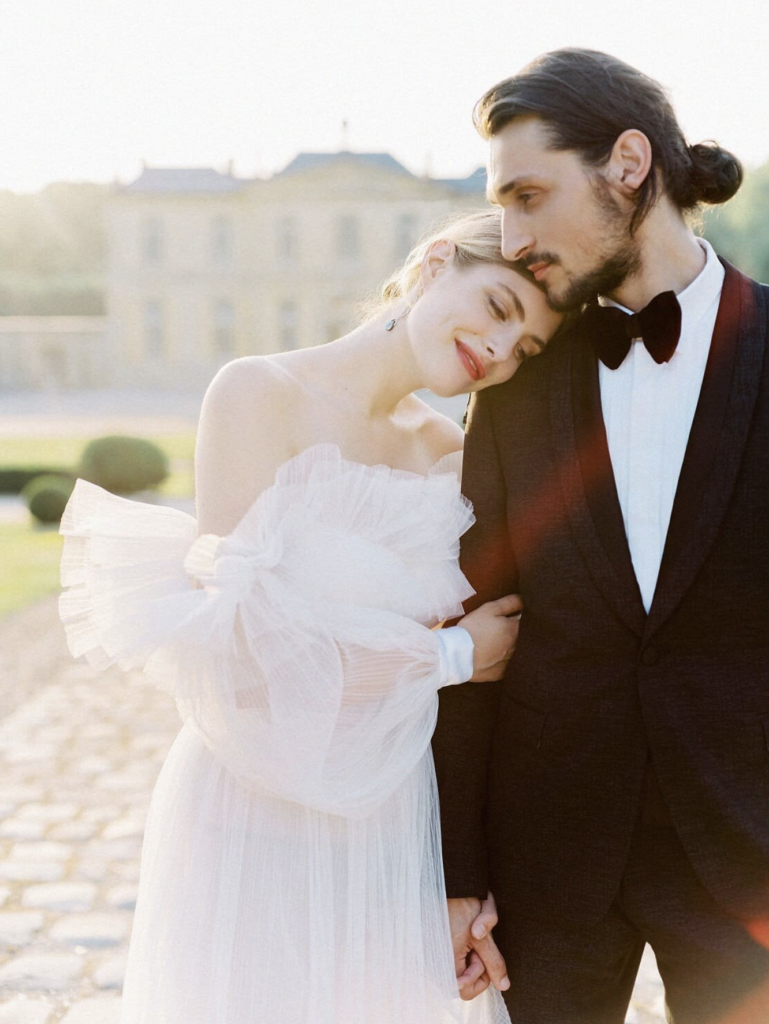
The Chemists’ Club Hotel, NY.
Shoes and Accessories
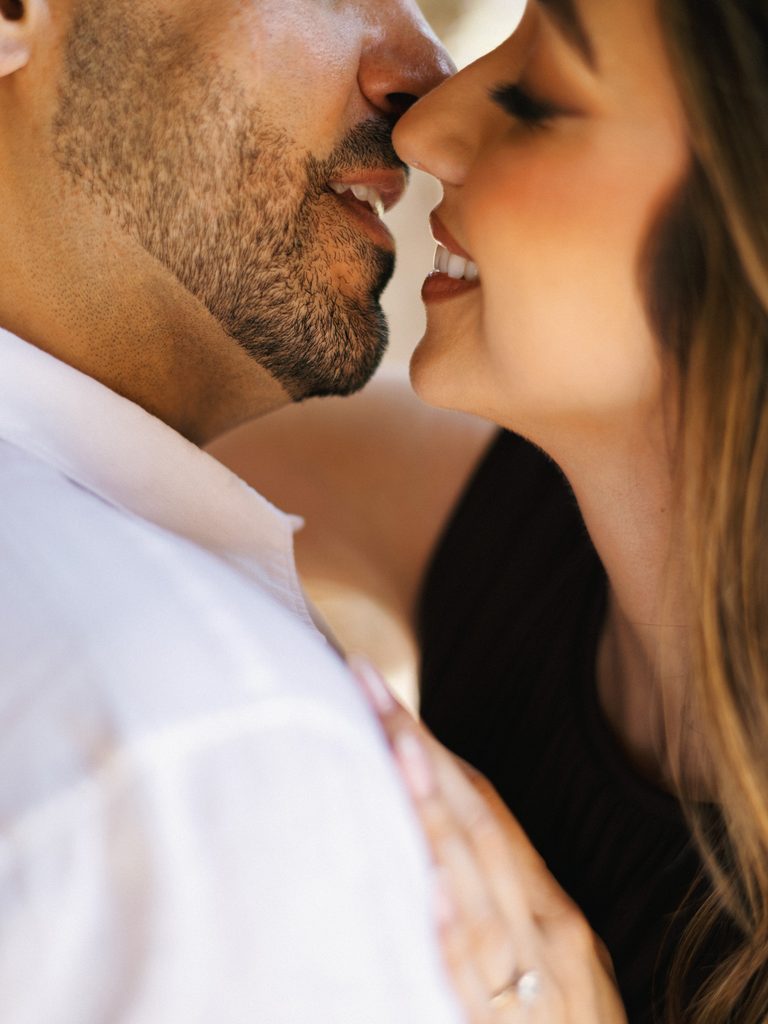
Shoes become part of the photograph whenever they are visible, but their effect starts with the way they change how a person moves. Walking, stairs, uneven surfaces, and extended standing can all affect posture and ease of movement. If the session involves significant walking between locations, a second pair can be useful between photographs while the intended shoes remain part of the finished look. Accessories bring another layer of personality to an outfit. Jewelry, watches, belts, scarves, and distinctive shoes can add detail and make the styling feel personal.
Patterns and Fabrics That Distract on Camera
Some patterns behave very differently on camera than they do in person. Fine, tightly spaced stripes, small checks, and repeated geometric designs can produce moiré or a shimmering effect in digital photographs. Large, busy prints can also draw attention through their scale and contrast, particularly when combined with strong color.
Logos and large text introduce another visual element that competes with the rest of the outfit. Reflective and metallic fabrics can behave unpredictably as the light changes, creating strong highlights that vary from frame to frame.
Pure white and pure black require more control in bright or high-contrast conditions, especially when they appear together. White can lose detail in strong light while black can become very dense, leaving less information in the fabric.
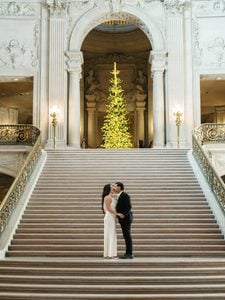
Pasadena City Hall, LA.
Keeping Both Looks Personal
Engagement outfits do not need to follow a particular trend. The wardrobe can stay close to the couple’s personal style while becoming more considered for the setting and the photographs.
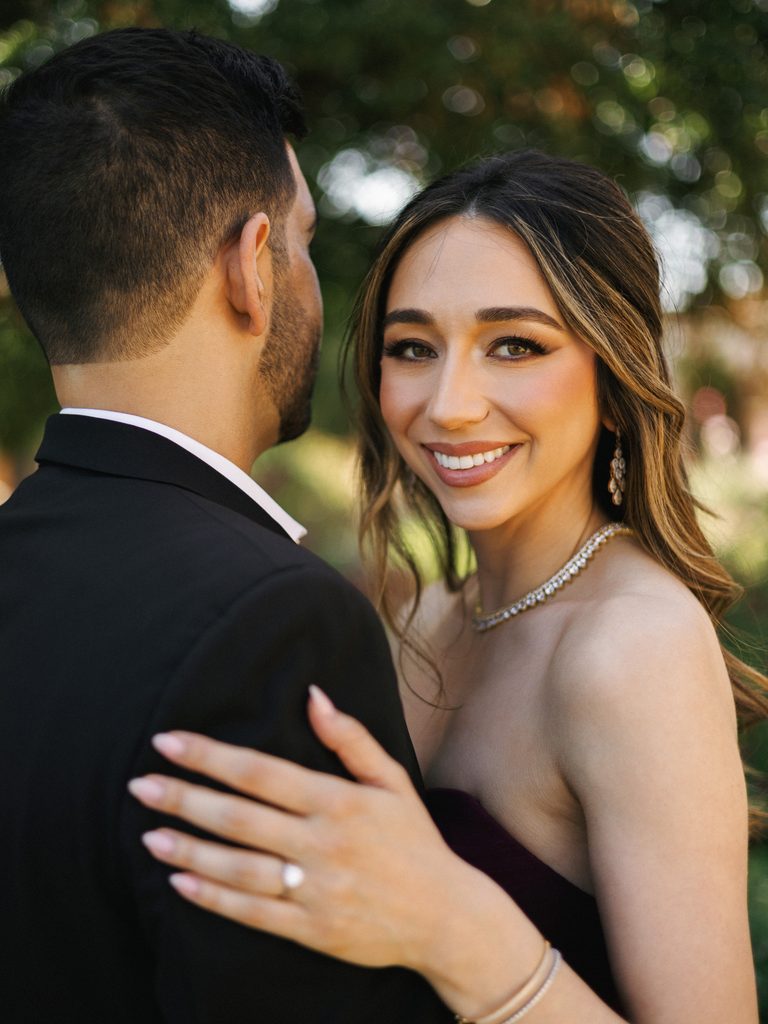
Fit deserves attention alongside color and styling. Clothing that sits well and allows comfortable movement tends to hold its shape throughout the session, including when the couple is walking, sitting, or changing layers.
FAQ
Should engagement photo outfits match?
Matching is not necessary. Related colors, textures, or levels of formality can bring two outfits together, while each person can still choose pieces that reflect their own style.
How many outfits should each person bring?
One or two outfits per person are usually enough. A second look can introduce a change in formality, texture, or silhouette.
What colors work well for engagement photos?
Neutral and muted tones are versatile, including cream, taupe, navy, grey, brown, and soft blues or greens. Stronger colors can work as well when they relate to the setting and the other outfit.
Are patterns a bad choice for engagement photos?
Patterns can work well when their scale and visual weight suit the wardrobe. Very fine stripes, tight checks, and closely repeated designs are more likely to create distracting effects on camera.
Should one outfit be formal and the other casual?
They can be. A change in formality gives the session another visual direction and can create variety in the final gallery.
What should we avoid wearing for engagement photos?
Very fine repeating patterns, prominent logos or text, highly reflective materials, and clothing that restricts movement can create visual or practical complications. The wardrobe should also work comfortably with the setting and season.
Do shoes matter in engagement photos?
Yes. Shoes appear in full-length photographs and influence movement, posture, and comfort. If the session involves significant walking, a second pair can be useful between locations while the intended shoes remain part of the look.
Should engagement outfits match the wedding colors?
They can, particularly when the couple wants a visual relationship between the engagement and wedding photographs. A separate color palette can work just as well.
Can bold colors work in engagement photographs?
Yes. A strong color can work beautifully when it relates to the setting and the rest of the wardrobe.
What fabrics work well in engagement photos?
Linen, cotton, wool, knitwear, silk, suede, and other materials can all photograph well. Their texture, weight, reflectivity, and movement are worth considering alongside the lighting and setting.