Waterfront Is Several Different Settings
Waterfront engagement photos can take place in several different settings, and each brings a distinct experience to the session. An open ocean beach, a public pier, and a bay-side shore all place the couple near the water, but the surroundings, movement, exposure, and available compositions differ. The choice can begin with the kind of time the couple wants to spend together, then follow the setting that suits those preferences.
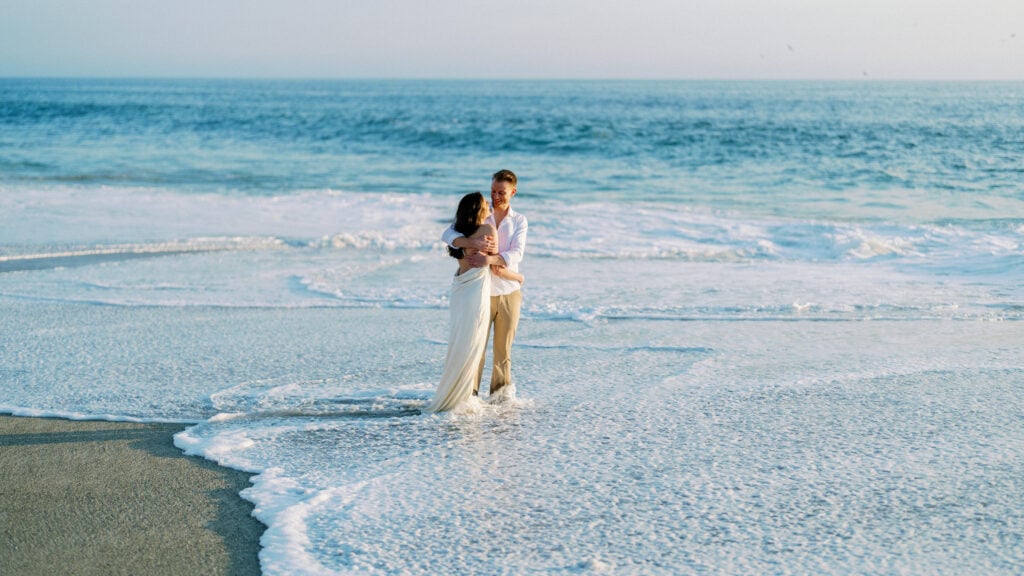
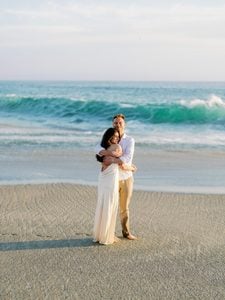
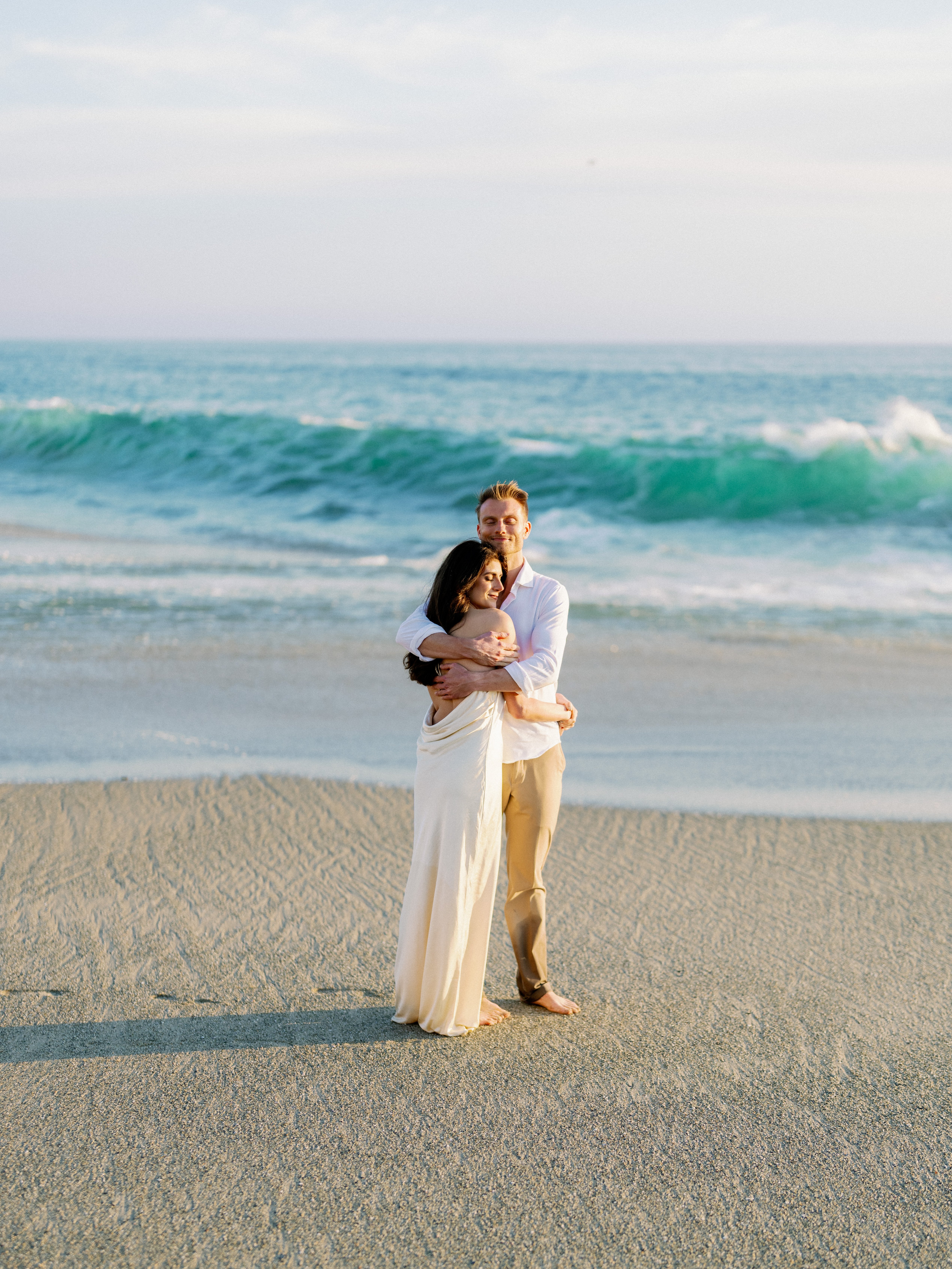
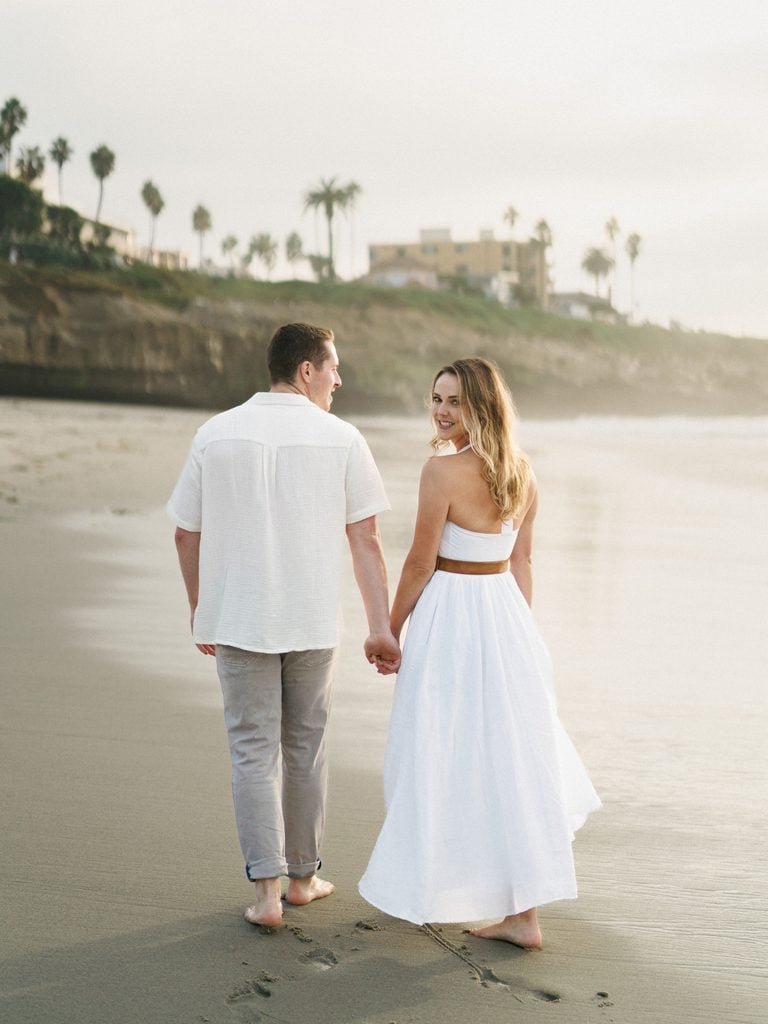
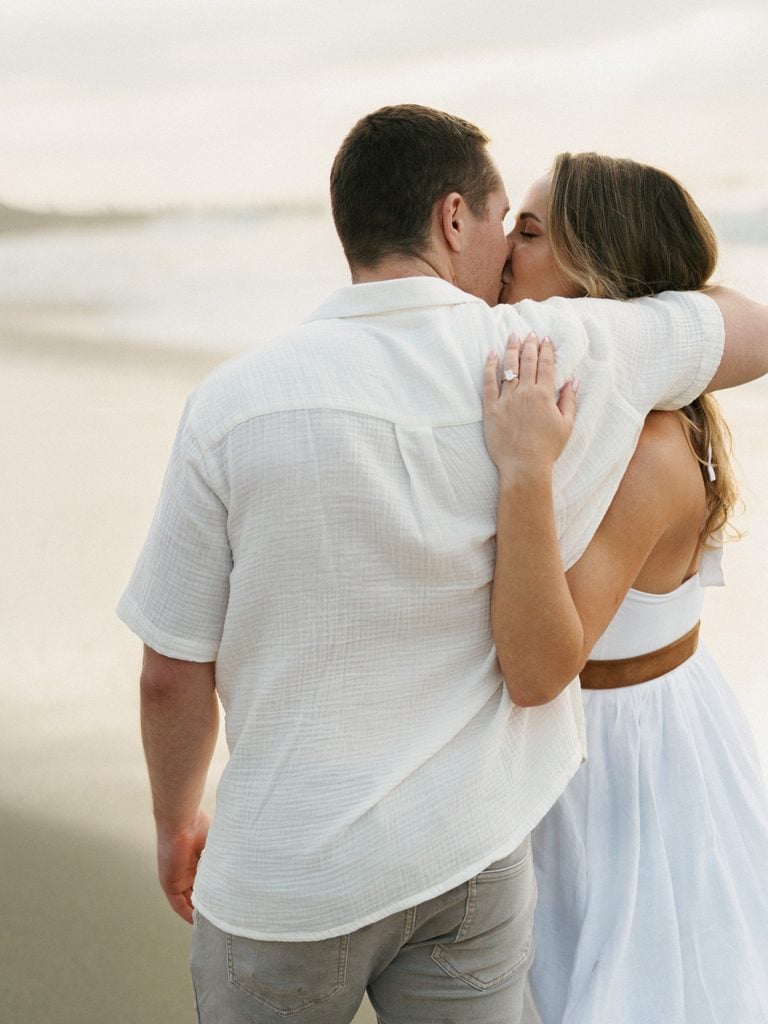
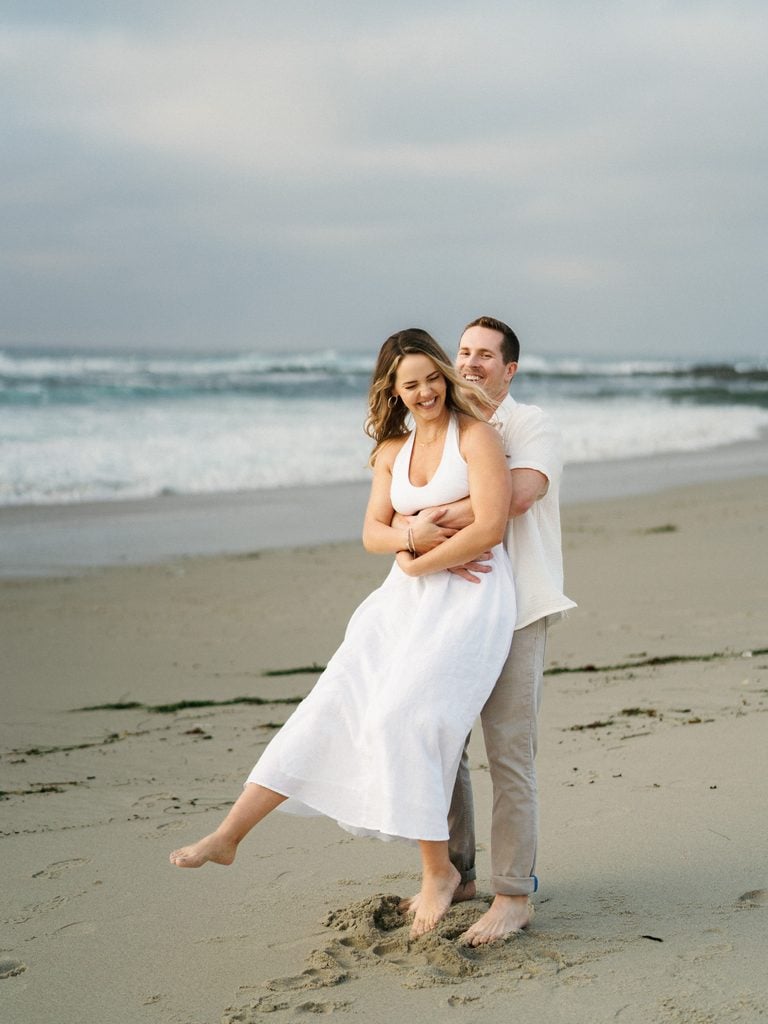
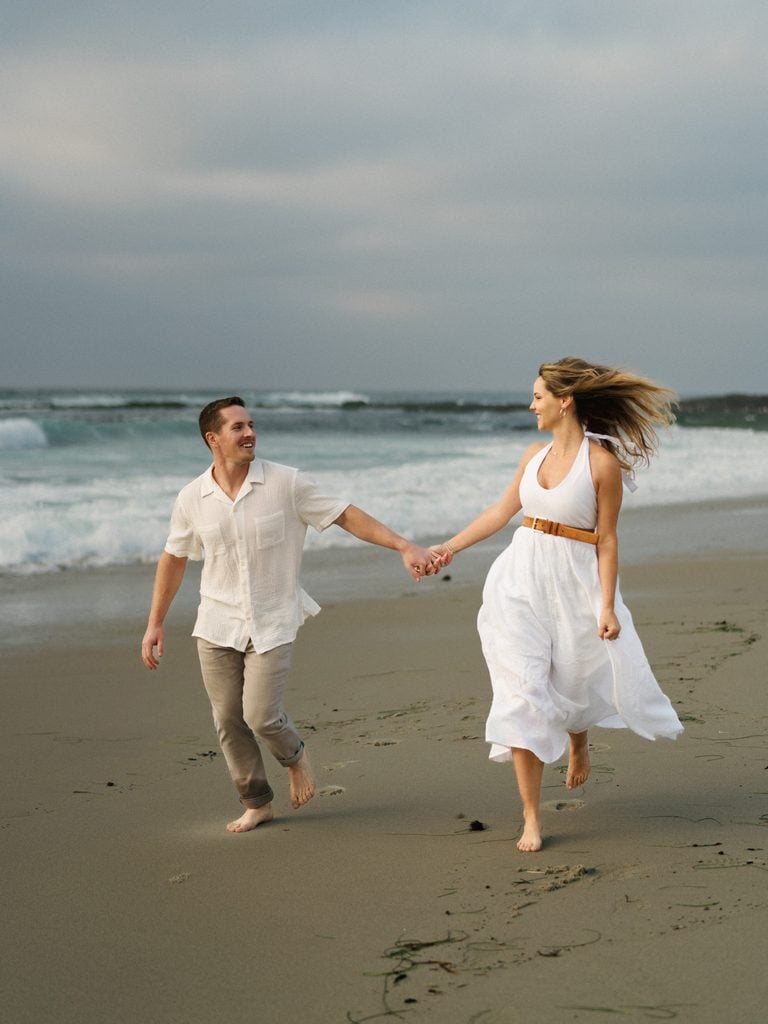
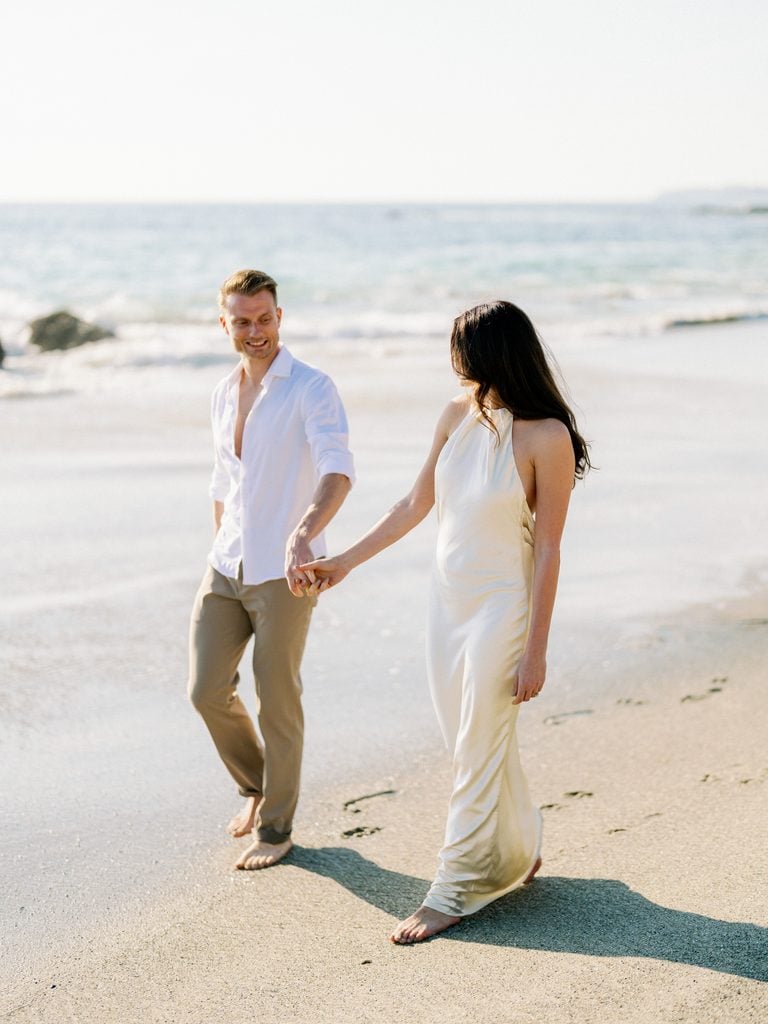
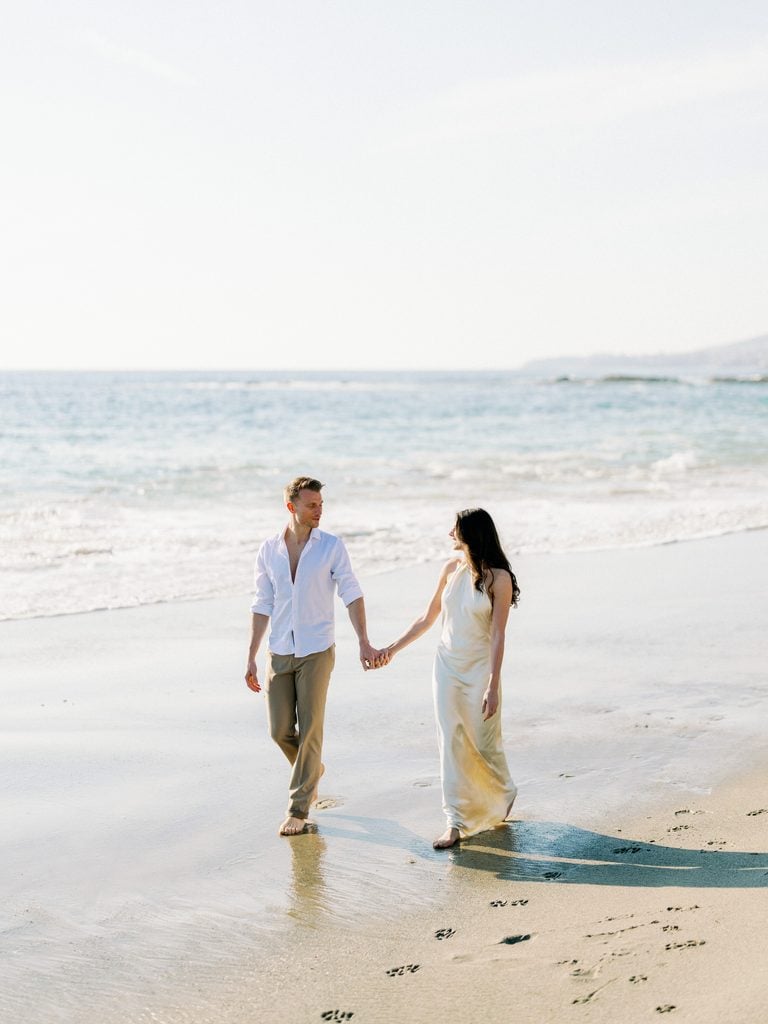
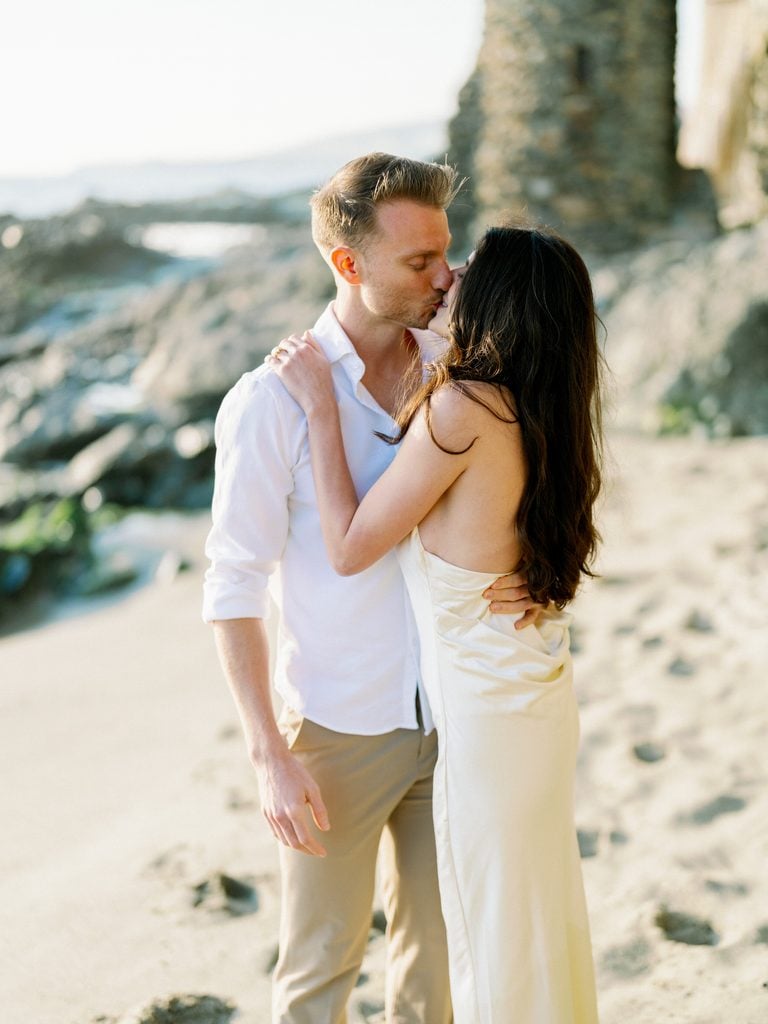
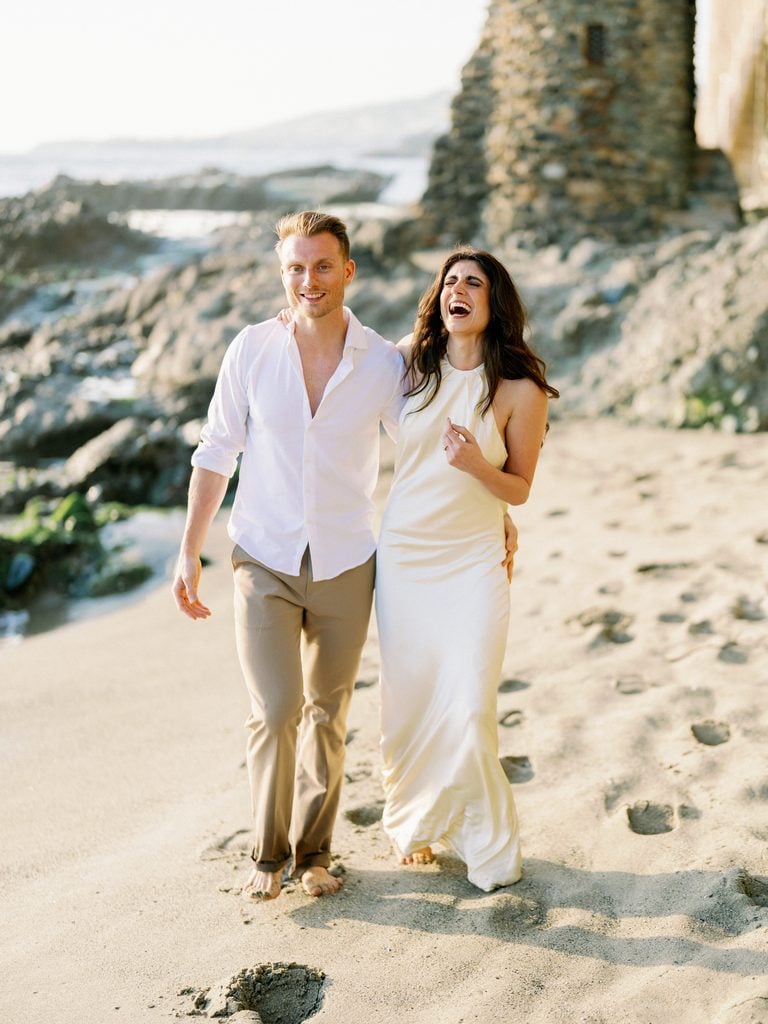
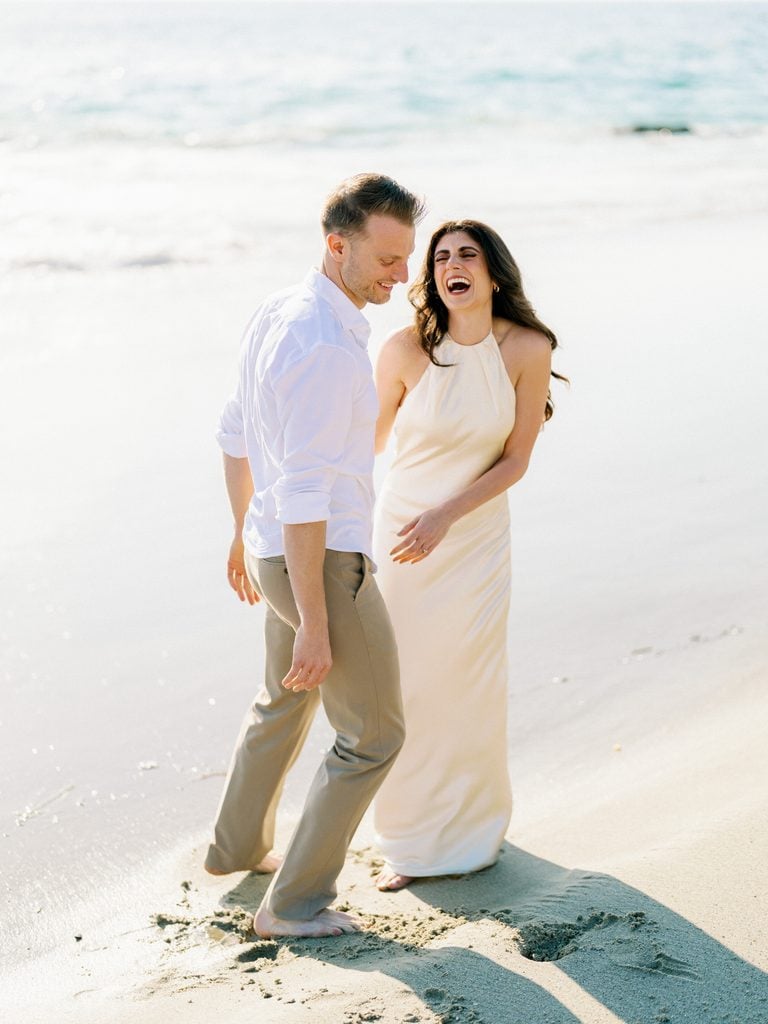
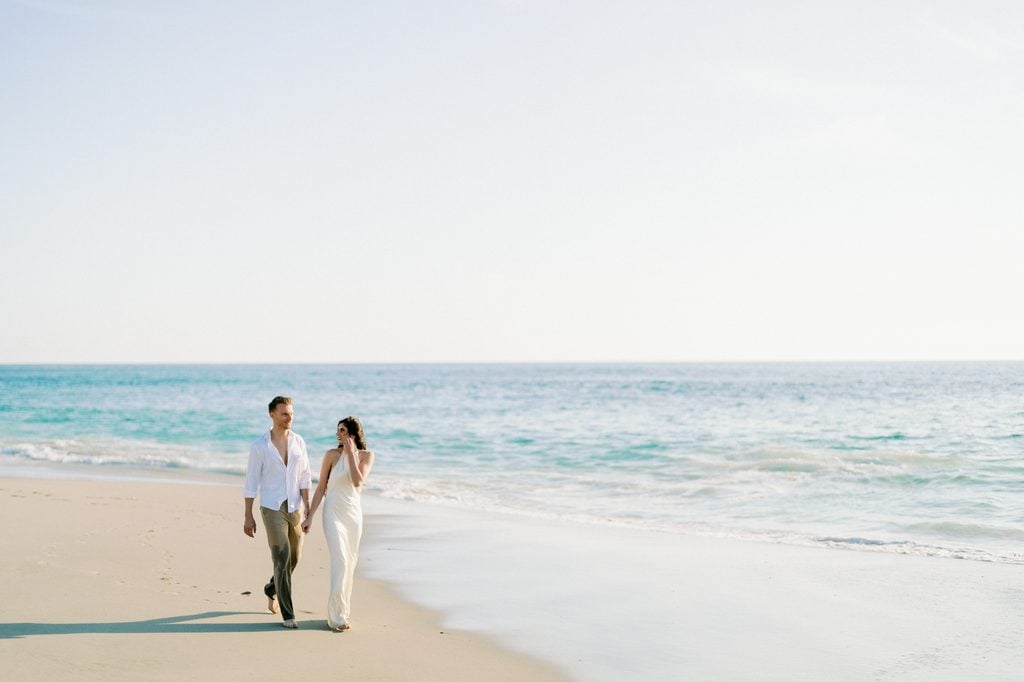
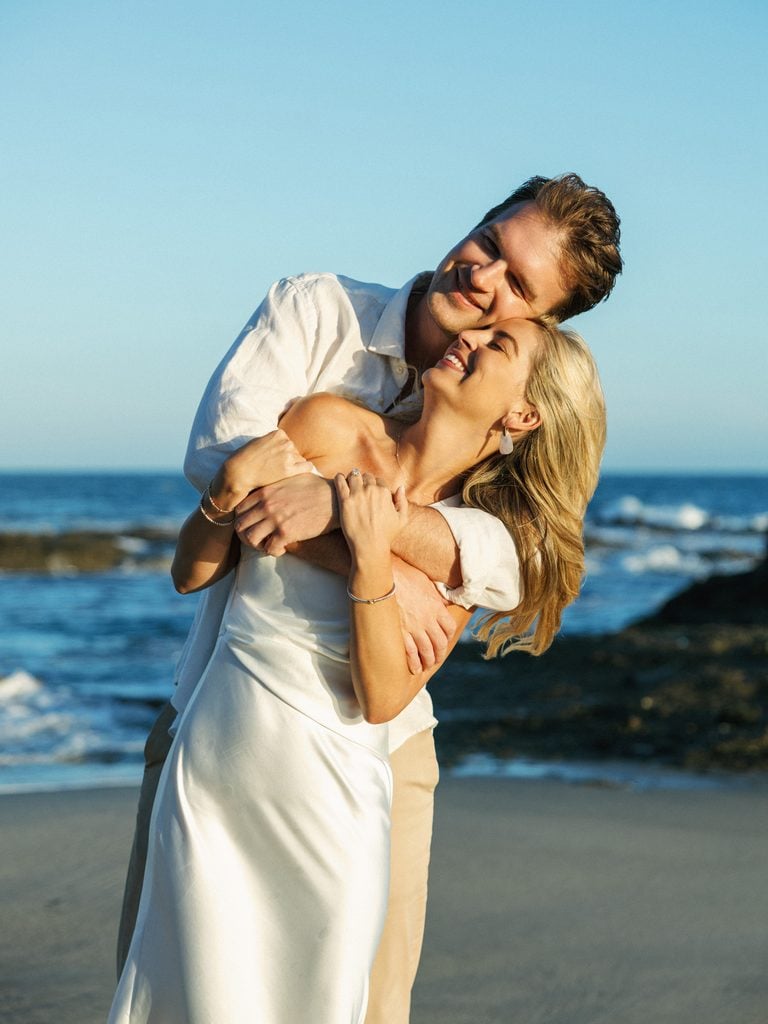
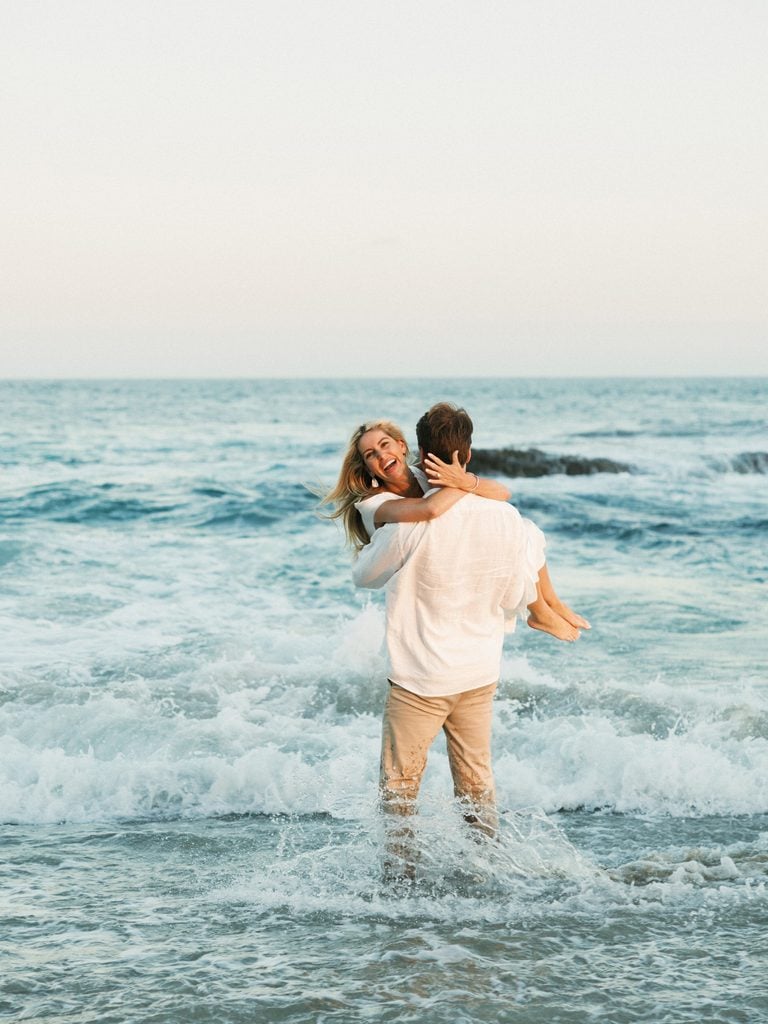
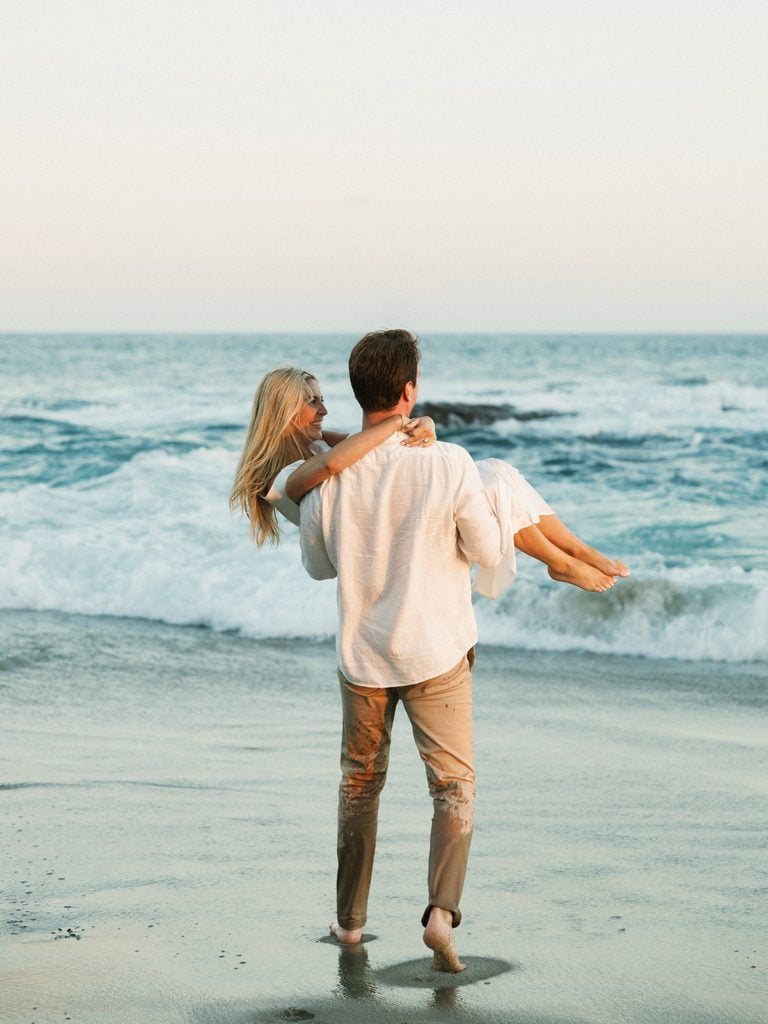
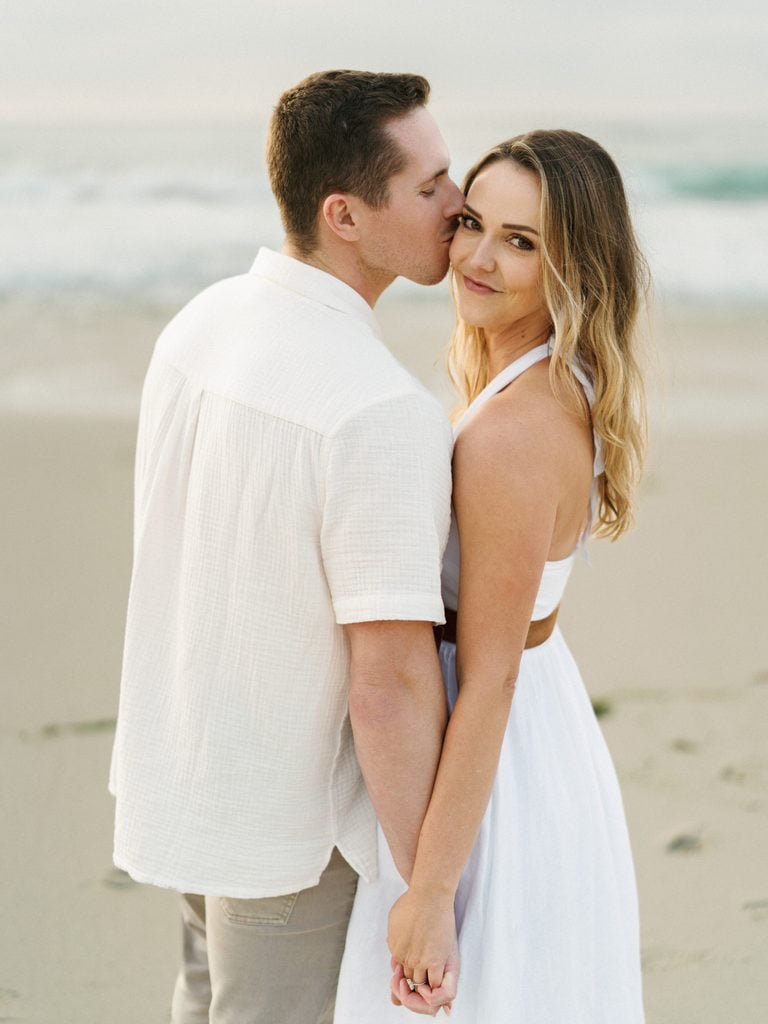
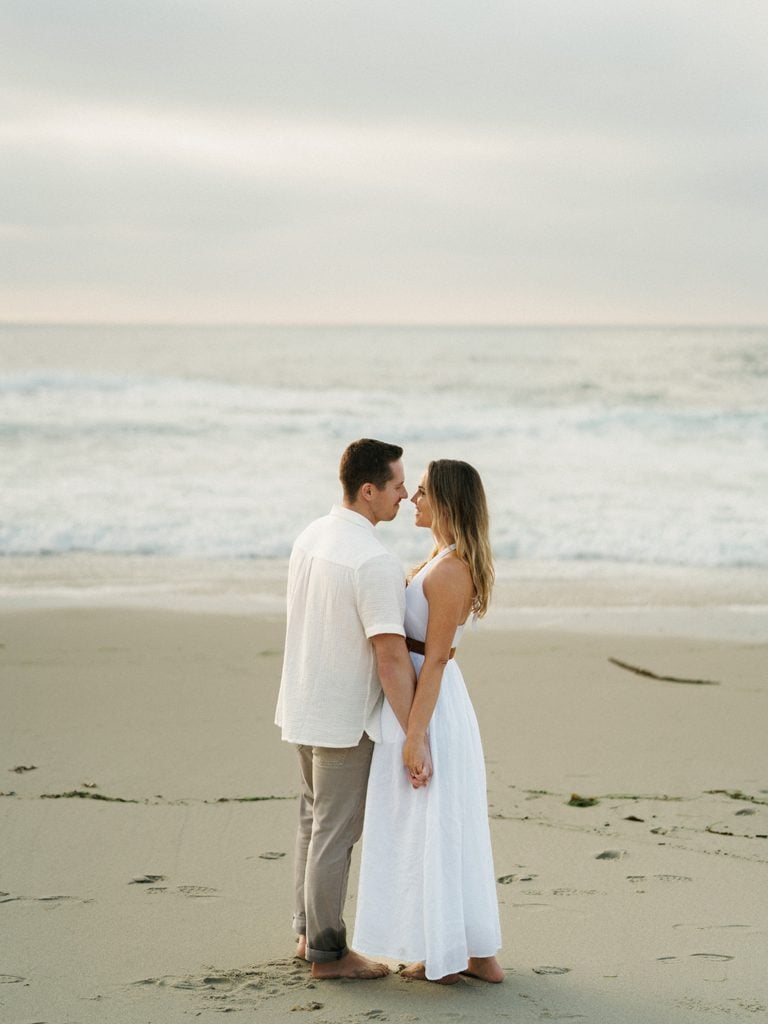
An open beach offers a broad horizon, moving surf, and room to walk along the shoreline. Sand changes the pace of the session and can make longer walks more tiring, while open exposure brings direct sun and coastal wind into the experience. The photographs can include wide views of the ocean, the shoreline, and the couple moving through the landscape.
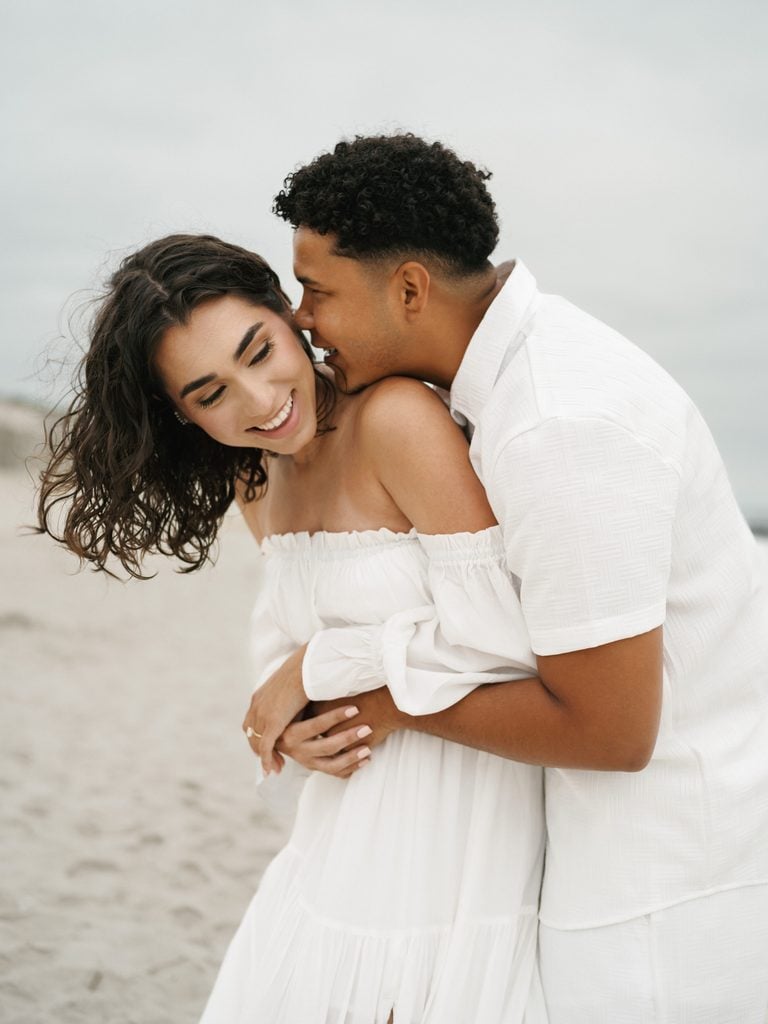
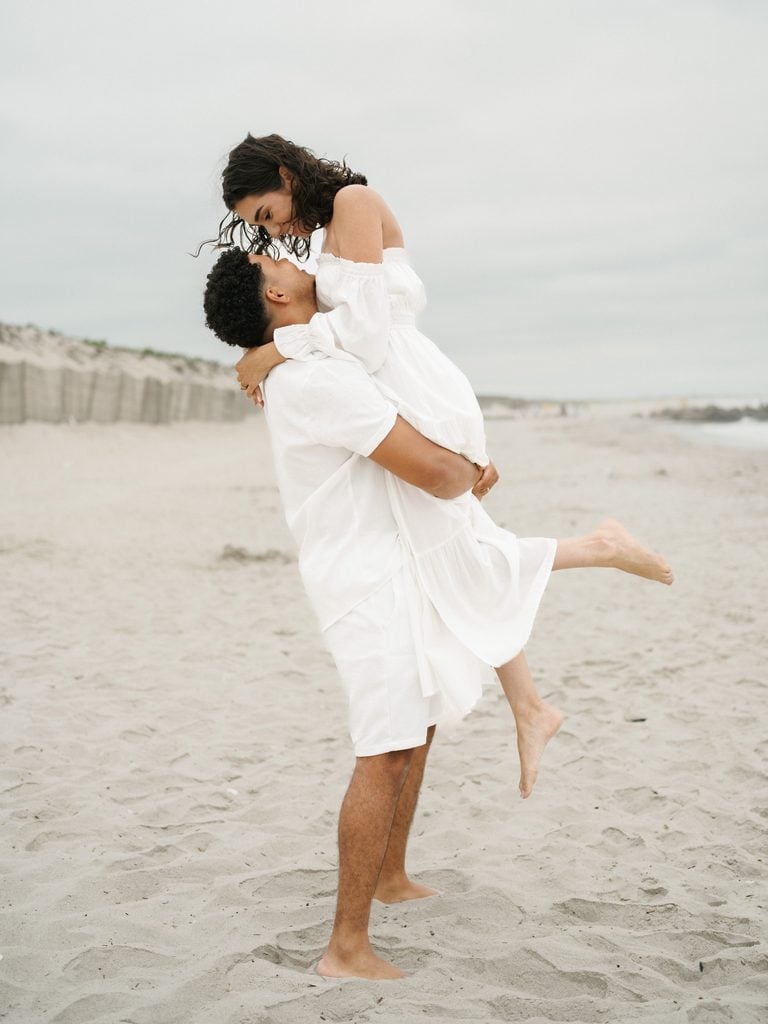
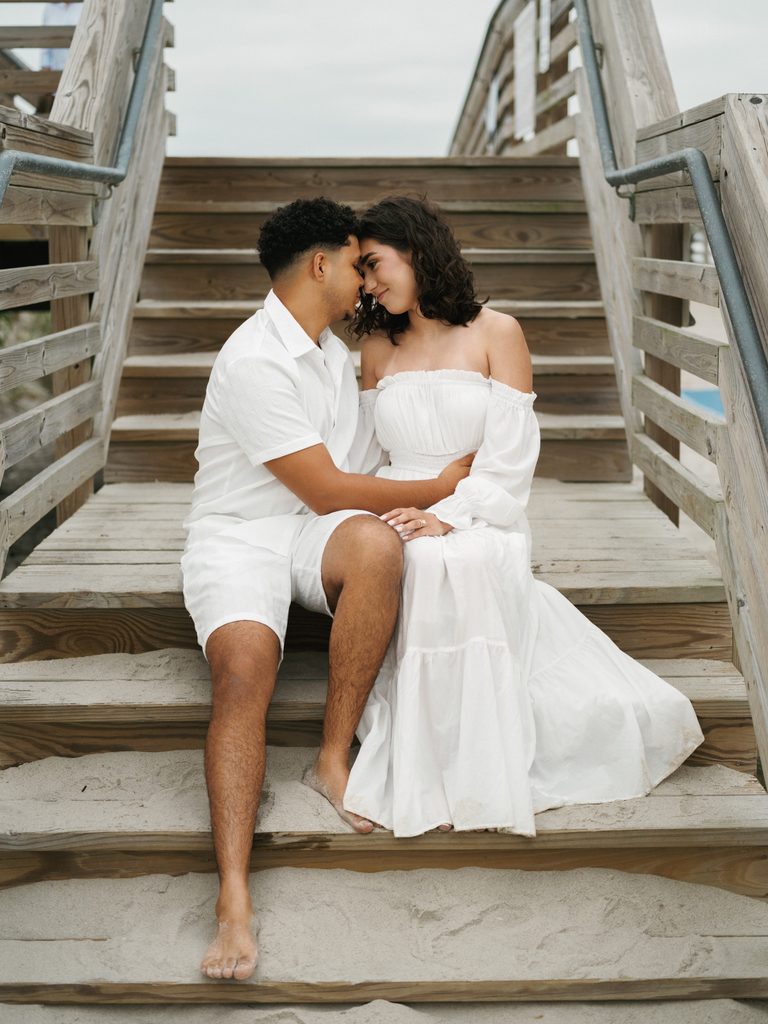
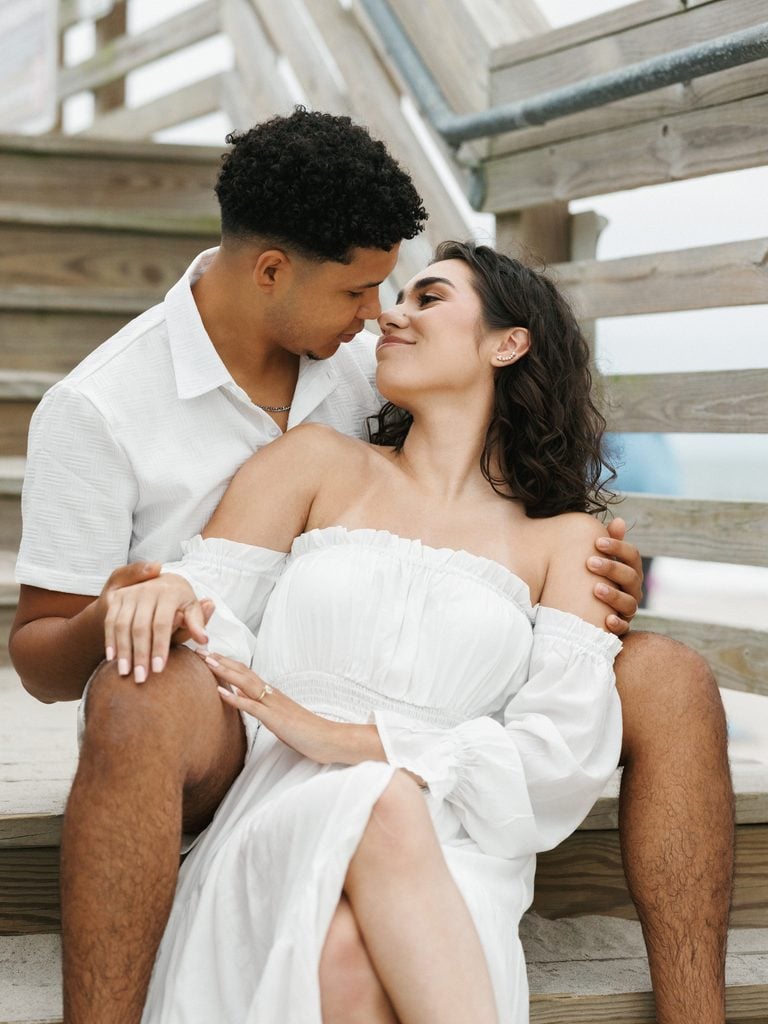
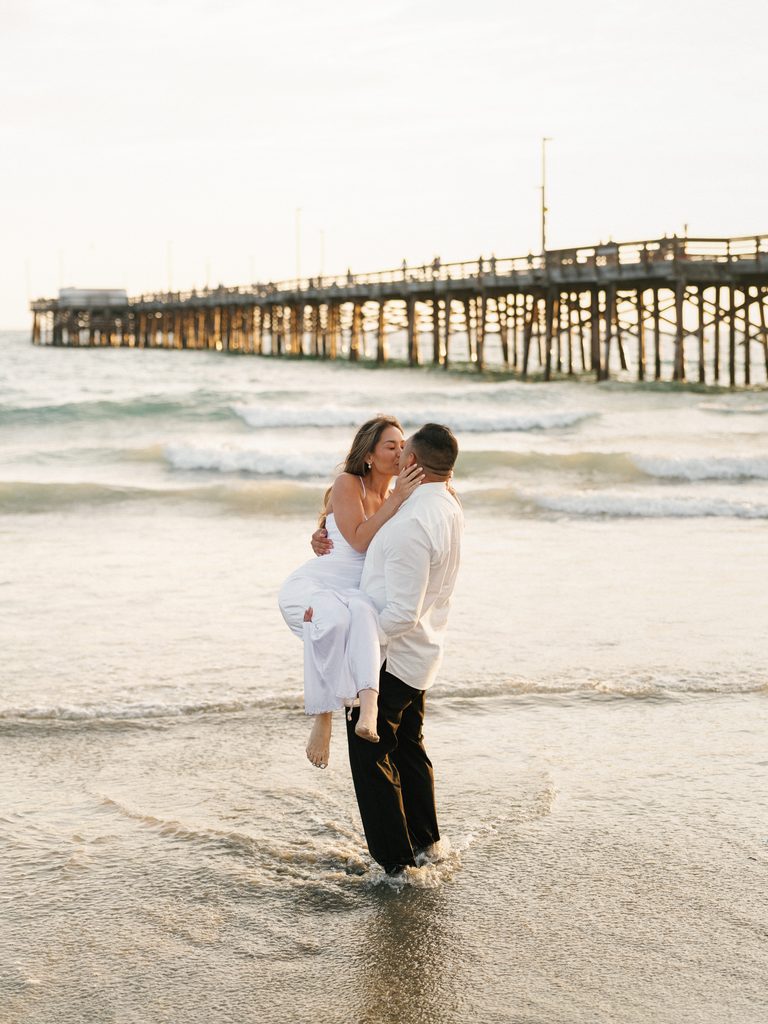
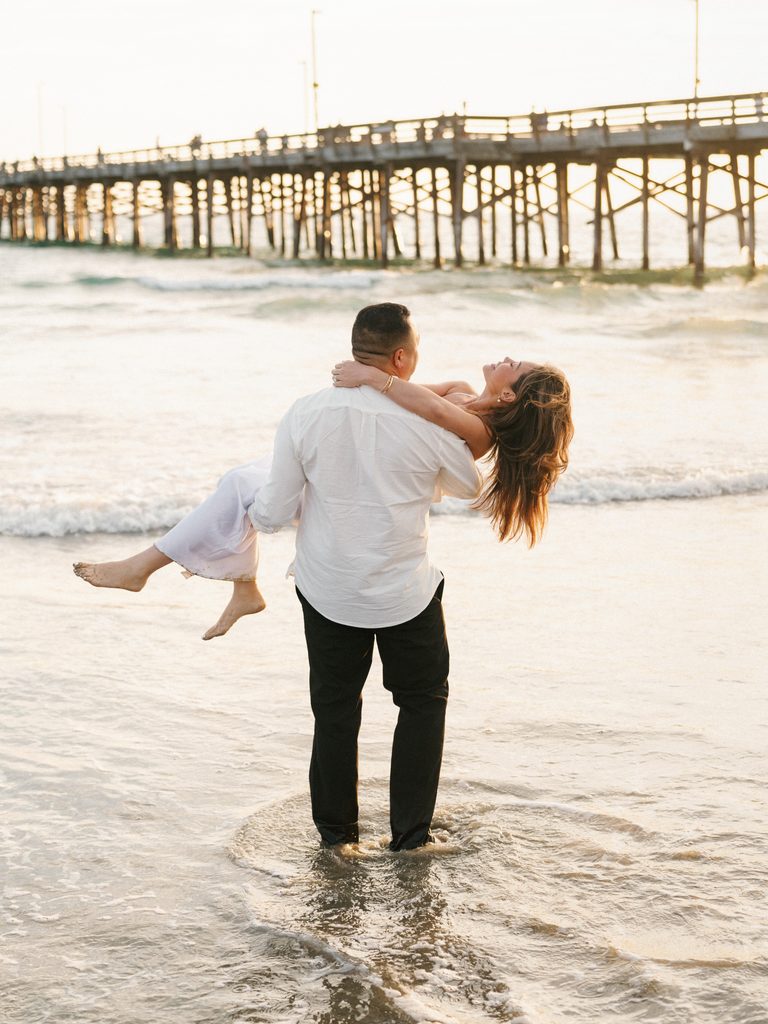
A pier brings a more structured setting. Wooden decking, railings, pilings, and the long perspective over the water give photographs strong lines and a connection to the surrounding coastline. The space is usually shared with other visitors, fishermen, and people moving along the deck, so the session follows the public activity of the location. Walking on a pier also feels different from moving across sand, with firmer footing and less room to step aside when the walkway becomes busy.
A bay-side location often has a quieter relationship with the water. Smaller beaches, boats, docks, and reflections can create a more sheltered setting, with less direct exposure than an open ocean beach in some locations. The shoreline may be narrower, and the surroundings can include marinas, residential areas, or landscaped paths. The exact character depends on the bay and the access points available for photography.
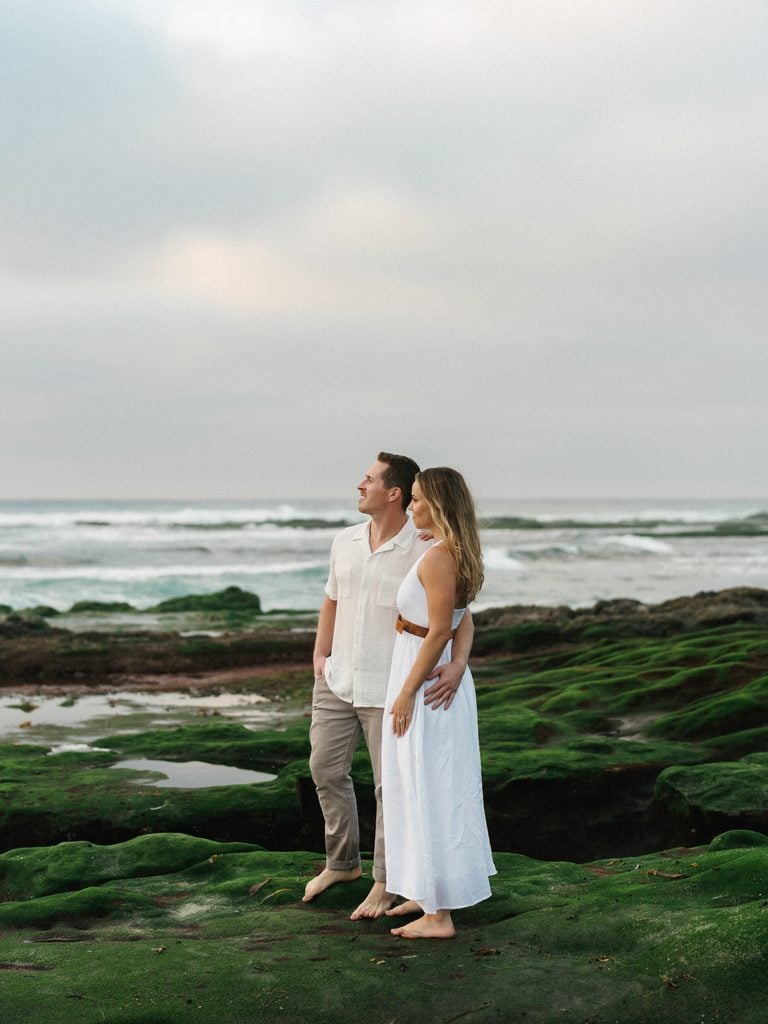
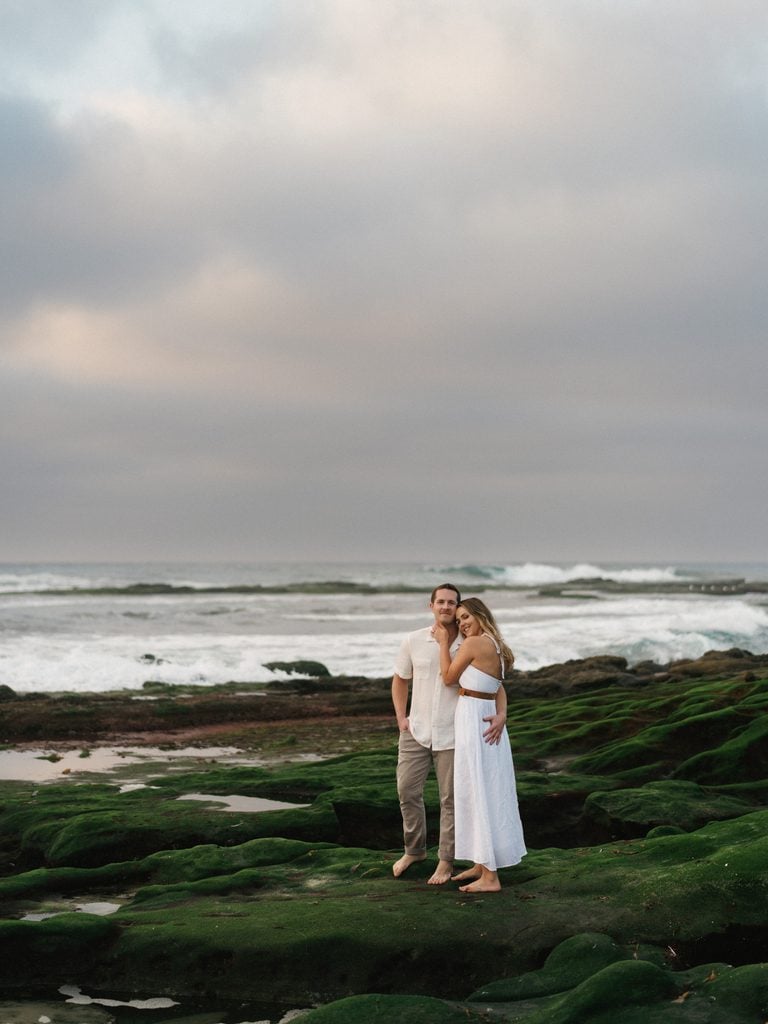
These settings also produce different visual results. Open sand and surf give the session a wide coastal backdrop, while a pier adds architectural lines and movement across the water. A bay can bring reflections, boats, and closer views of the shoreline. The photographer can discuss these differences with the couple before selecting a location, keeping the preferred experience and the practical conditions in view.
Location-Specific Access and Photography Requirements
A location name needs to be specific before access and photography arrangements can be planned. Newport Beach, California, offers a useful example because its coastline includes Newport Pier, Balboa Pier, ocean-facing beaches, and bay-side beaches. These are separate settings, each with its own access points, public facilities, hours, and photography considerations.
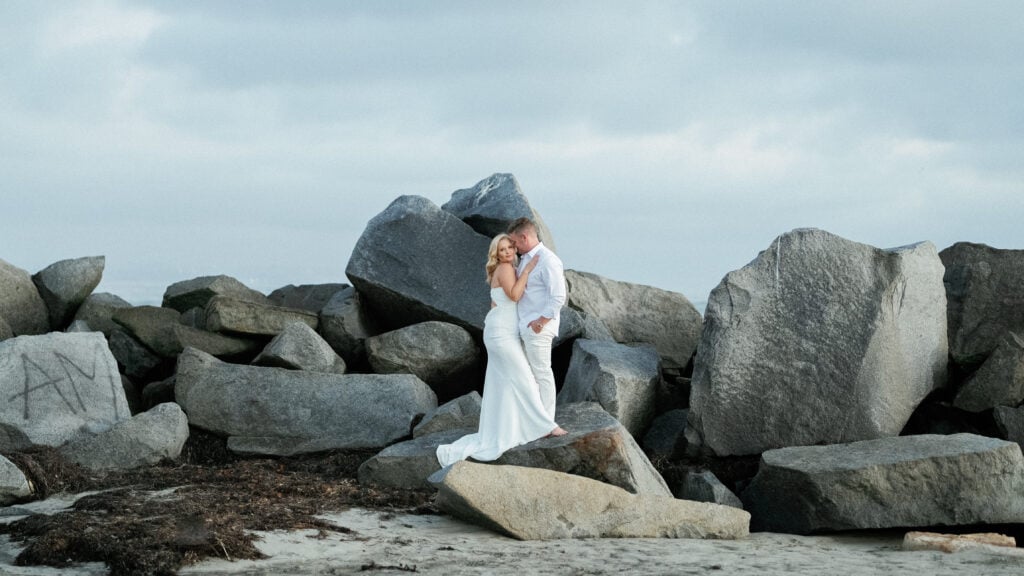
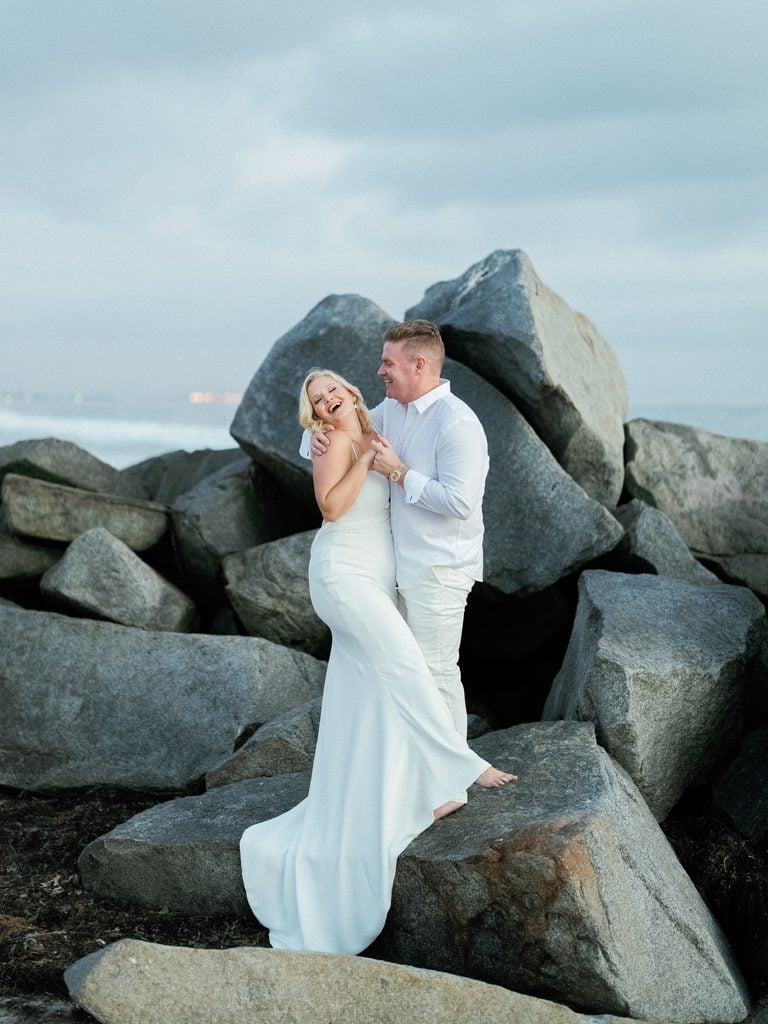
Newport Pier and Balboa Pier are public structures with their own operating hours and visitor activity. The surrounding beaches are managed separately, and public beach access does not automatically include permission to reserve an area or set up equipment. Crystal Cove State Park, farther south along the coast, operates under state park rules. Its access arrangements and restrictions should not be assumed to match those of Newport Beach.
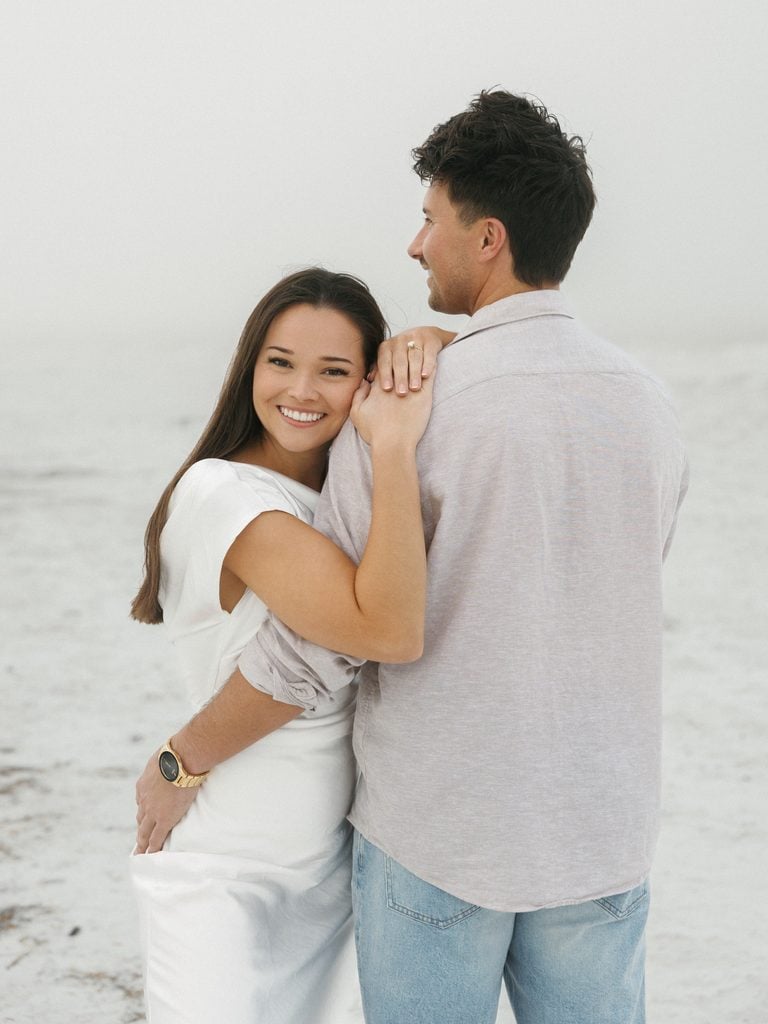

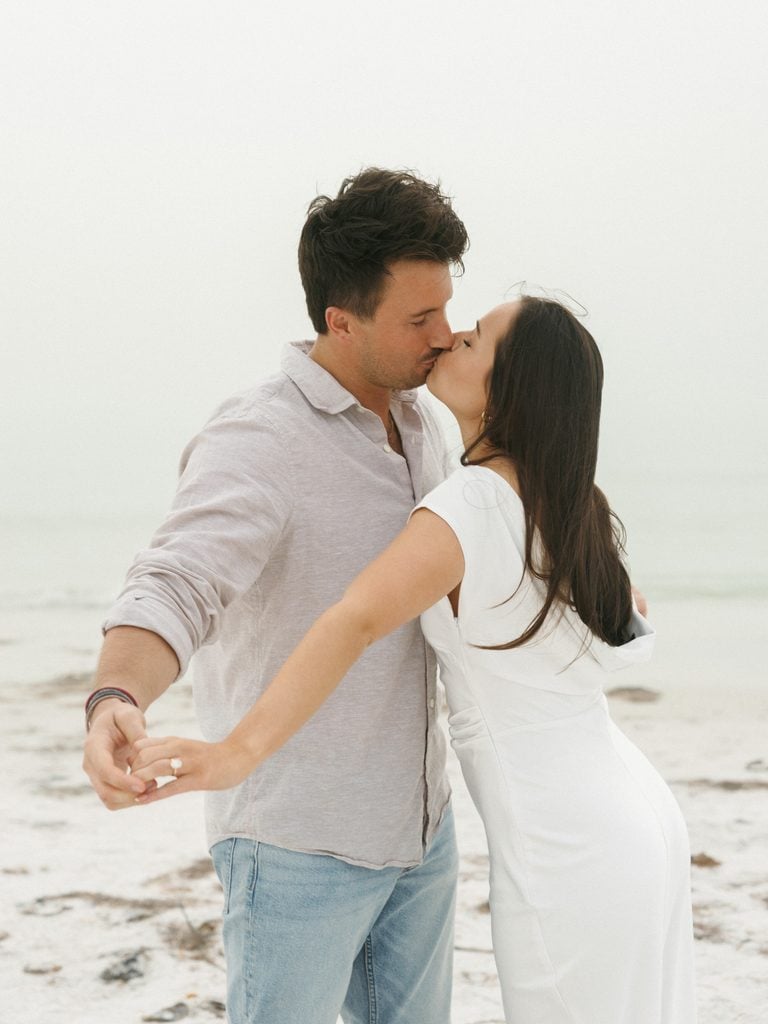
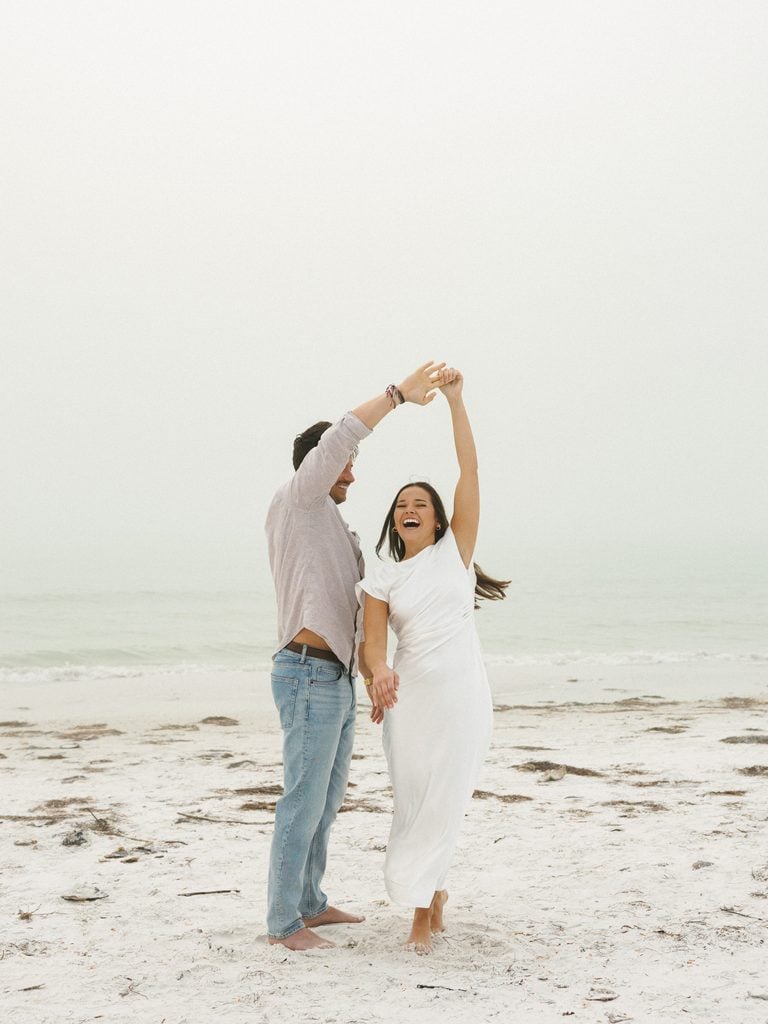
Photography and film requirements also depend on the authority responsible for the exact location. A public engagement session may have different requirements from a commercial production, particularly when the work involves a larger crew, lighting equipment, tripods, or other production gear. Drone use is a separate matter and requires its own confirmation. Current requirements should be checked with the relevant city, park, or property management office before the session is scheduled.


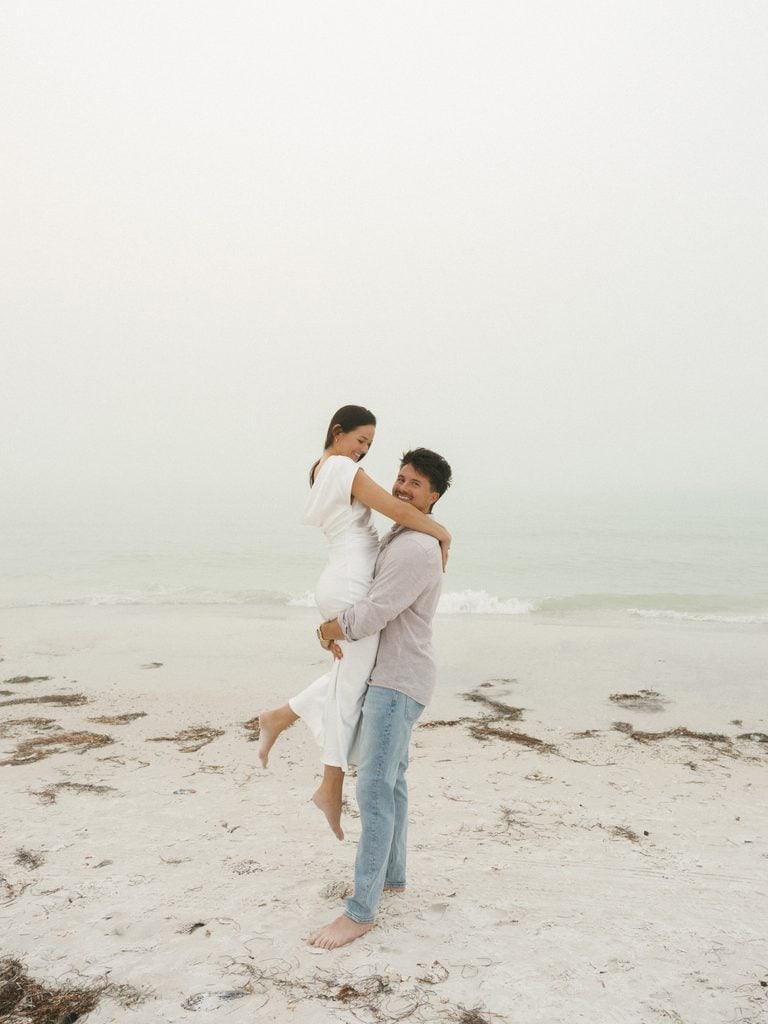
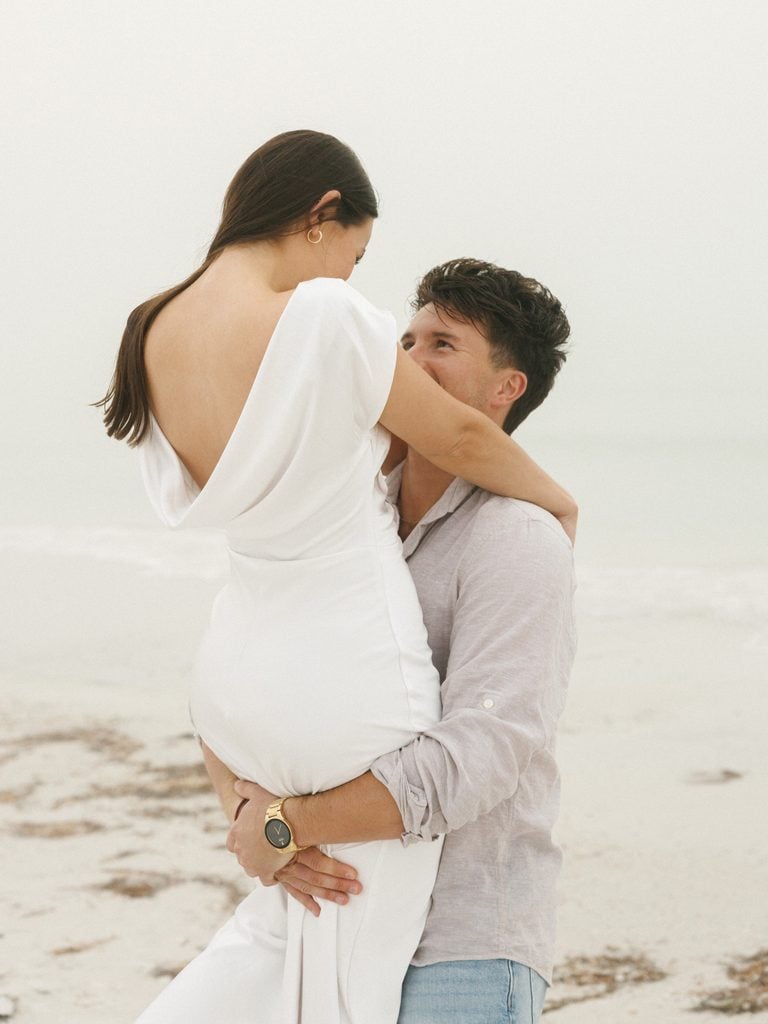
Public locations also mean that other visitors may appear in the background. A photographer can work with the available space and choose angles that account for foot traffic, but a completely empty beach or pier cannot be guaranteed. A nearby alternative can give the session another option if the preferred area is especially busy.
Water, Wind, and Available Light
Waterfront conditions can change the appearance and practicality of a session within a short period. Tide is particularly relevant at ocean beaches and rocky shorelines. At high tide, the available sand may become narrower, especially near a pier or between rocky outcrops. Lower water can expose more shoreline and reveal details such as tide pools and marine life. Checking the tide forecast for the session date helps establish which parts of the location are likely to be accessible.
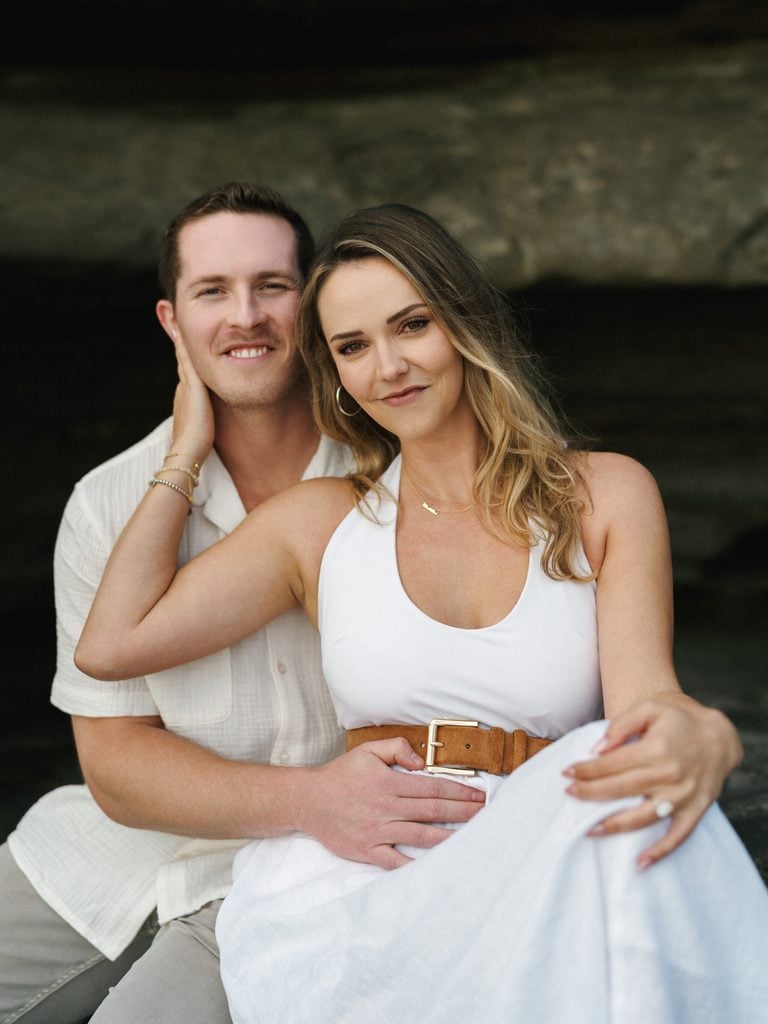
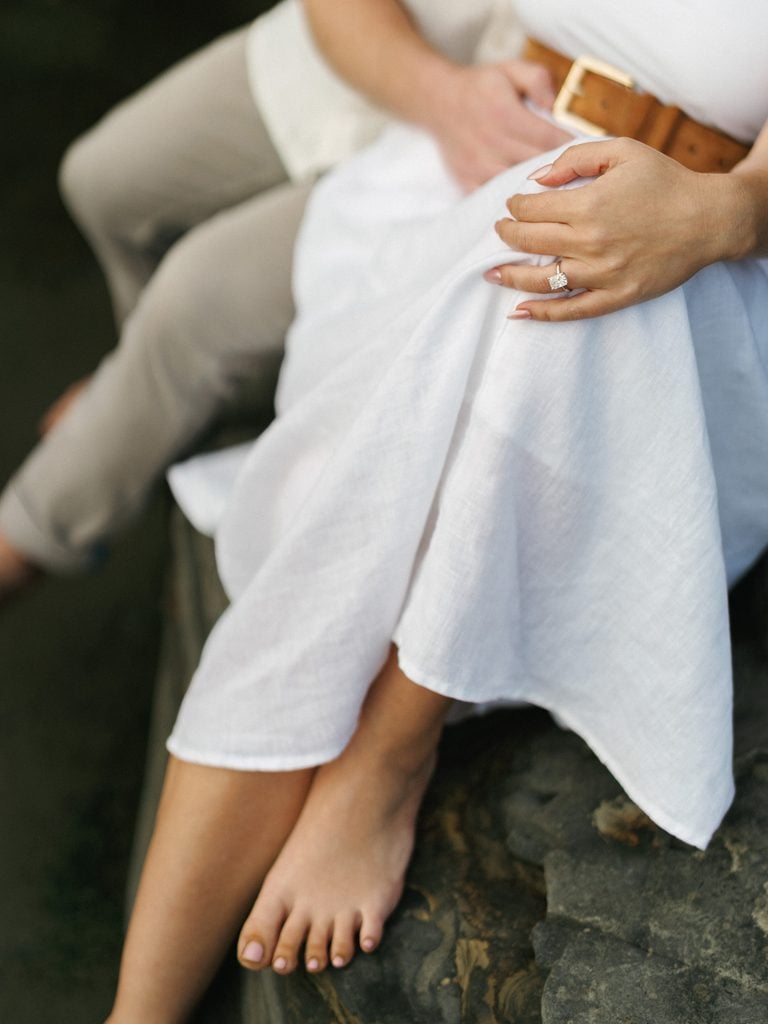
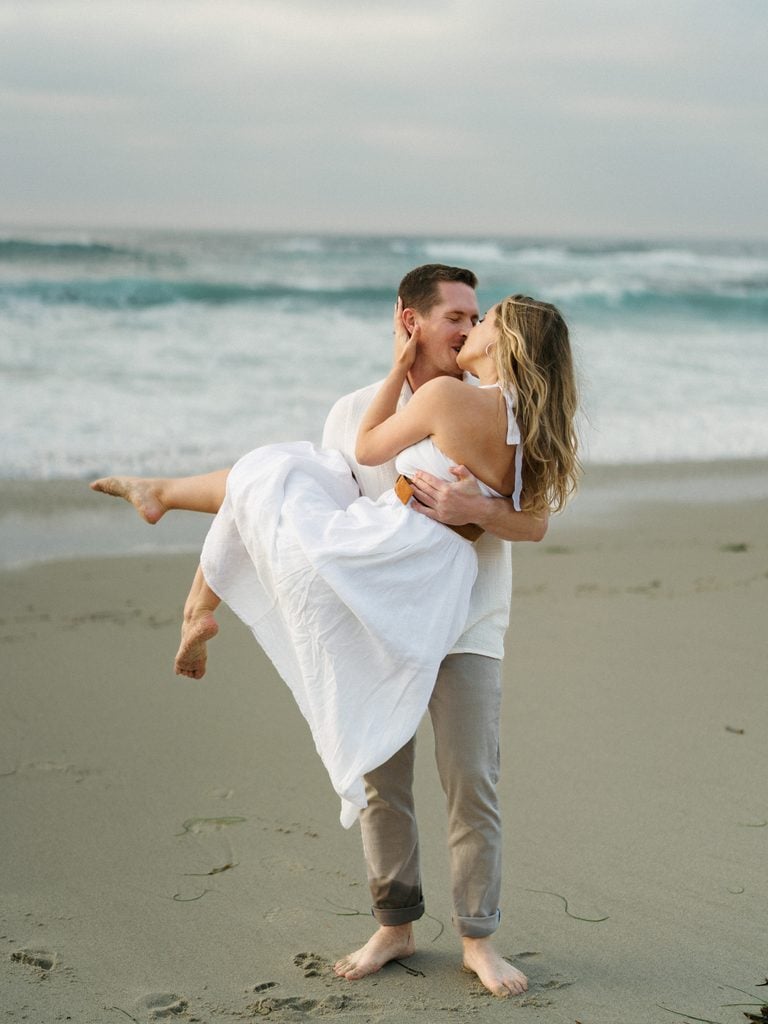
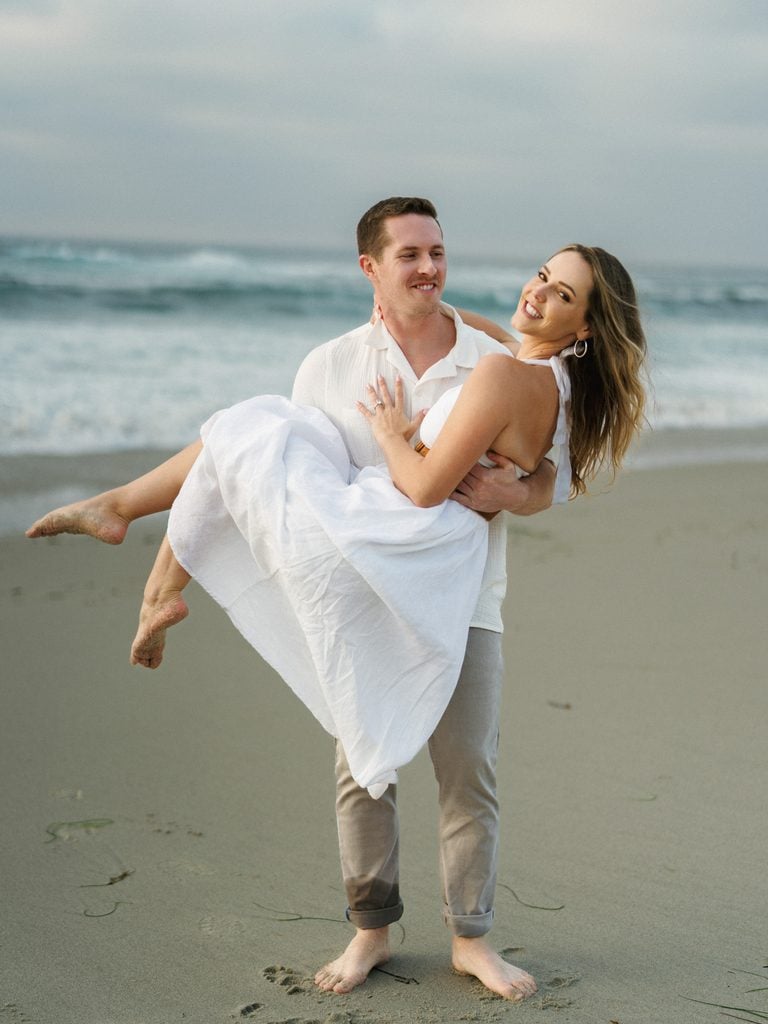
Wind is another important consideration. Open beaches and exposed piers can feel quite different from sheltered areas beside a bay. Coastal breezes may lift hair and clothing, while stronger gusts can make it harder to keep a consistent pace or record clean spoken audio. A bay-side setting can offer more shelter in some locations, although local conditions still need to be checked.

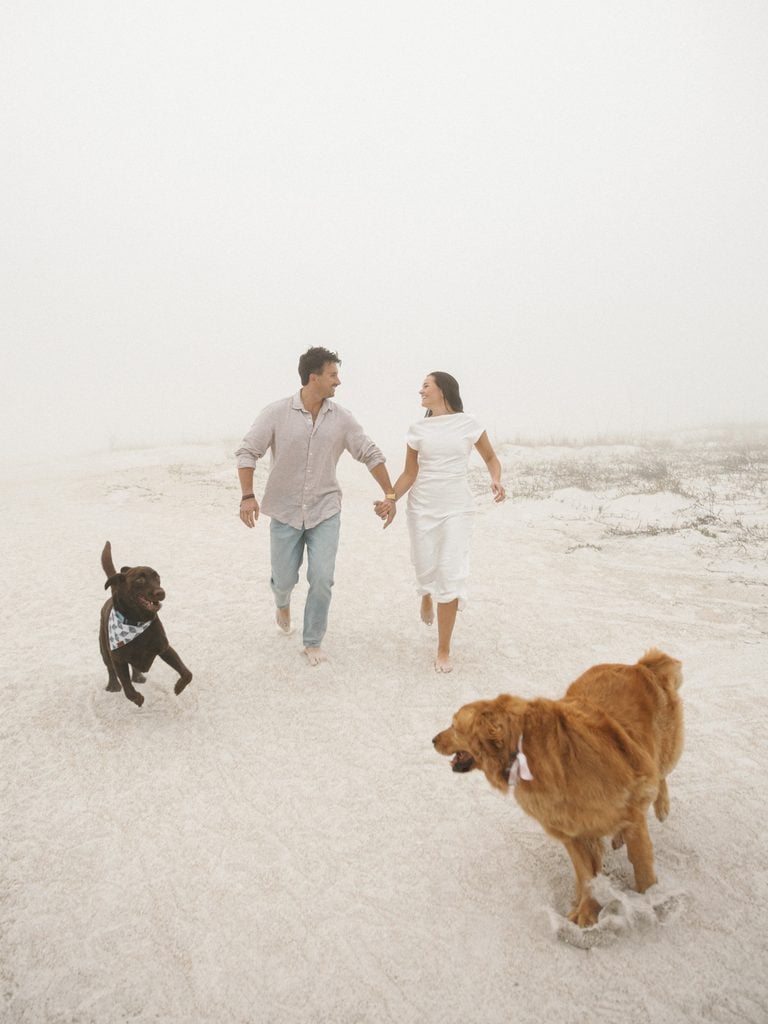

Available light depends on the wedding or engagement session date, the orientation of the shoreline, and the surrounding landscape. A beach facing west may offer direct views toward the setting sun, while a pier or bay-side path may have a different relationship with the afternoon light. Buildings, cliffs, trees, and other structures can also place parts of the location in shade before official sunset.
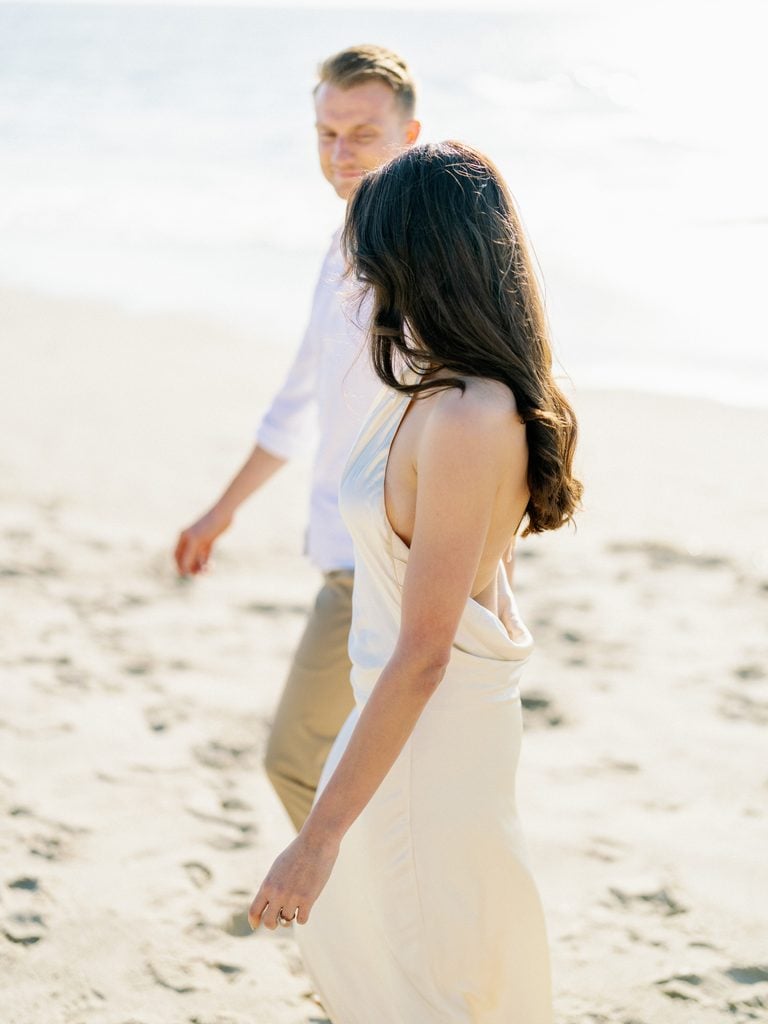
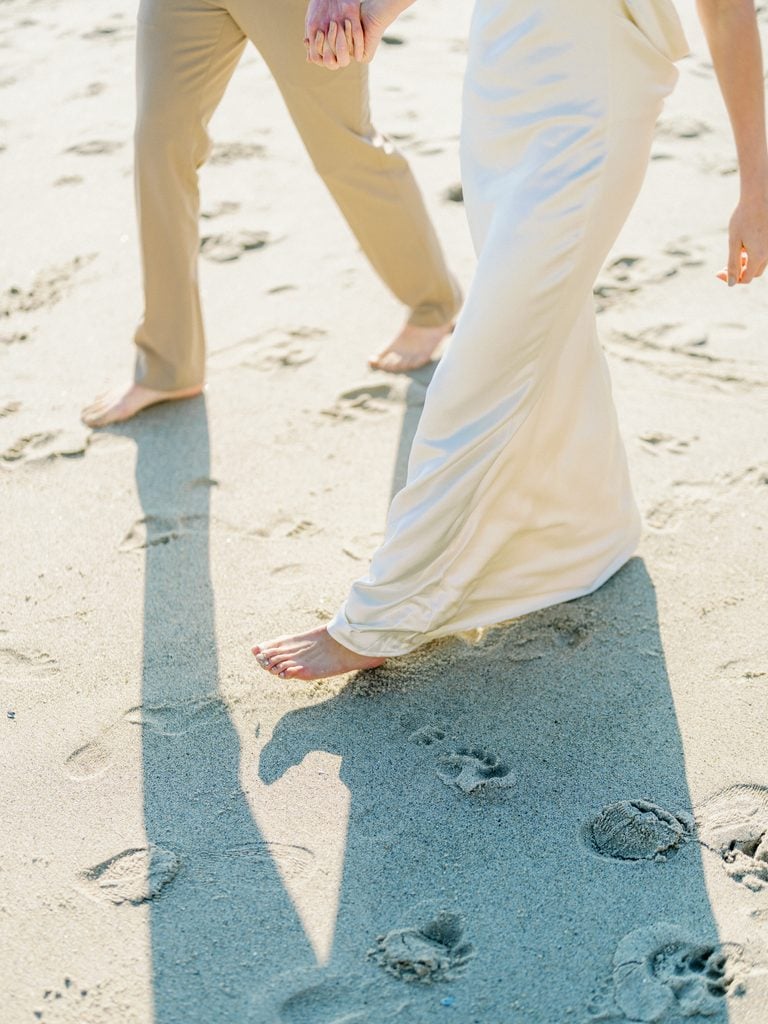
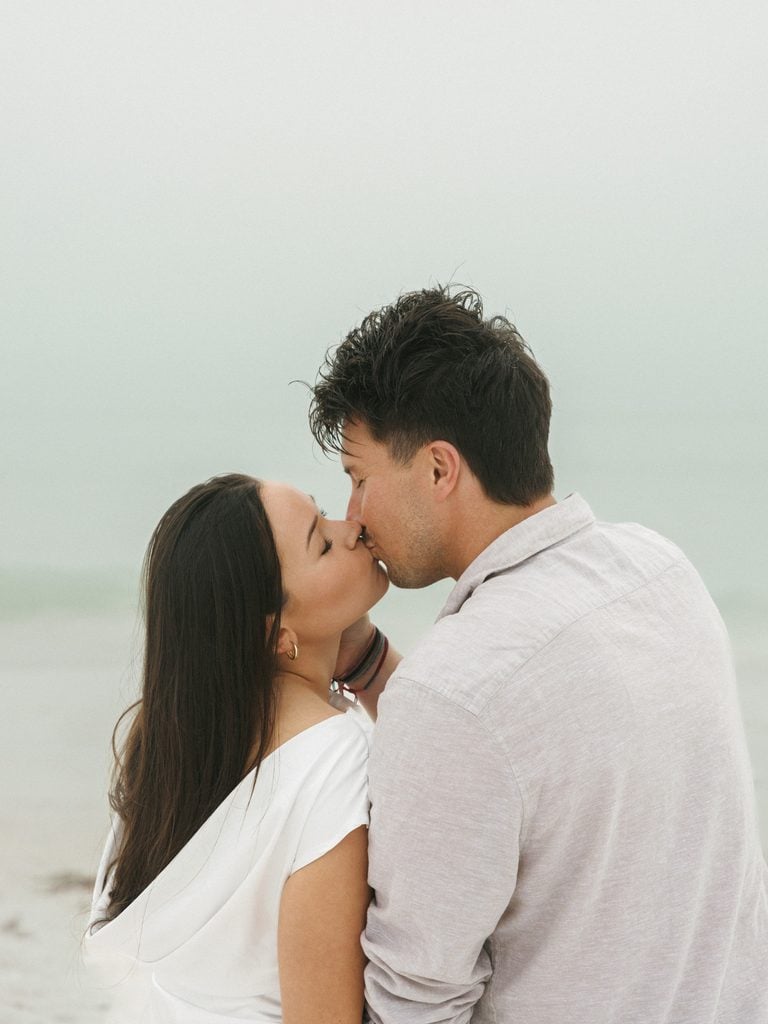
Water reflects light back toward the couple, and bright sand can increase the overall contrast in a photograph. The photographer can adjust exposure and positioning to keep skin tones natural while retaining detail in the water and sky. For film coverage, the filmmaker also needs to account for wind and surf when recording ambient sound or conversation.
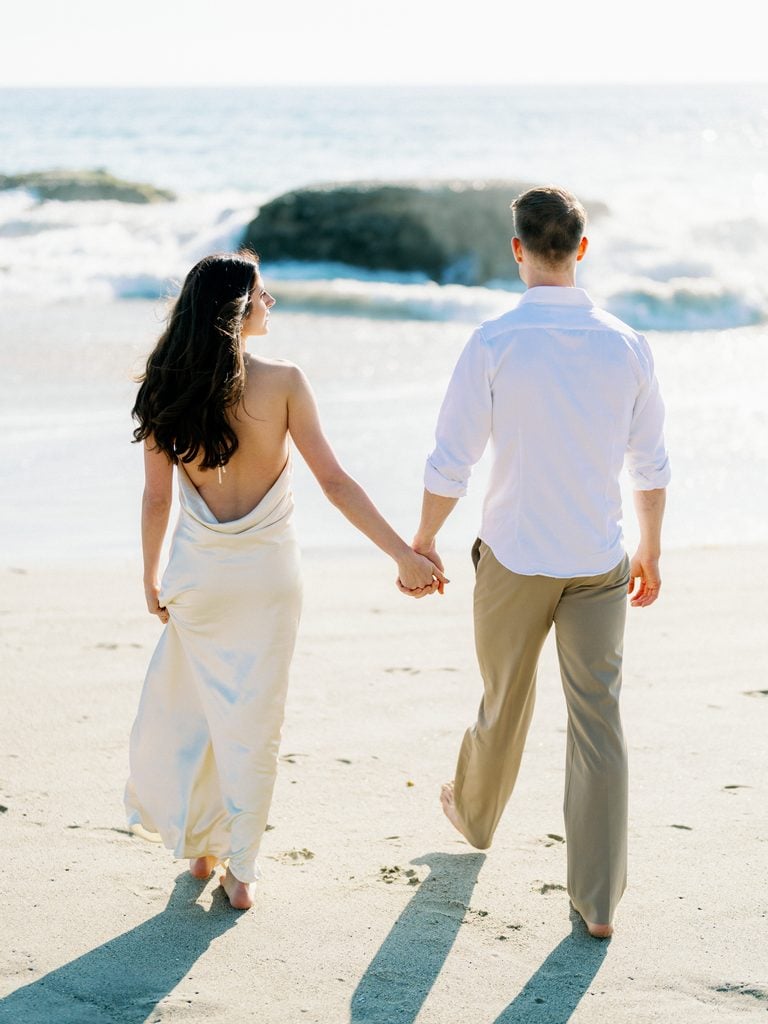
A preferred time should be chosen for the exact location and date. The photographer can check the sun’s position, tide, and expected conditions when planning the session, while keeping enough flexibility for changes in weather. No location or time can guarantee calm water, an empty shoreline, or a particular sunset.
Movement and Clothing for Different Waterfront Settings
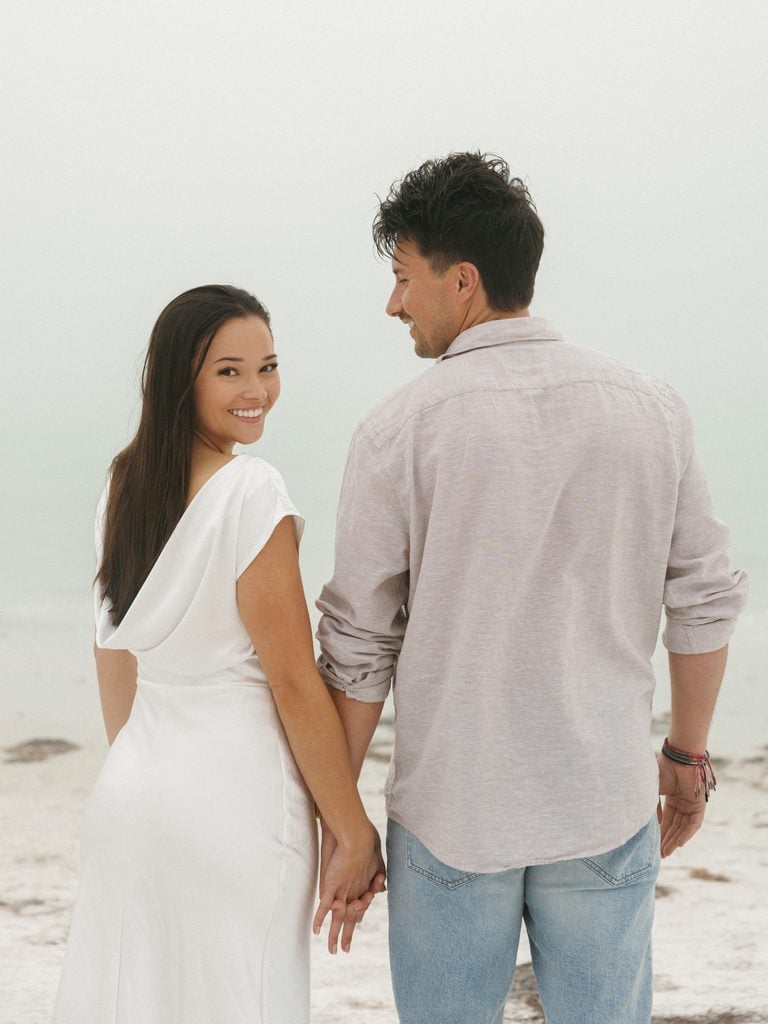
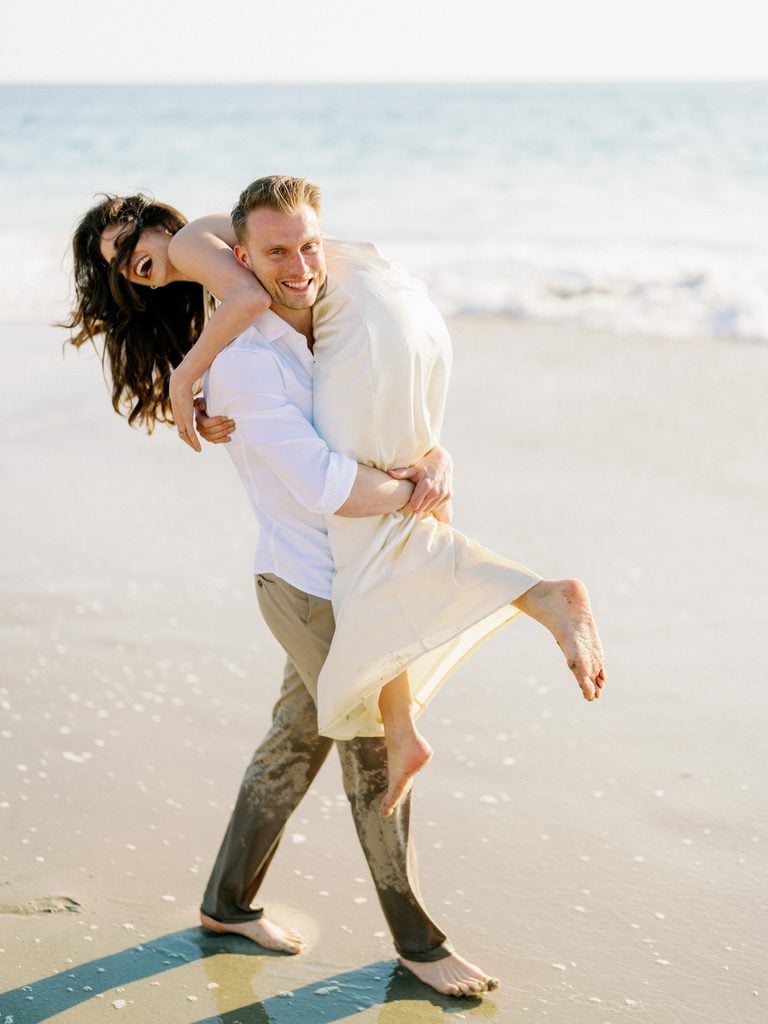
The surface underfoot influences what feels comfortable during a waterfront session. Sand can make walking slower, particularly on soft or uneven sections of the beach. Barefoot photographs may suit a short shoreline sequence, while shoes that are easy to remove can make the walk between the parking area and the sand more convenient. On a pier, firmer footwear is generally more practical for walking along the deck.
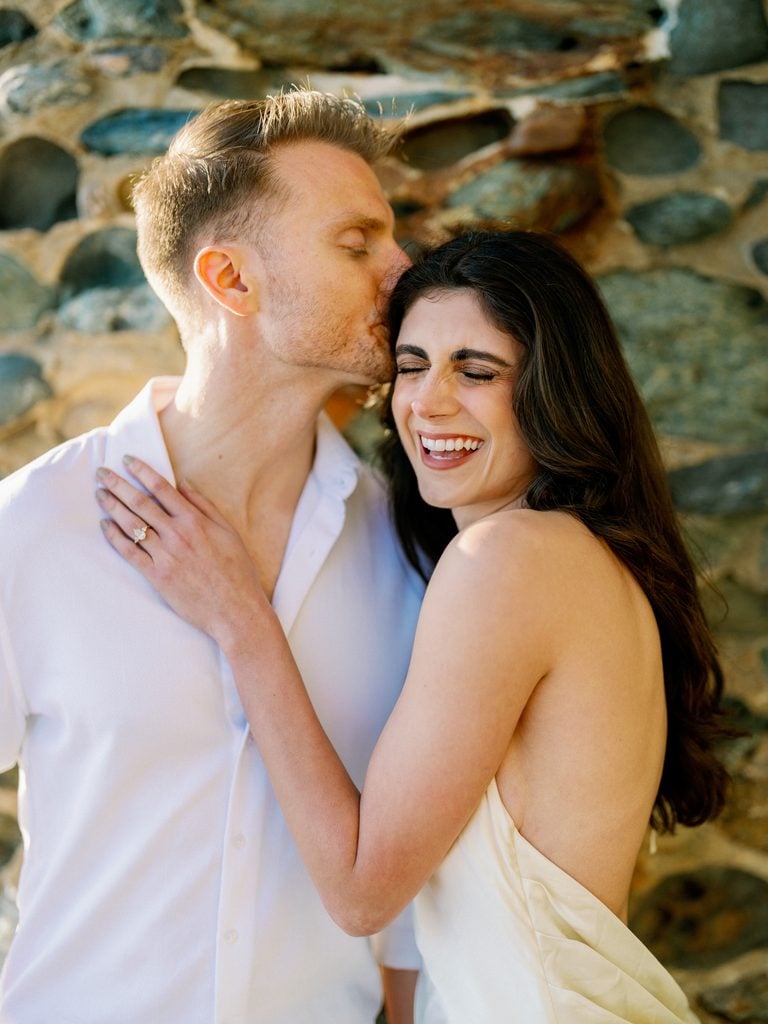
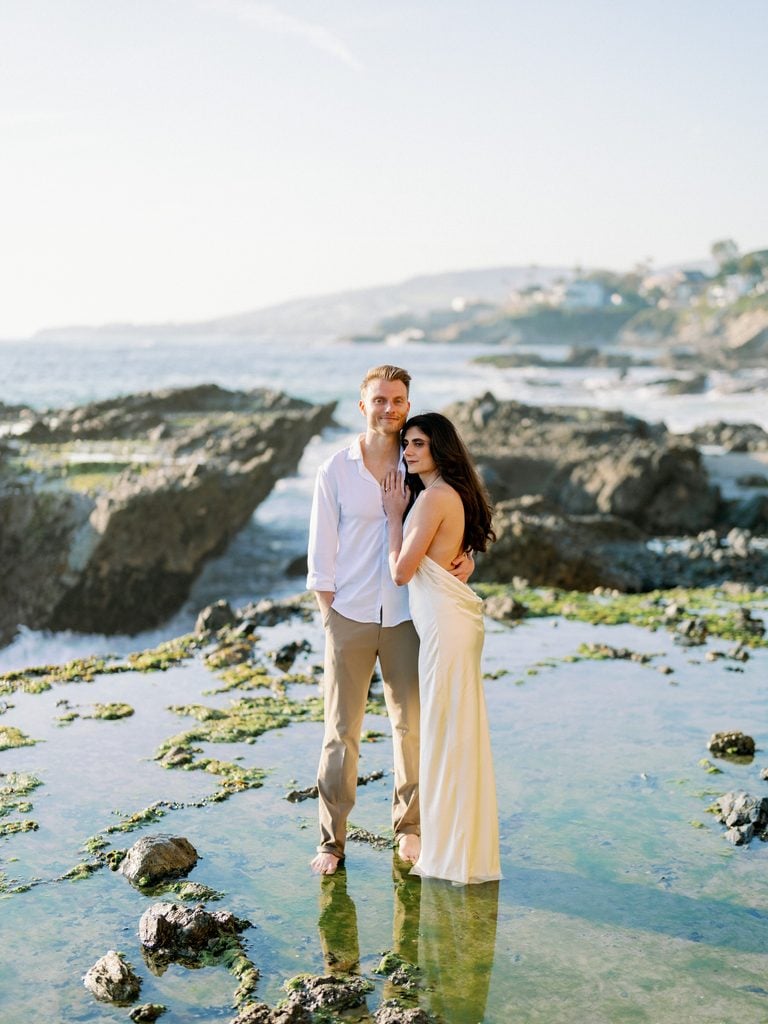
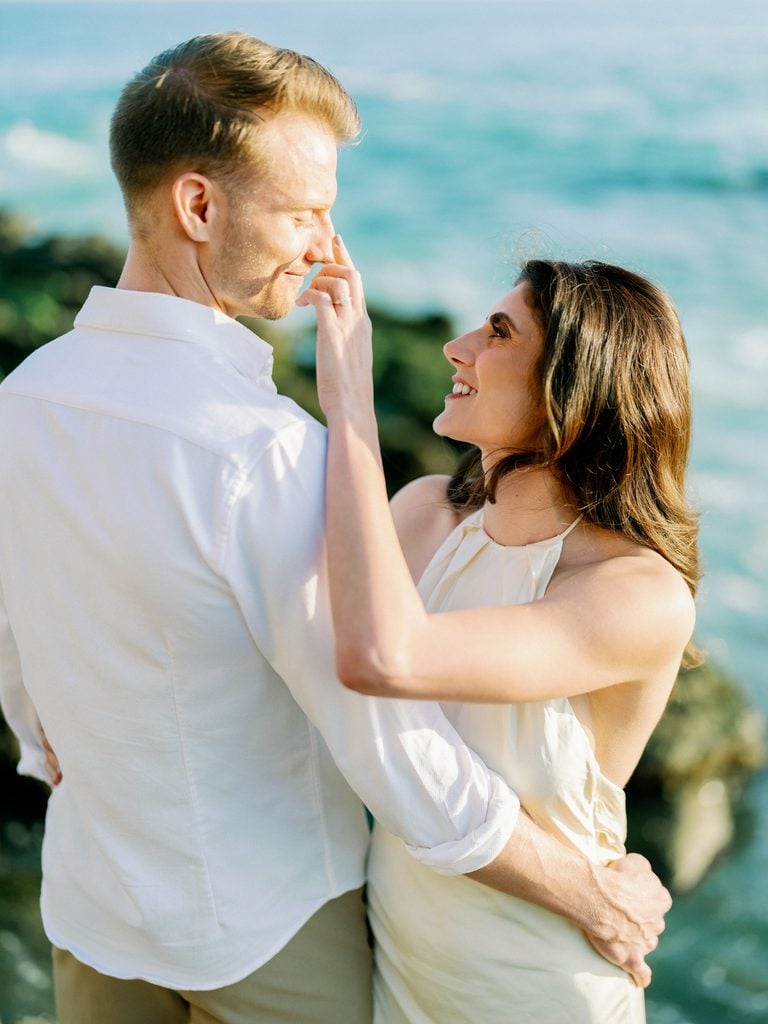
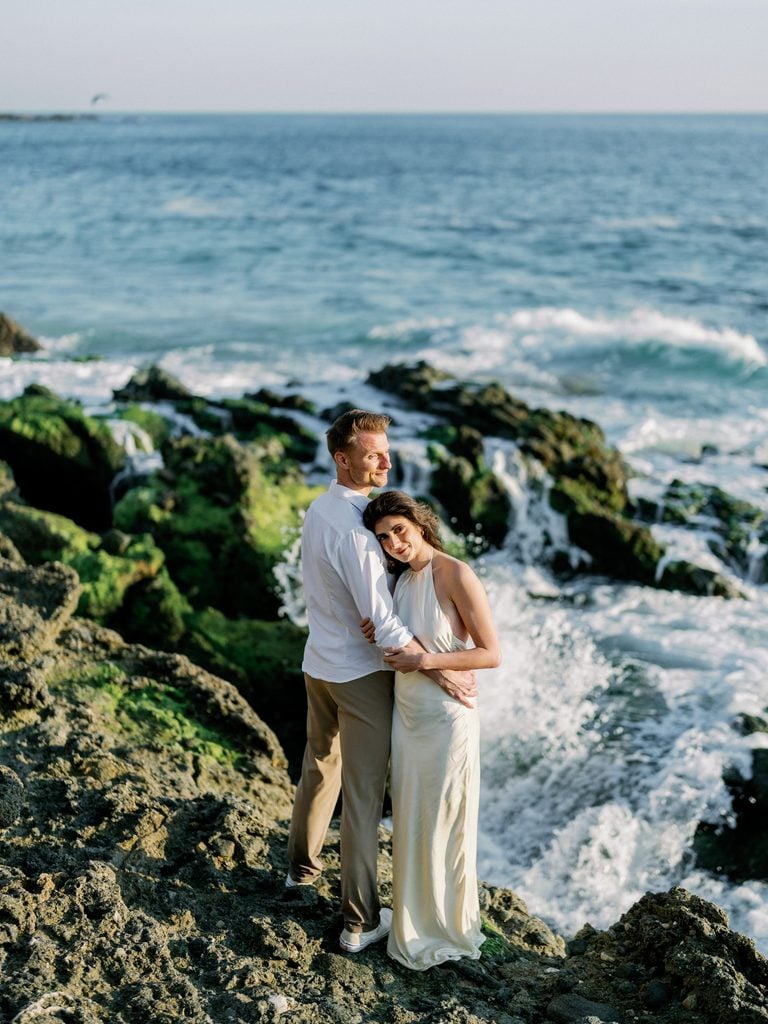
Bay-side locations can involve a mixture of paved paths, docks, grass, and small sandy areas. The route determines whether comfortable walking shoes, sandals, or a change of footwear will be useful. These details are worth considering alongside the clothing selected for the photographs.
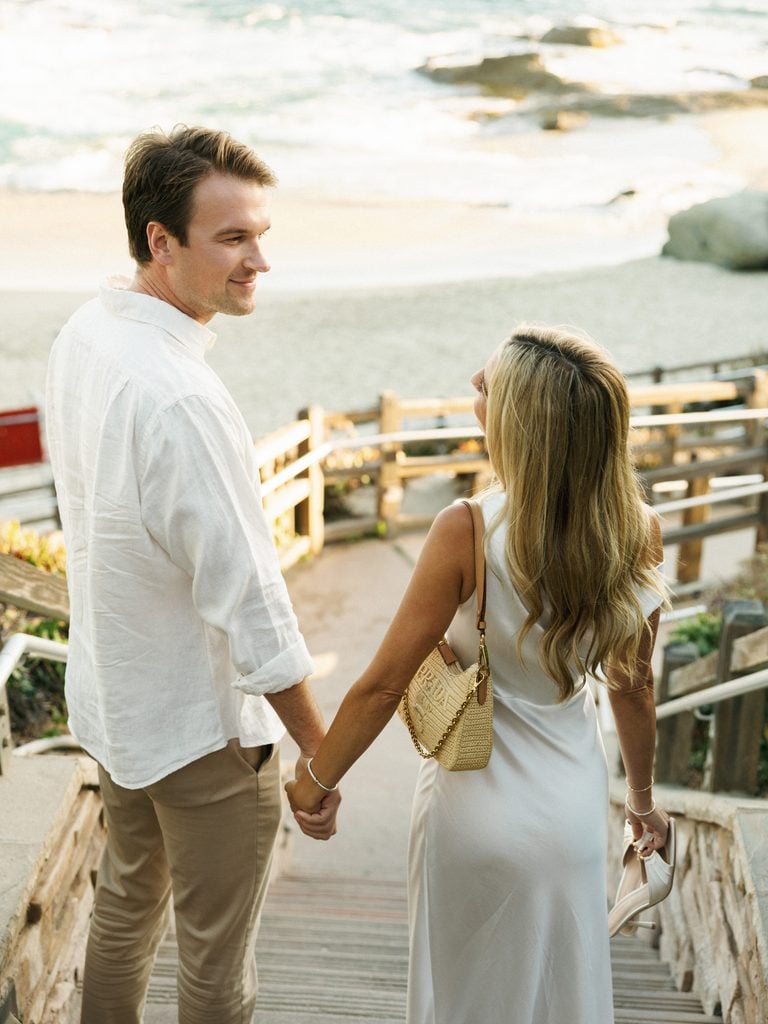
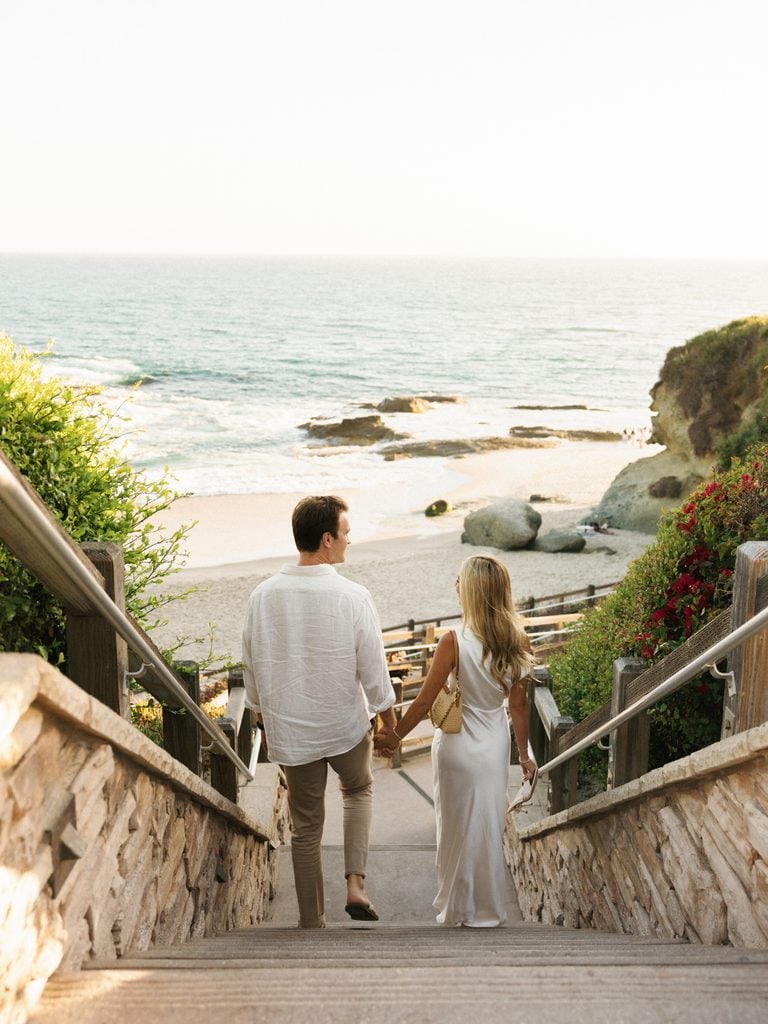
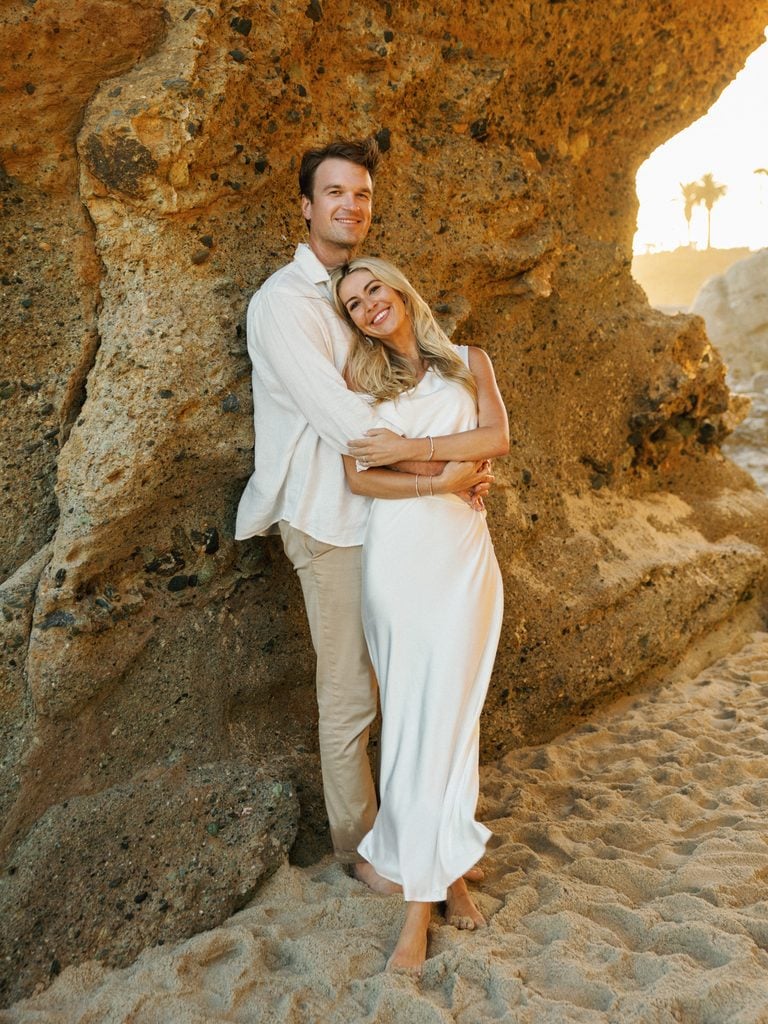
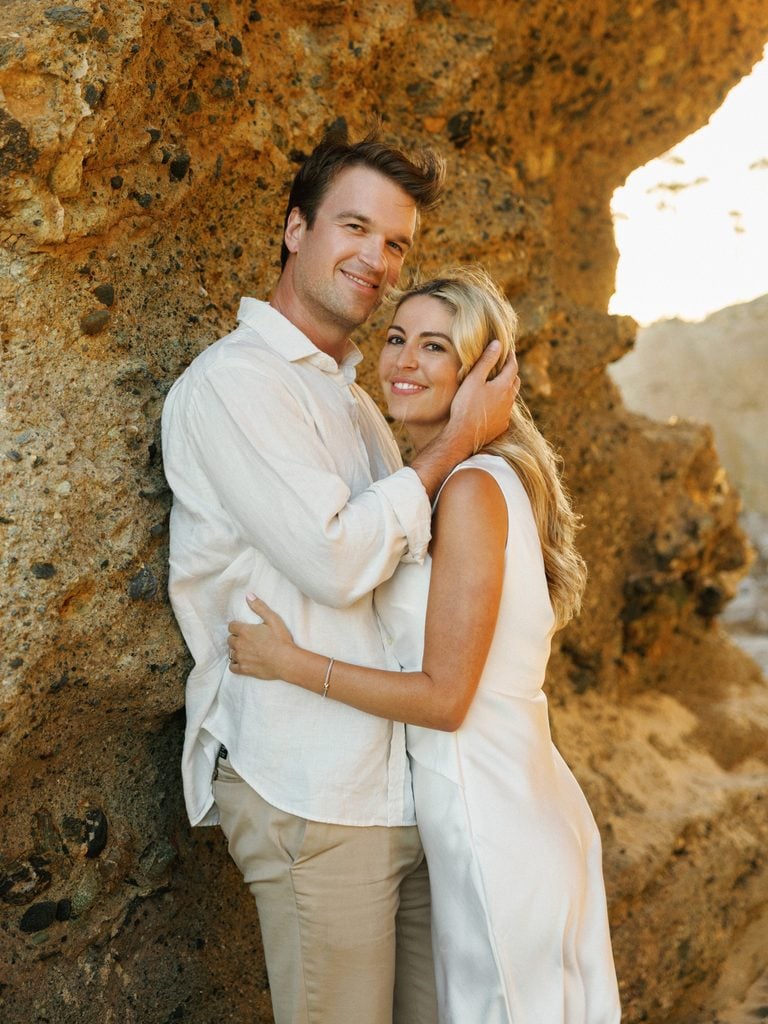
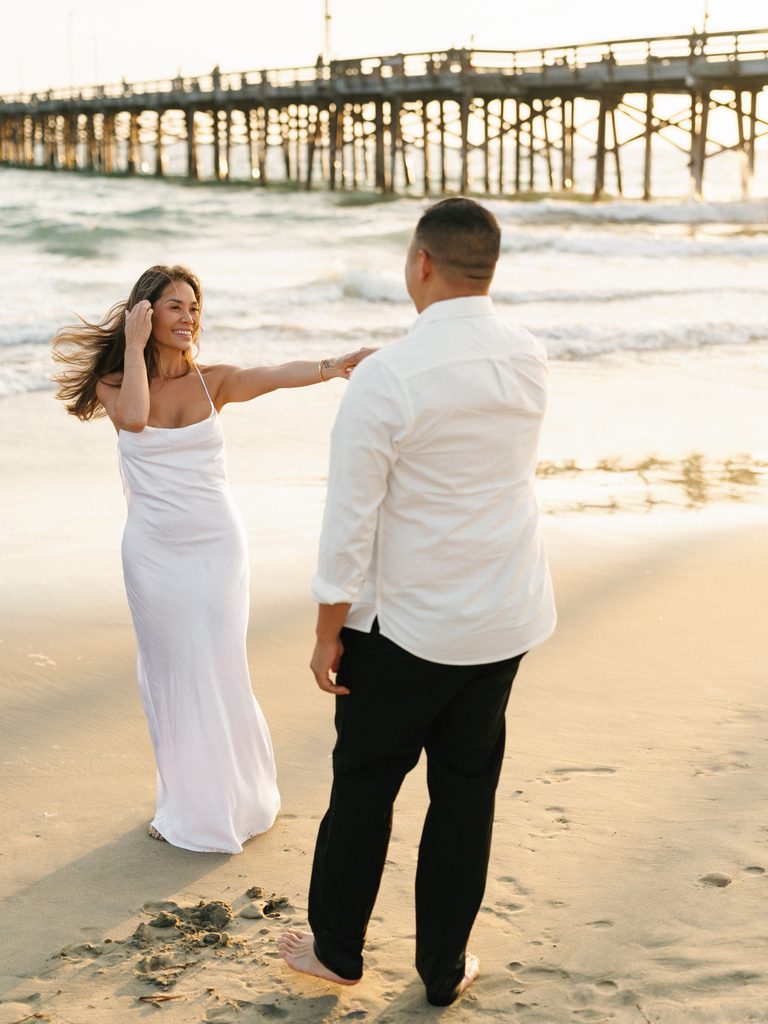
Layers can be useful near the water, where a breeze may make the air feel cooler than expected. Clothing that moves naturally in the wind can add movement to photographs and film, while long hems may collect sand or become damp near the shoreline. A light jacket or wrap can remain available between photographs, especially during an evening session.
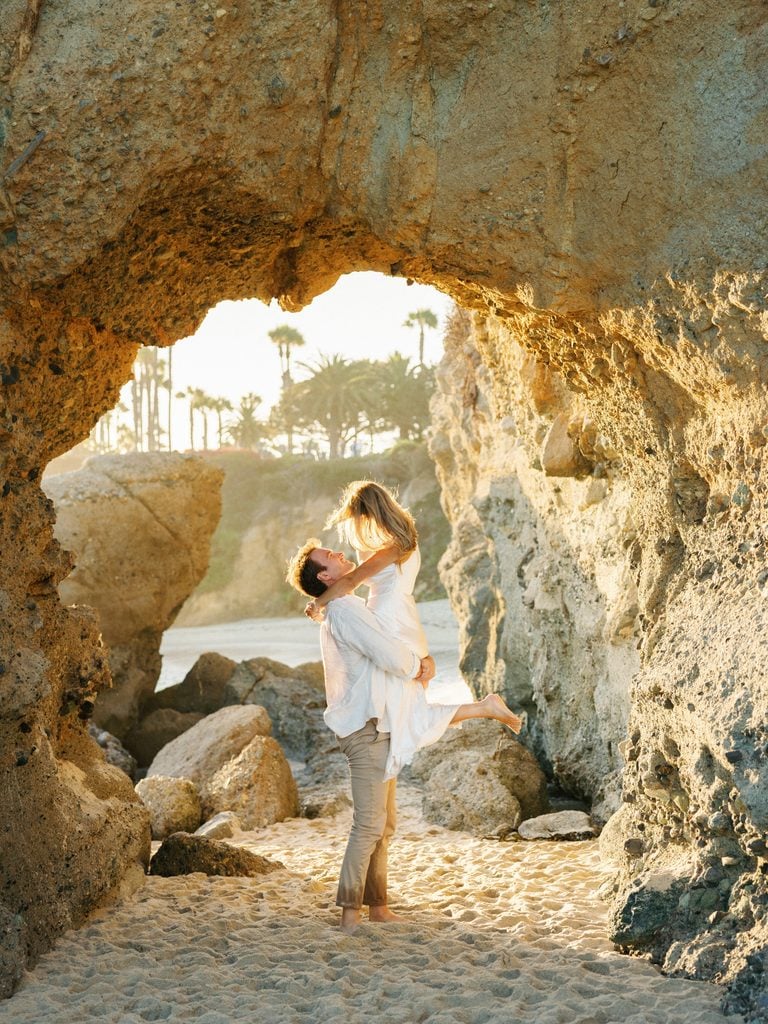
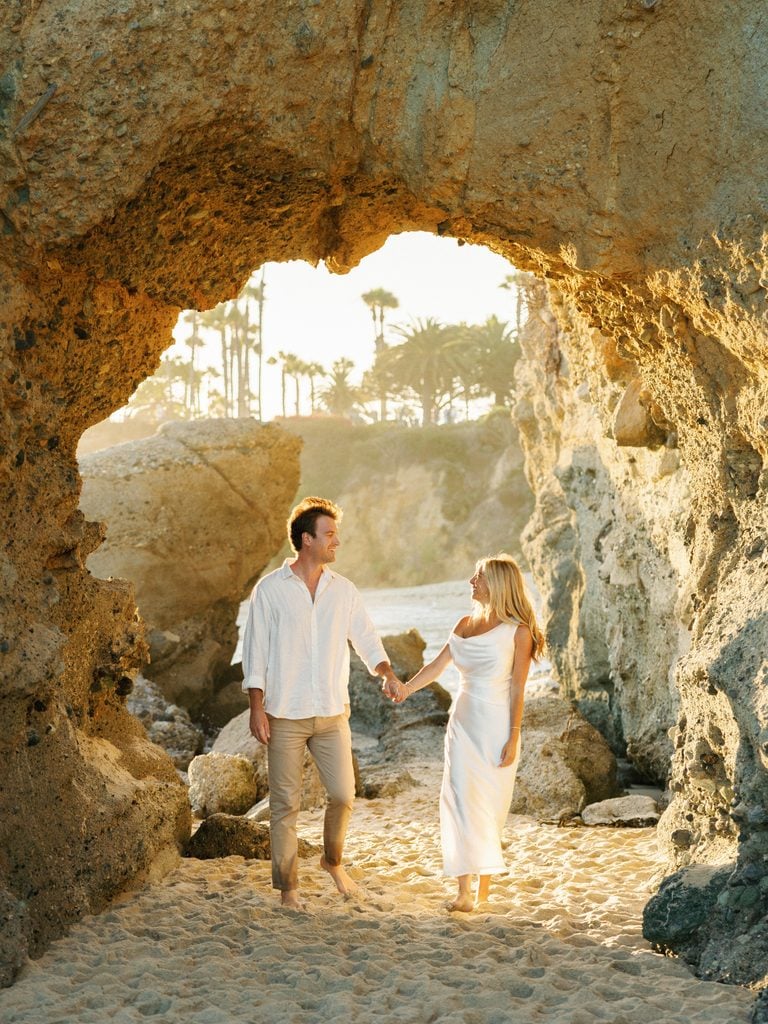

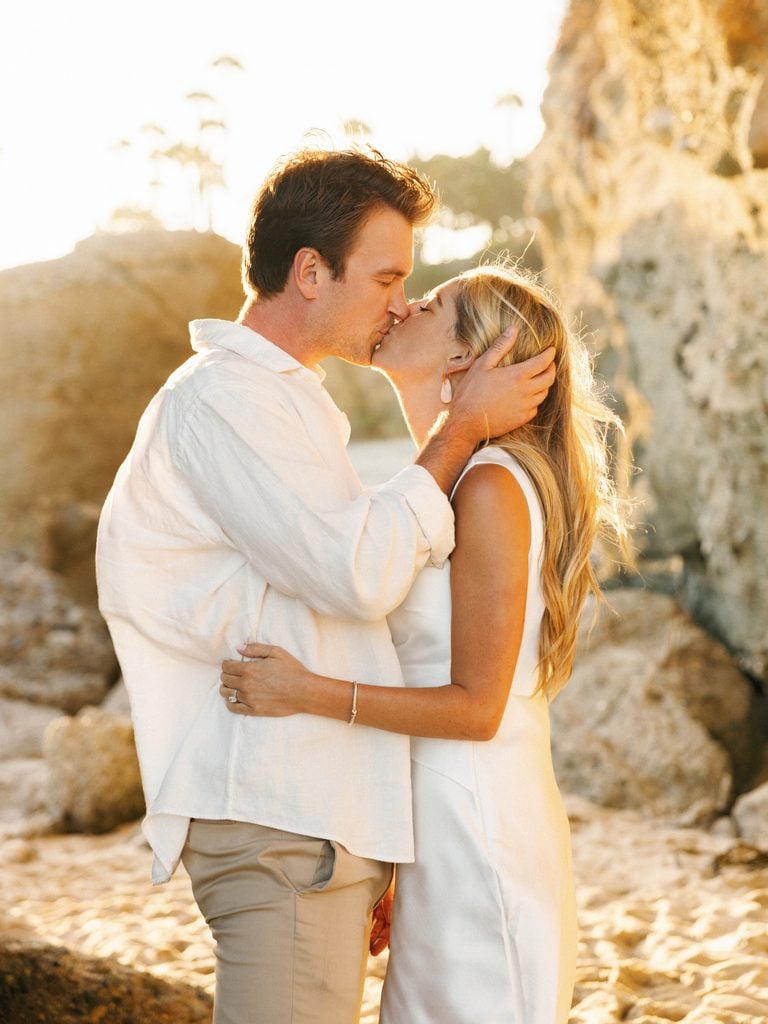
Belongings can stay simple. A small bag, water, a towel for sandy feet, and a place to leave extra shoes can make movement between settings easier. If another person accompanies the couple, they can hold these items while the photographer works. Salt spray and sand can also affect personal belongings and camera equipment, so keeping bags and loose items away from the water’s edge is sensible.
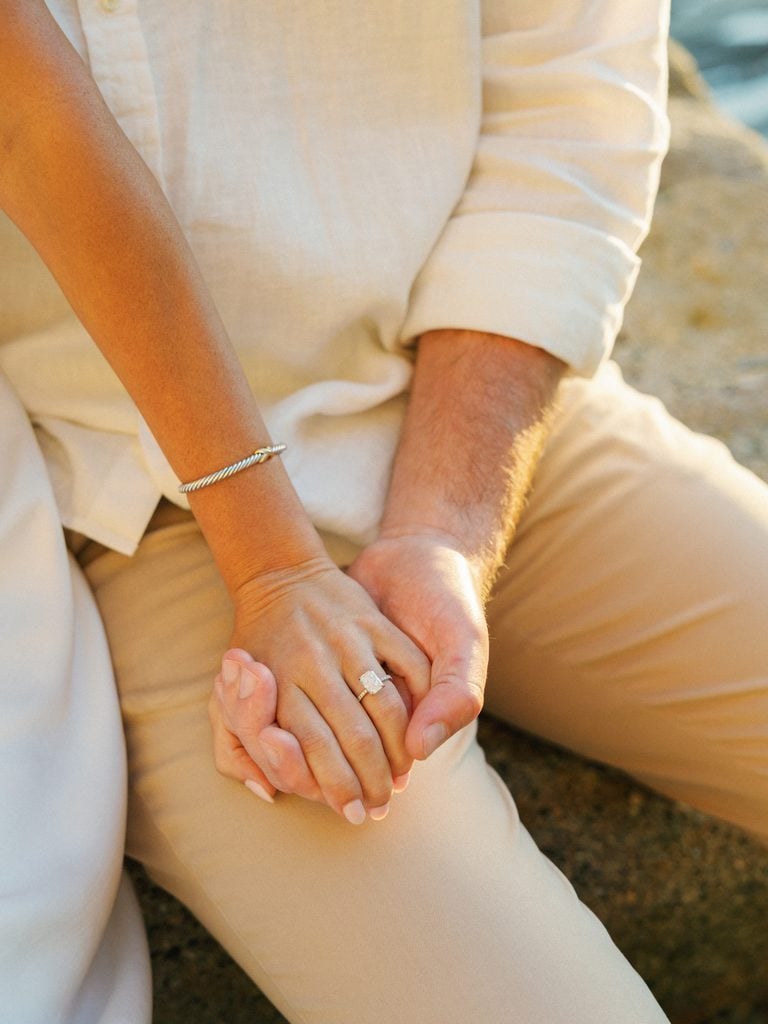


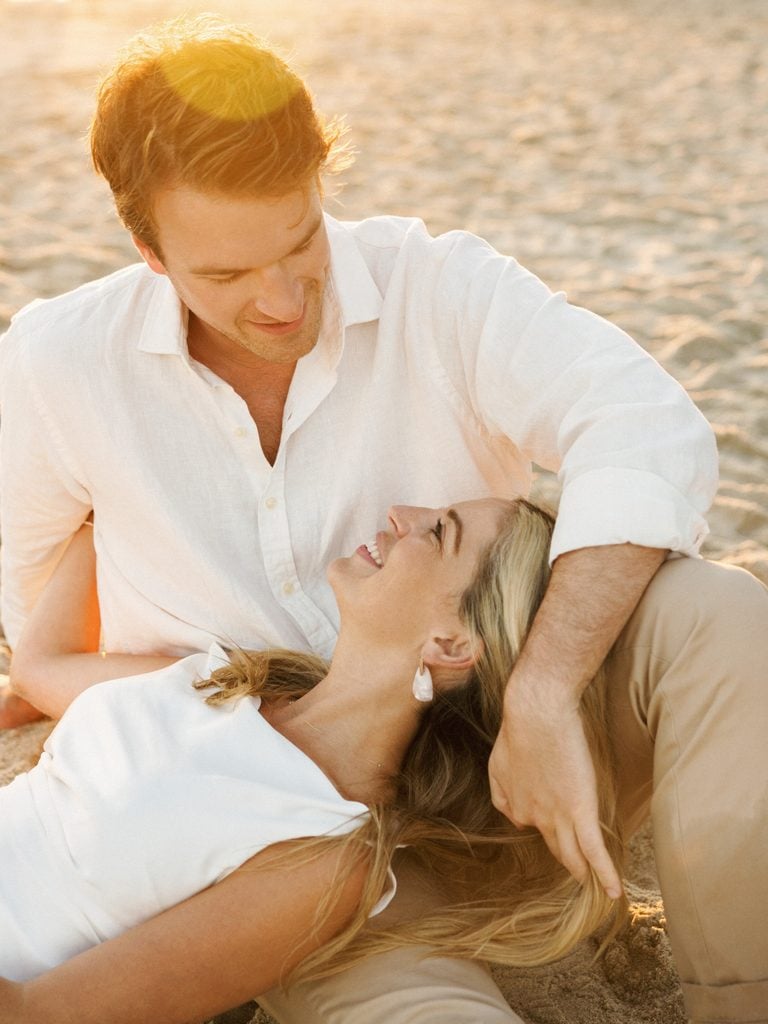
The preparation for a waterfront session is closely tied to the chosen location. A beach walk, a pier sequence, and a bay-side session call for different footwear, clothing, and practical arrangements. Broader themes and activities can be explored separately, while the preparation here follows the conditions of the setting.

Session Routes and Alternative Locations
A waterfront session can feel more relaxed when it has one primary setting and a nearby alternative. The primary location can carry most of the portraits, while a second area offers a different background or a more sheltered option if conditions change. The route should account for walking distance, access points, public activity, and the time needed to move between settings.
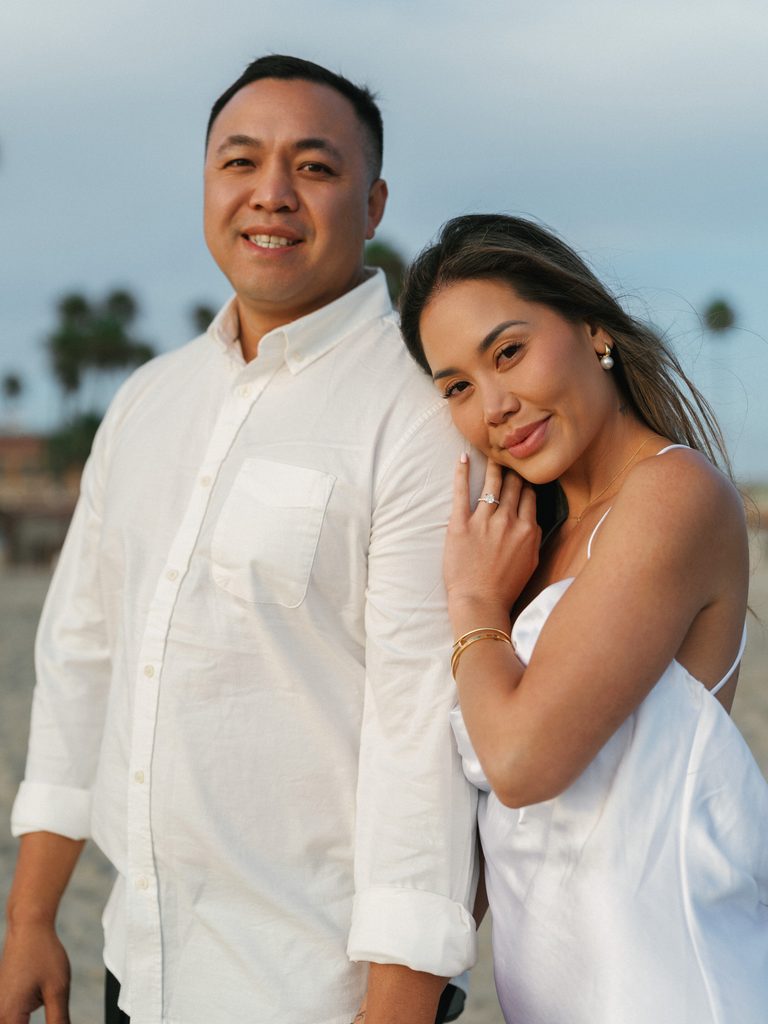
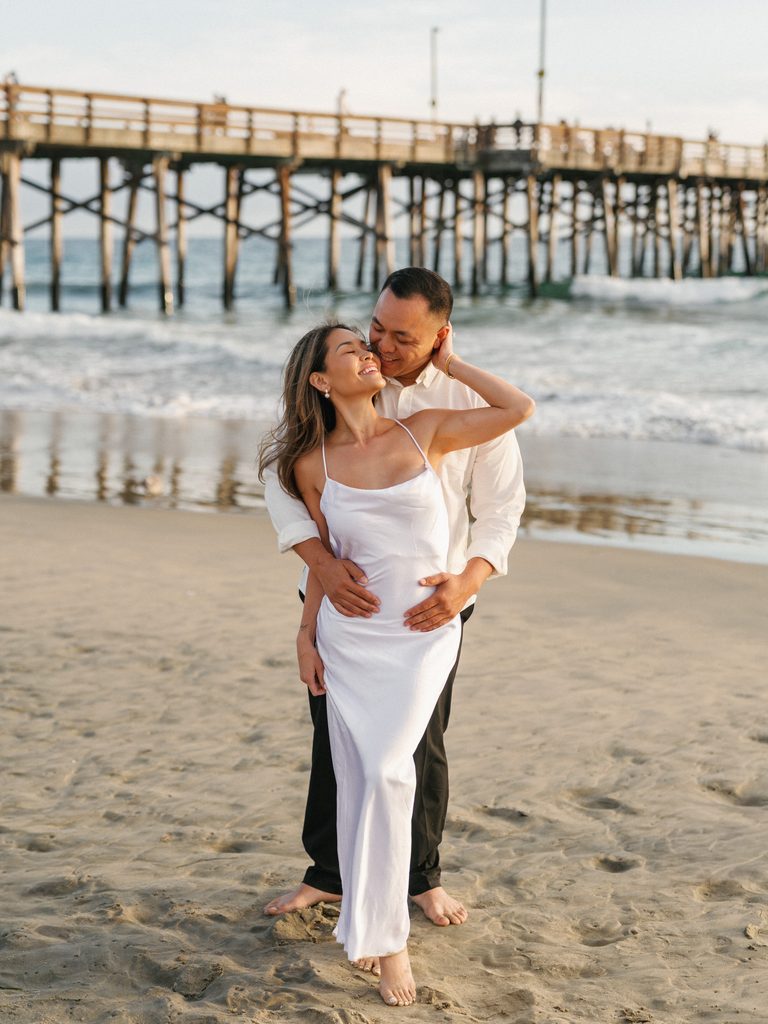
In Newport Beach, for example, a session could begin near Newport Pier and continue onto the adjacent beach, provided access and current conditions allow. Another plan might use a bay-side location for a quieter sequence, with a nearby waterfront path as an alternative. These are illustrative routes; the actual locations and permissions need to be confirmed before the session.
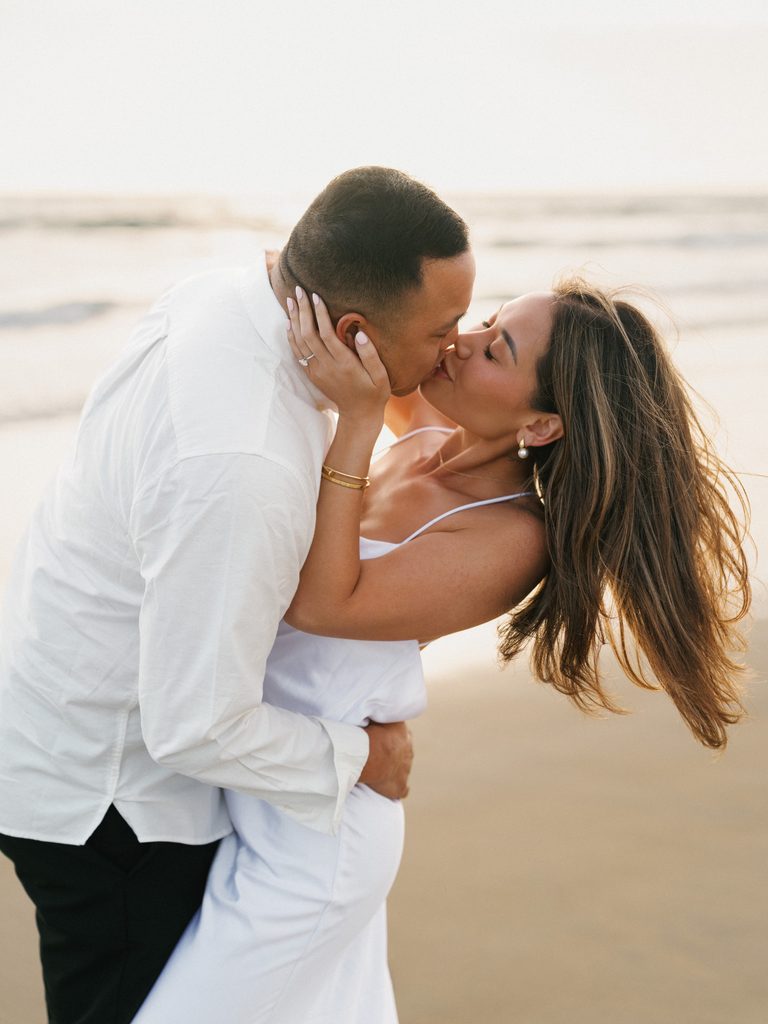
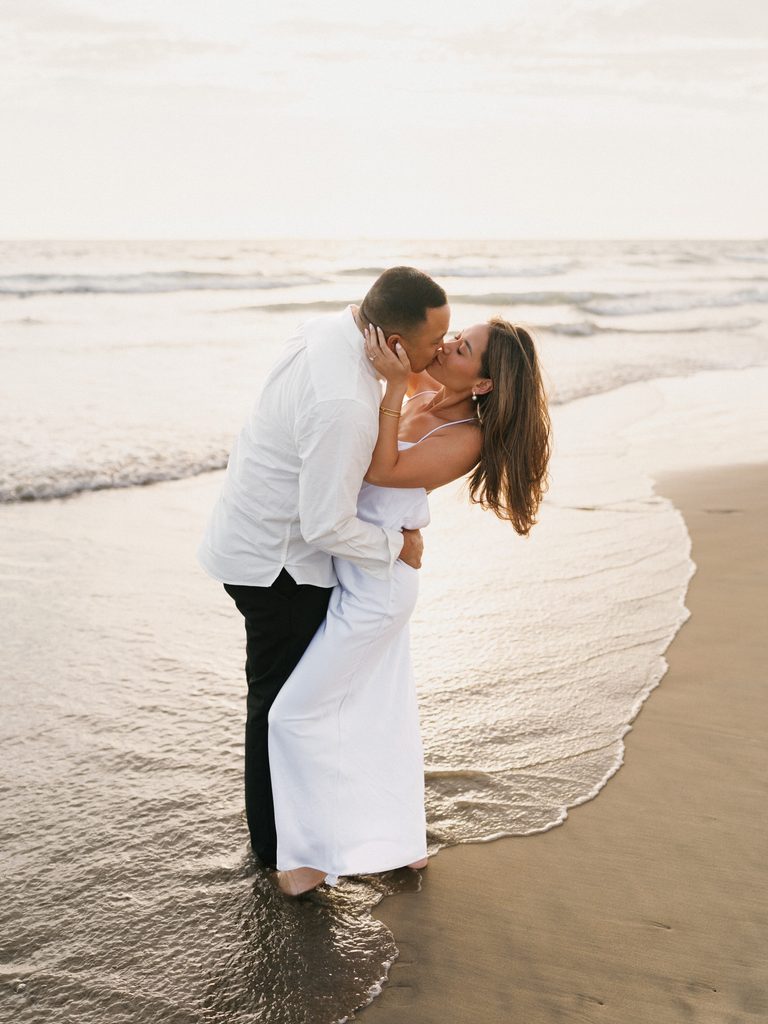
The meeting point should be clear, especially when parking is not directly beside the beach or pier. Newport Pier visitor information notes that parking can be limited and that some visitors may need to walk several blocks. Allowing time for parking, walking to the meeting point, and getting ready avoids using the planned portrait time for arrival arrangements.
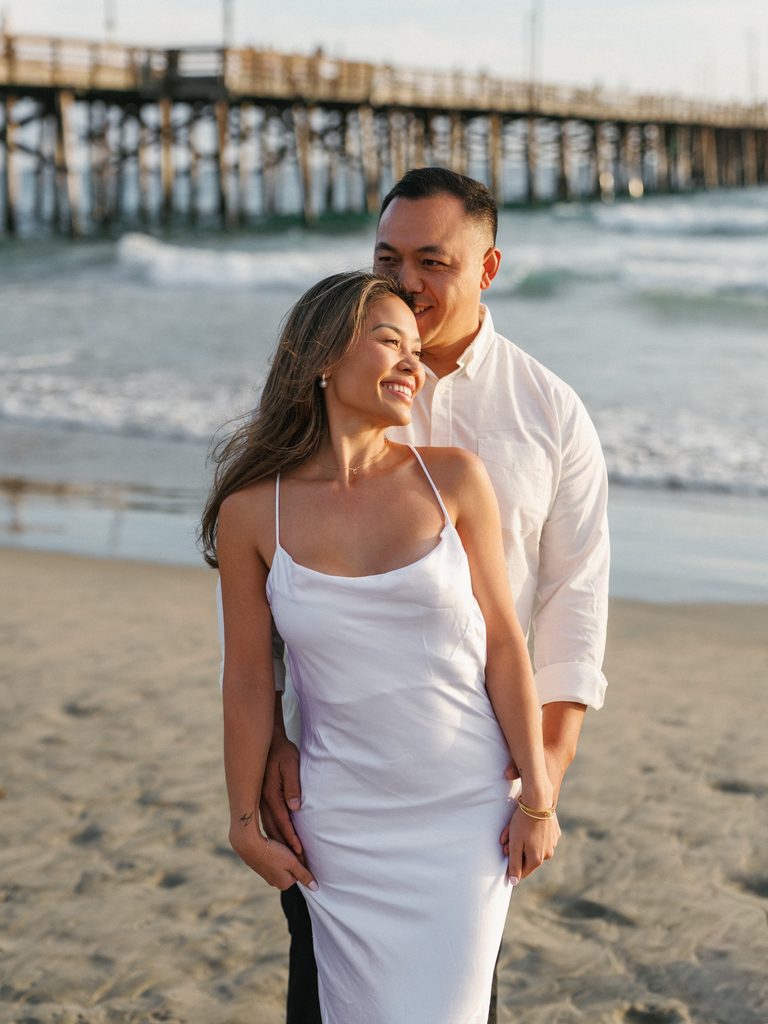
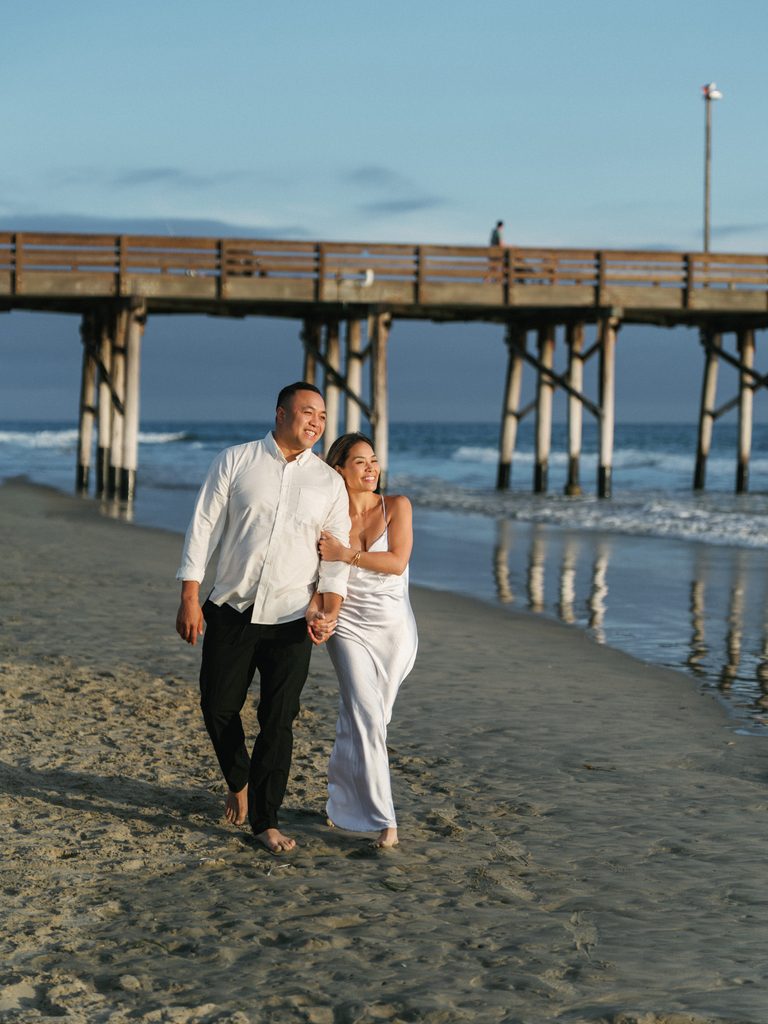
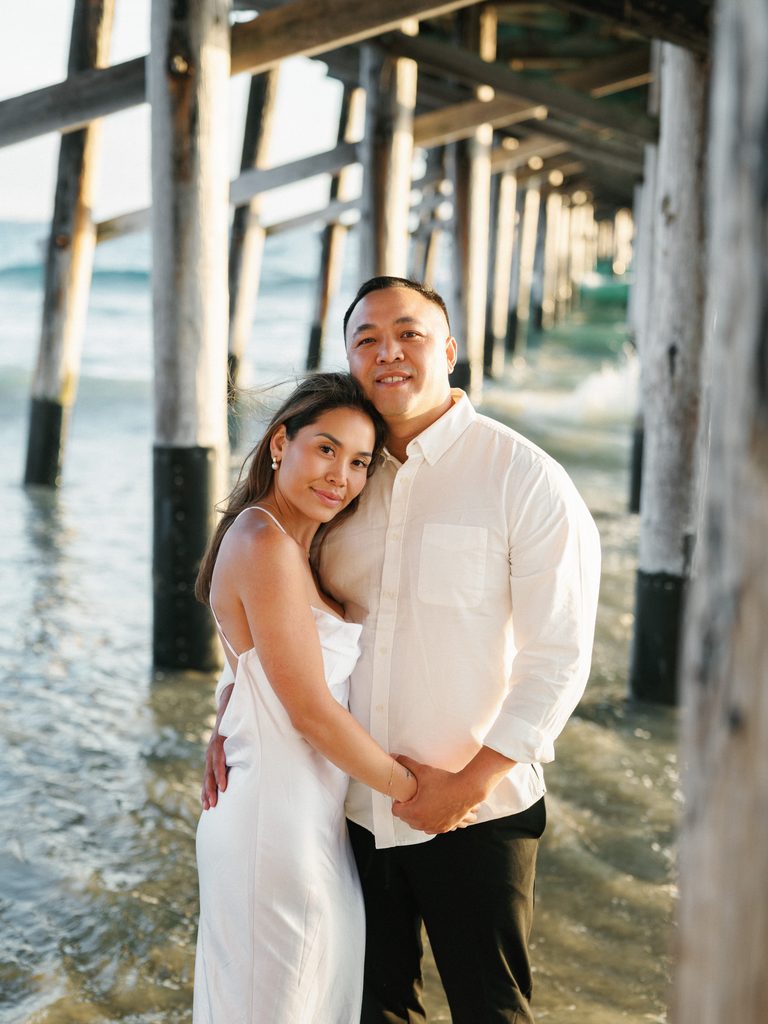
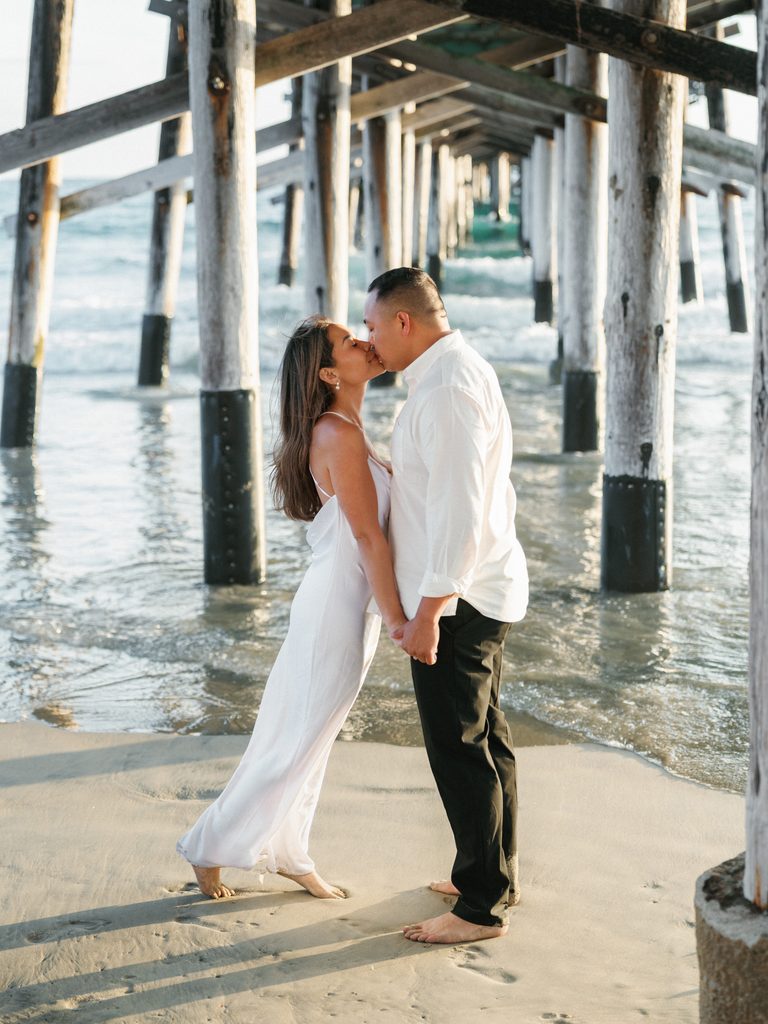
The alternative location should be checked in advance too. A different stretch of beach may have similar wind exposure, while a nearby bay or sheltered path could offer a more practical change if conditions become difficult. The photographer can help assess whether the alternative provides a suitable background and enough room for the planned photographs.
Before the session, the confirmed details should include the location by name, current access and photography requirements, meeting point, scheduled time, route, and any comfort arrangements for walking or changing footwear.
FAQ
Are waterfront and beach engagement photos the same thing?
Waterfront is a broader term that includes ocean beaches, piers, bay-side beaches, docks, and other settings beside the water. Beach engagement photos usually focus on the sand and shoreline, while a waterfront session can include several different environments.
Should a couple enter the water for engagement photos?
Entering the water is optional and depends on the couple’s comfort, the conditions, and the location’s rules. A session can include shoreline photographs and views across the water without anyone getting wet.
Does one Newport Beach rule apply to every waterfront location?
No. Newport and Balboa piers, ocean-facing beaches, bay-side beaches, and Crystal Cove State Park are separate locations with different management and access arrangements. Current requirements need to be checked for the exact place selected.
What if it is too windy for the preferred setting?
The photographer can assess whether a more sheltered nearby location will work for the session. The alternative should be agreed in advance, along with the photographer’s rescheduling terms if conditions make the session impractical.
What time of day suits waterfront engagement photos?
Early morning and late afternoon can offer softer light, but the best time depends on the shoreline’s orientation, the date, tide, wind, and visitor activity. The photographer can assess these factors for the chosen location.
Can a short film be part of a waterfront engagement session?
Yes. A short film can include walking, movement along the shoreline, details of the setting, and interactions between the couple. Wind and surf affect spoken audio, so the filmmaker can use appropriate microphone protection and record the sound of the water separately.
Let’s Plan Your Waterfront Engagement Session Together
We would be happy to discuss waterfront locations, session timing, and route options, and help plan photography and film coverage around the setting that suits you.