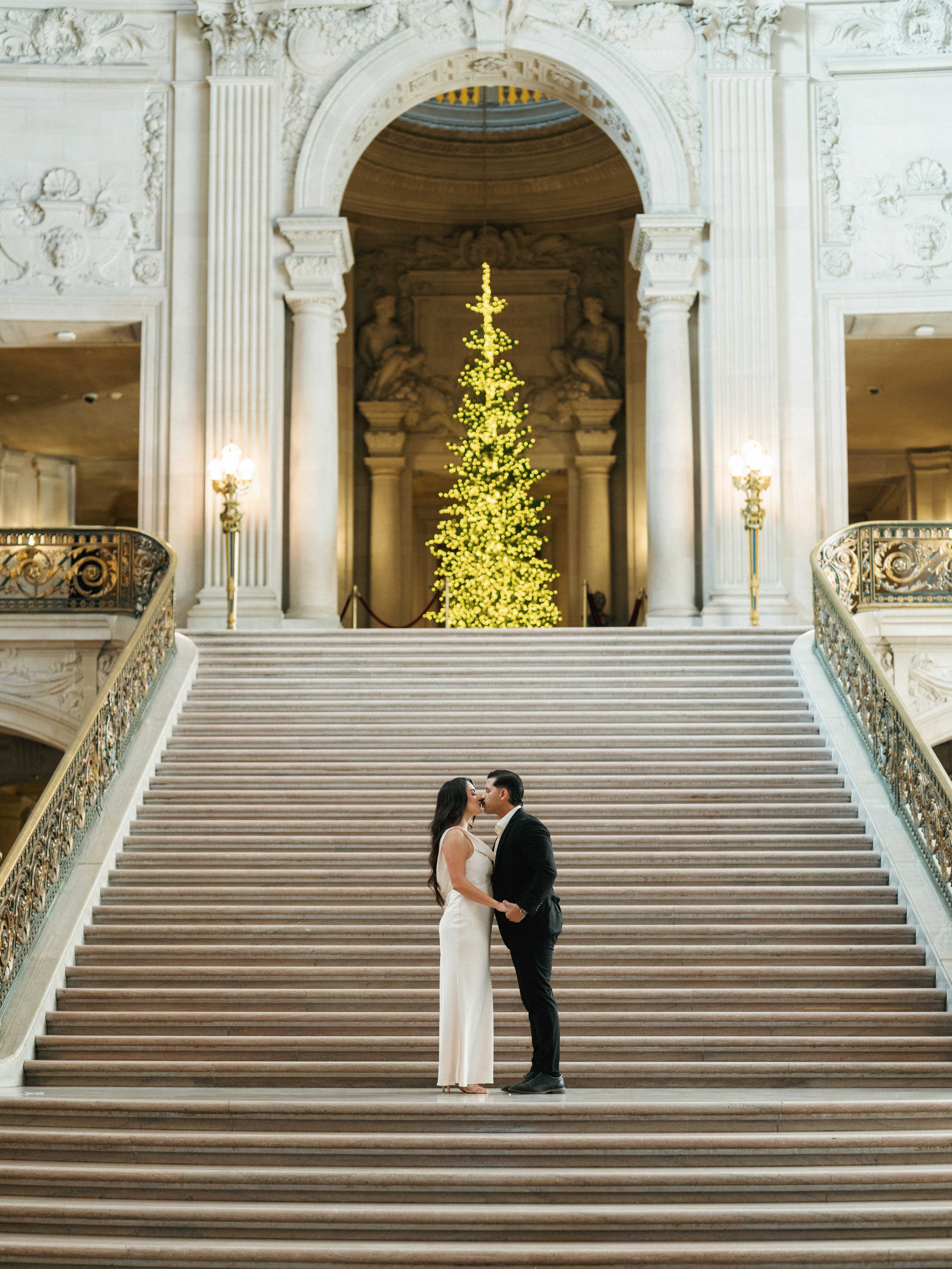
Winter Means Different Conditions in Each State
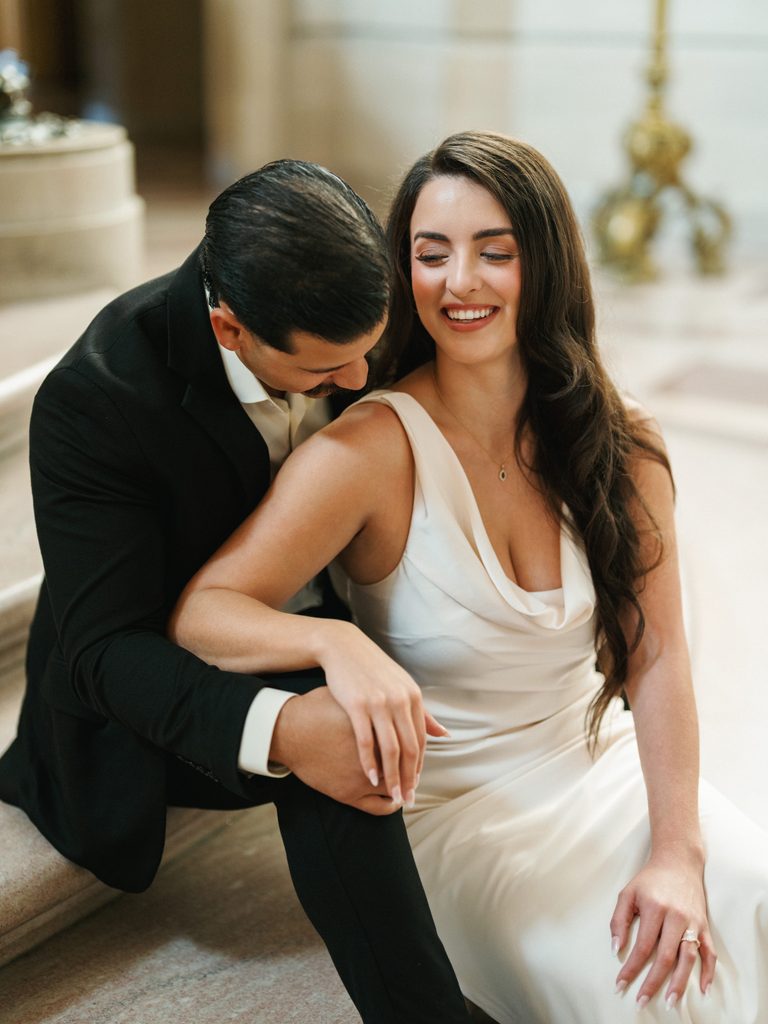
Winter has a visual language of its own. The afternoon sun sits lower, the light can become softer and more directional, and the landscape takes on a different palette as trees lose their leaves and the season moves toward colder tones.
Rain can bring reflections to city streets and coastal settings; snow can simplify a landscape into clean planes of light and texture; warm interiors become part of the visual story when the couple moves back inside. For a photography and film team, those qualities shape the way the day is photographed from the first portrait to the final evening scenes.
California offers several distinct versions of that winter atmosphere. Along the coast, winter can bring rain, mist, soft overcast light, and clear periods between weather systems. The combination of ocean, winter sky, and lower afternoon sun can produce a quiet, atmospheric quality in portraits. Inland and desert locations tend to stay drier, with cooler evenings and a different kind of winter light.
Mountain venues bring snow into the landscape and can turn the surroundings into an important part of the photographs.
New York has a more distinctly winter visual vocabulary. Bare trees, snow-covered streets, low afternoon light, and the contrast between cold outdoor scenes and warm interiors can all become part of the wedding imagery. In the city, winter light interacts with architecture, glass, stone, and wet streets; outside the city, snow and open landscapes can give portraits a very different sense of space.
The season also changes how the available light fits into the wedding day. Sunset comes earlier in winter, so the best outdoor portrait light often arrives earlier in the afternoon and needs a defined place in the timeline.
In San Francisco, for example, sunset falls around 4:50 p.m. at the beginning of December. The exact window varies with the date and location, which makes the wedding venue and calendar date the natural starting points for planning the photography.
The Daylight Math Behind a Winter Timeline
The lower sun, softer direction, longer shadows, and changing color of the light can bring a distinctive quality to wedding photographs when the timing and locations are considered carefully. For couples who want that winter atmosphere in their photographs, the portrait session becomes part of the visual design of the day.
The exact window depends on the wedding date and location. In early December, sunset in San Francisco falls in the late afternoon, with New York City reaching sunset earlier on the same dates. The amount of afternoon light shifts gradually through the season, with daylight beginning to return as winter progresses into January and February.
That timing reaches into the rest of the wedding day. If couple portraits are planned for the softer light before sunset, they need a defined place in the afternoon schedule. Family photographs and wedding-party portraits may sit before the ceremony, during a planned portrait interval afterward, or partly indoors depending on the ceremony time.
A late-afternoon ceremony can also place the atmospheric outdoor portraits before the vows, with the evening continuing into the warmer light of the reception space.
Buildings, trees, hills, and the orientation of the property can place a portrait location in shade before official sunset. A shaded garden may hold soft, diffused portraits, while an open area can retain direct light later into the afternoon.
Knowing how those conditions shift across the venue gives the photographer more options when selecting portrait locations for the wedding date.
Expert Note
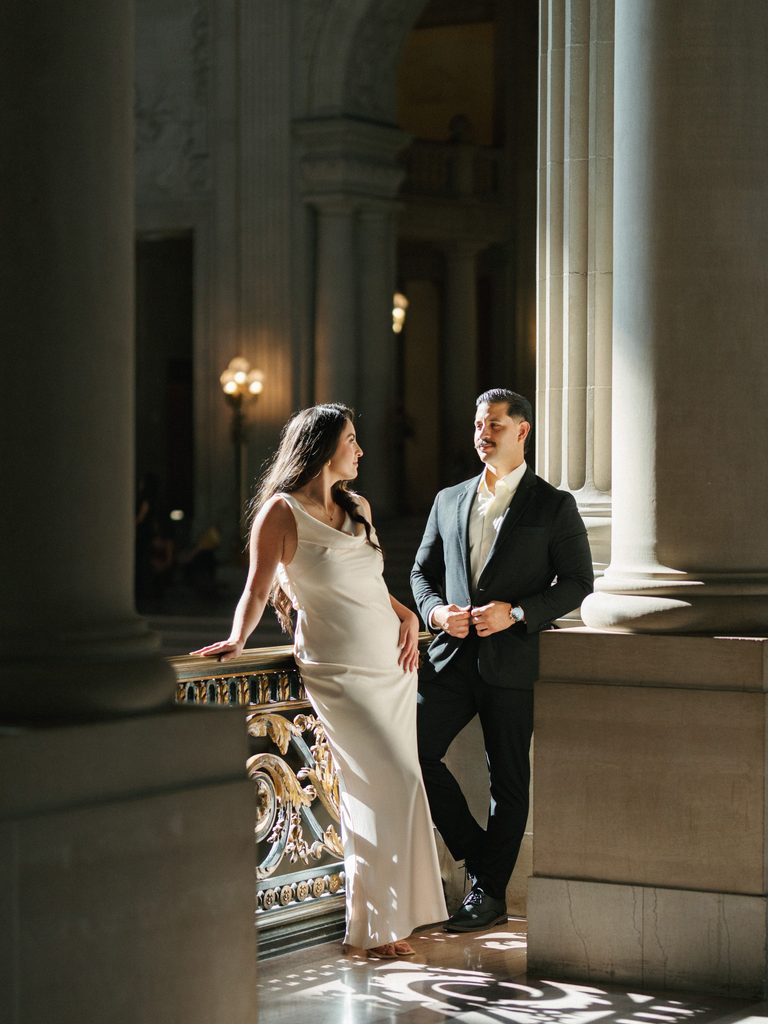
A venue can hold very different light conditions within the same afternoon. An open terrace may retain direct light after a garden has fallen into shade, or a south-facing room may remain naturally bright after another interior space becomes darker. These differences can influence the order of portrait locations and the amount of time needed to move between them.
Building an Indoor or Covered Portrait Plan
Rain along the California coast can turn part of an afternoon portrait session toward a covered terrace, sheltered courtyard, architectural entryway, or a well-lit interior room. In New York, cold, snow, or ice may bring the couple indoors after a short outdoor session. The transition can happen within the same portrait sequence, keeping some photographs outside and moving the rest into a warmer setting.
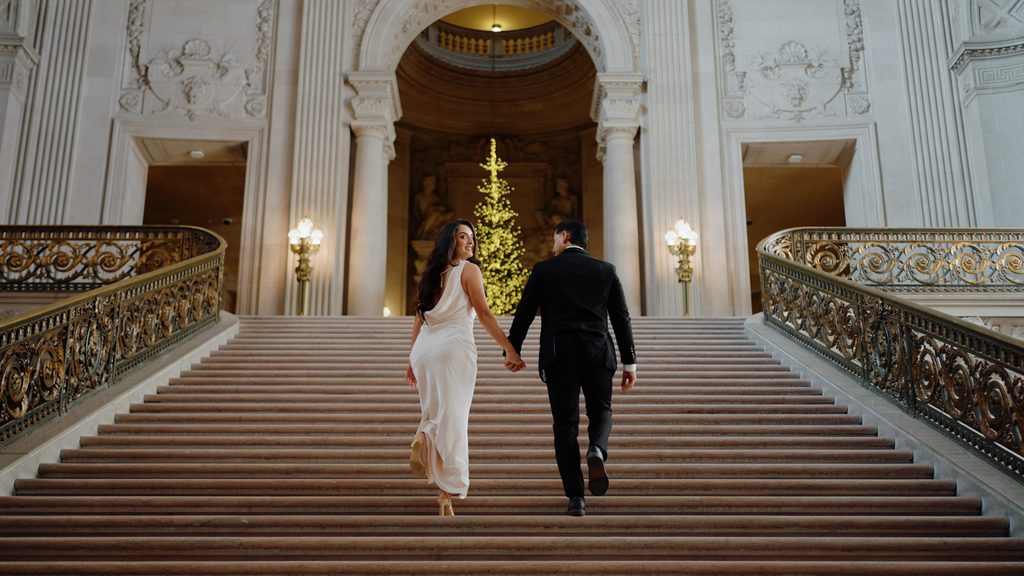
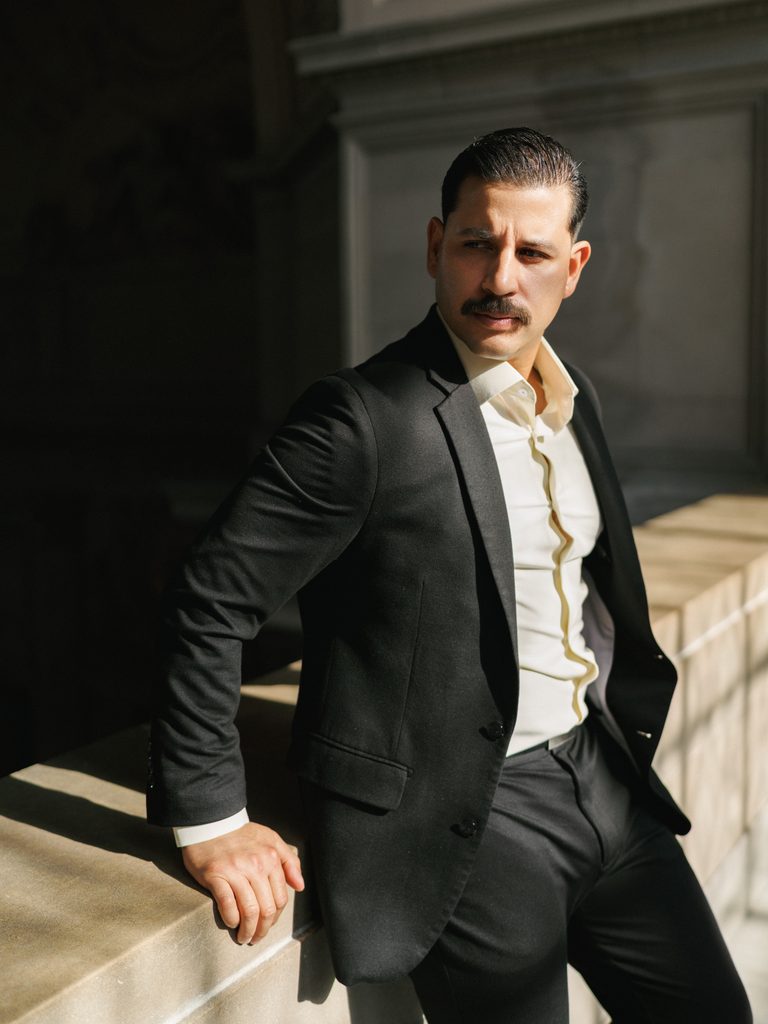
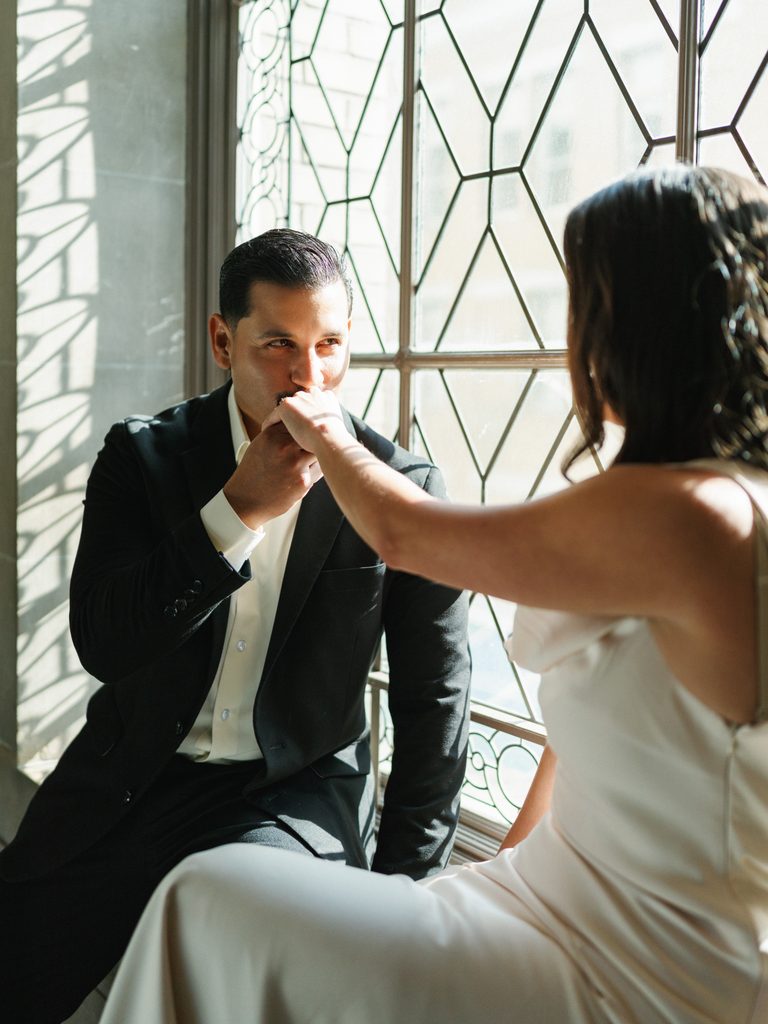
Large windows can bring soft winter daylight across a room, and architectural details can frame the couple without competing with the photographs. Staircases, fireplaces, textured walls, and covered courtyards offer different compositions within the same venue. The change from cold outdoor light to a warmer interior can also add another visual rhythm to the gallery.
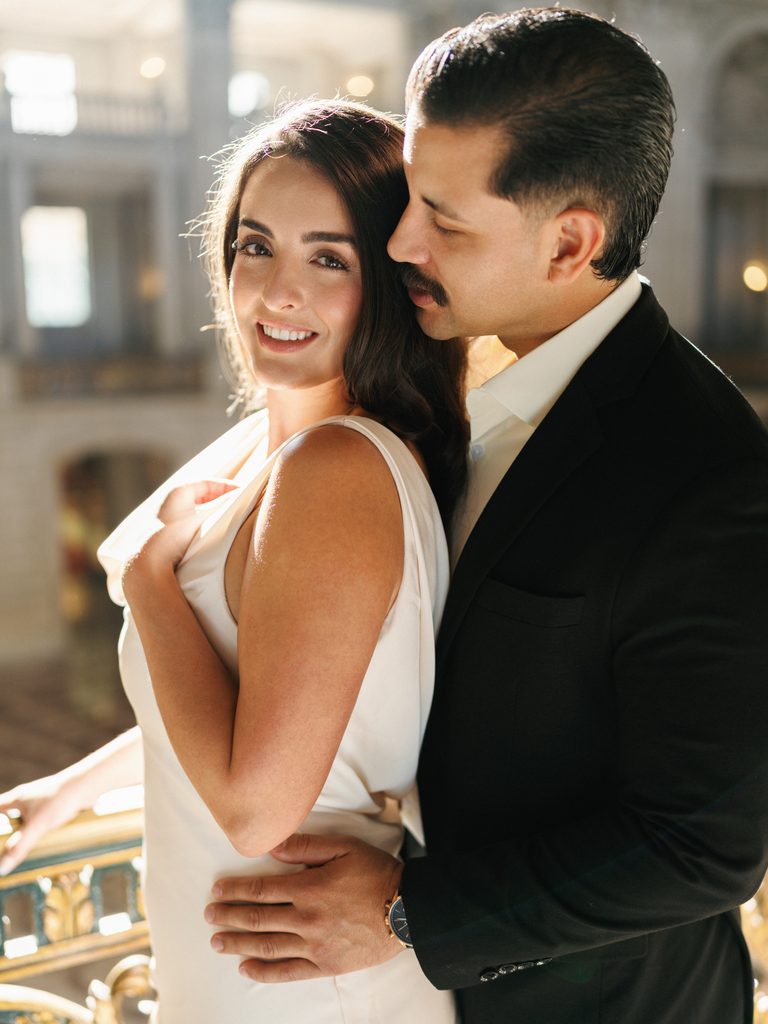
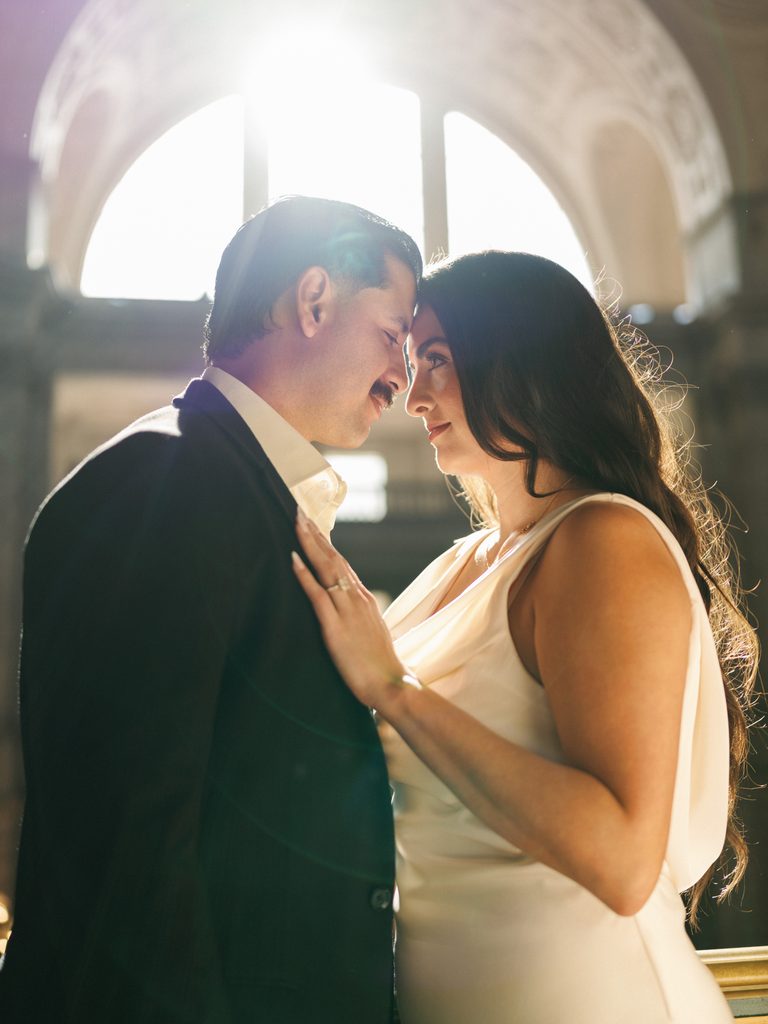
A winter wedding also does not need to look overtly seasonal. Many couples prefer to keep Christmas trees, holiday decorations, and other festive details outside the visual language of the wedding. An indoor portrait session can follow the same direction, focusing on architecture, window light, textures, florals, and the couple. The resulting photographs may carry the quiet atmosphere of winter without tying the gallery to a particular holiday or time of year, which can give the images a more timeless quality.
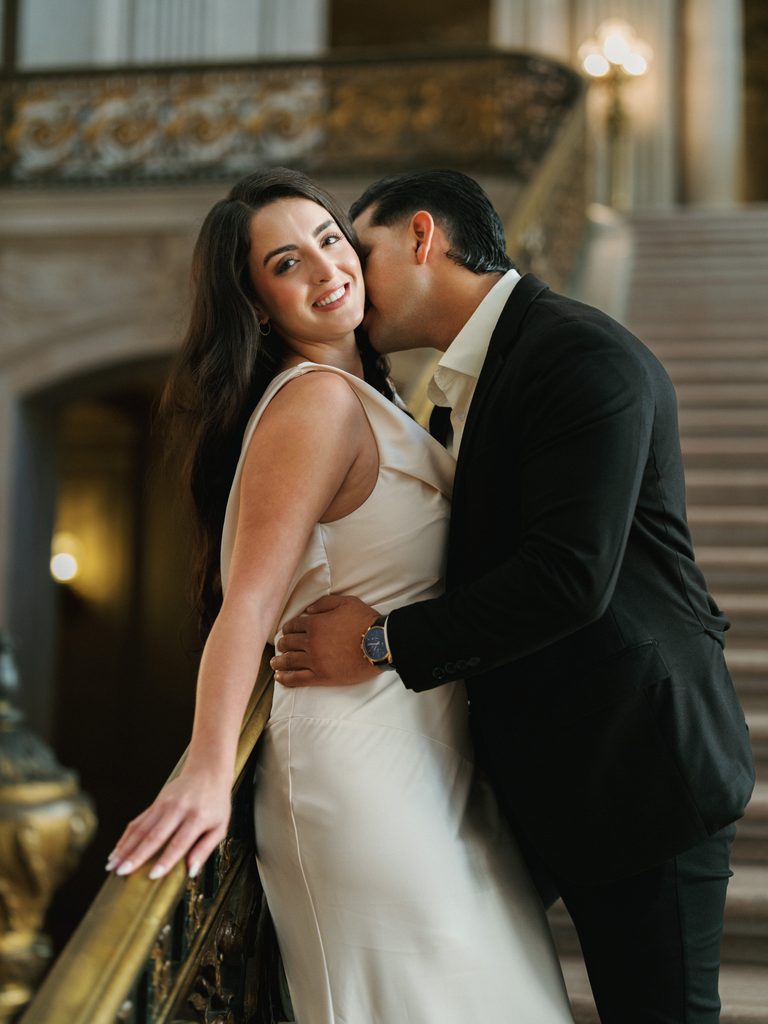
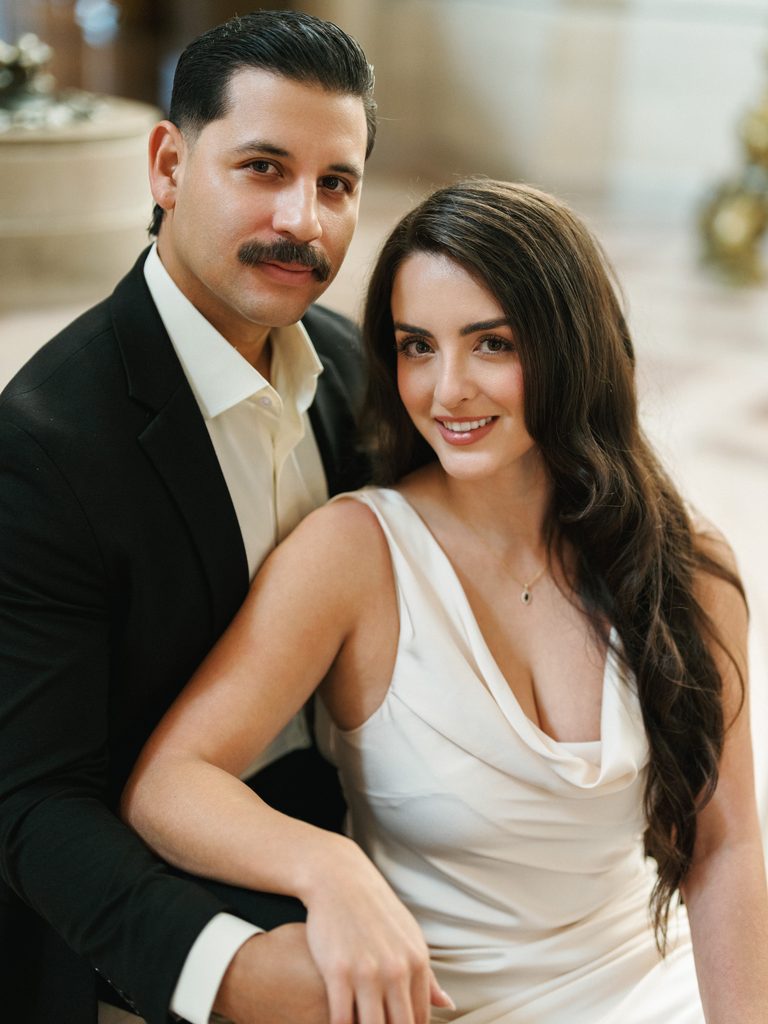
A venue may contain several spaces that suit this approach, from a window-lined room for soft portraits to a staircase or covered passage with stronger architectural lines. Seeing those possibilities in advance lets the photographer shape the indoor sequence around the character of the venue, the available light, and the visual style of the wedding.
Clothing and Comfort in Cold-Weather Portraits
Cold-weather portraits depend on keeping the couple comfortable enough to stay relaxed in front of the camera. Outdoor photographs are entirely optional, and a winter wedding can have a beautiful, complete gallery with portraits photographed indoors.
For couples who want some time outside, a short session can fit naturally into the day when the timing, location, and warm-up points are planned in advance.
Winter outerwear can also become part of the styling. A coat, cape, wrap, or tailored jacket may work as a second look for portraits, giving the couple another silhouette and bringing a softer, more editorial character to the gallery. The change can feel romantic and refined when the outer layer has been chosen with the same care as the rest of the wedding attire.
The same consideration applies to guest photographs. Not every guest will want to spend time outside in cold weather, so family and group portraits can remain indoors even when the couple has planned an outdoor session.
When a wedding has a defined dress code, outerwear for the couple and close family can also be selected with that palette and level of formality in mind, keeping winter layers visually connected to the rest of the celebration.
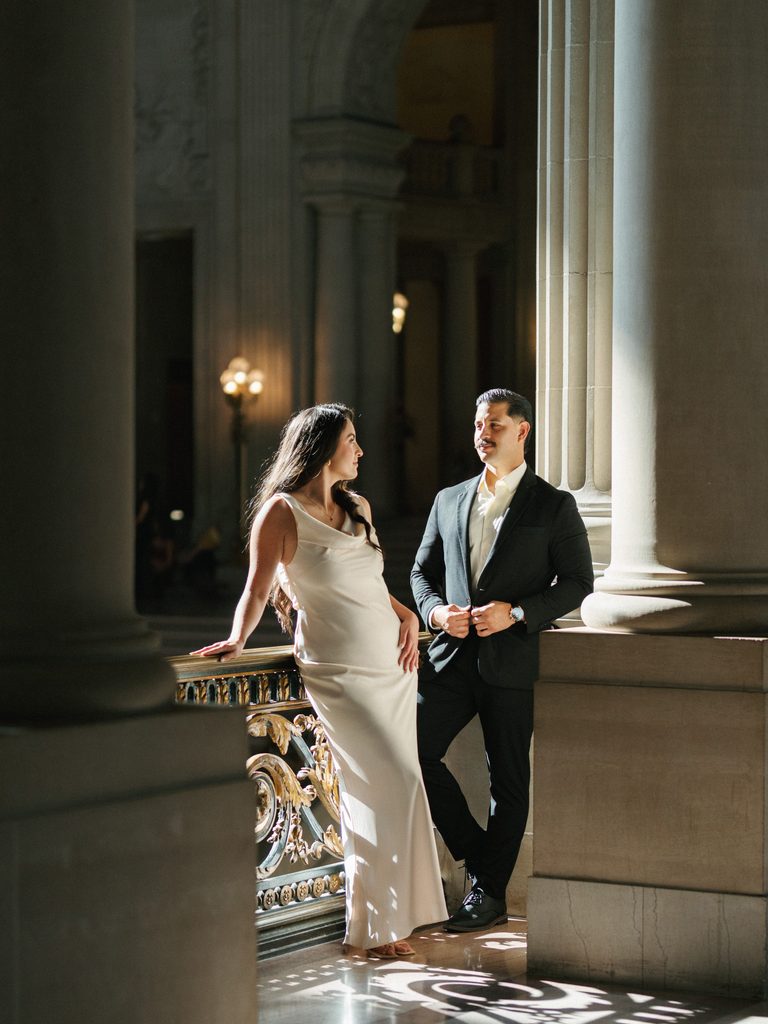
New York winter conditions can require more substantial preparation, particularly when temperatures drop sharply or snow and wind accompany the cold. California calls for a more location-specific approach, since a coastal afternoon, an inland winter morning, and a mountain wedding can feel very different on the same calendar date. Short outdoor sequences with warm-up intervals can keep the experience comfortable and give the gallery a mix of winter landscapes and warmer indoor photographs.
Expert Note
Warm layers can remain close to the portrait location and come off immediately before photographs begin. Hand and foot warmers can stay out of frame, and a coat or wrap can cover the couple between camera positions. When outerwear forms part of the planned look, these practical layers can be selected alongside the wedding attire. A planner or coordinator can also coordinate where coats, extra layers, and personal belongings are kept, along with suitable spaces for changing between looks, so the couple and guests have a comfortable place to prepare before returning to the celebration.
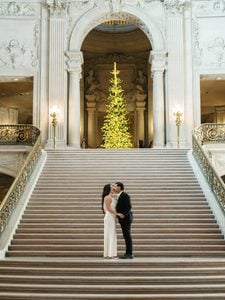
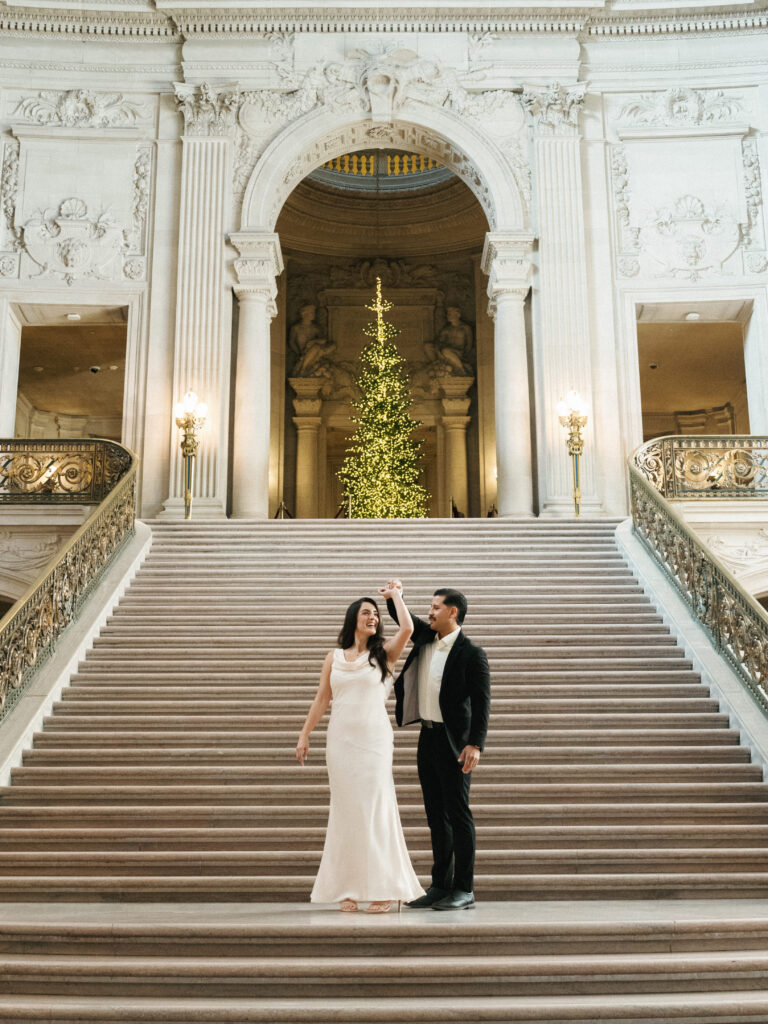
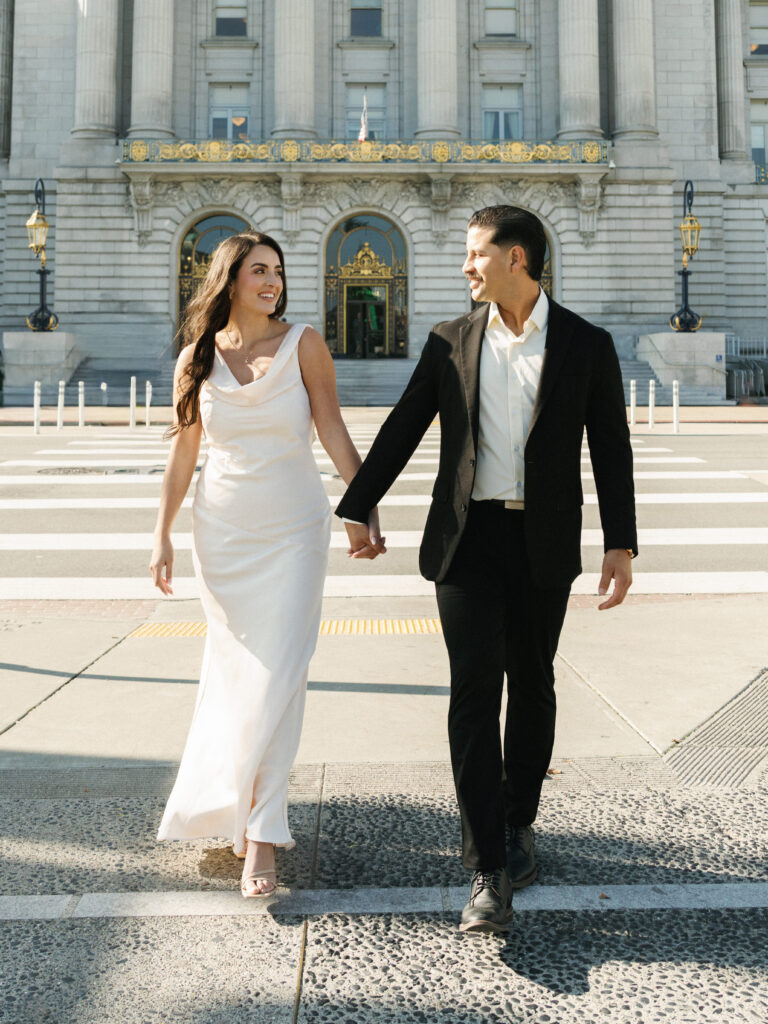
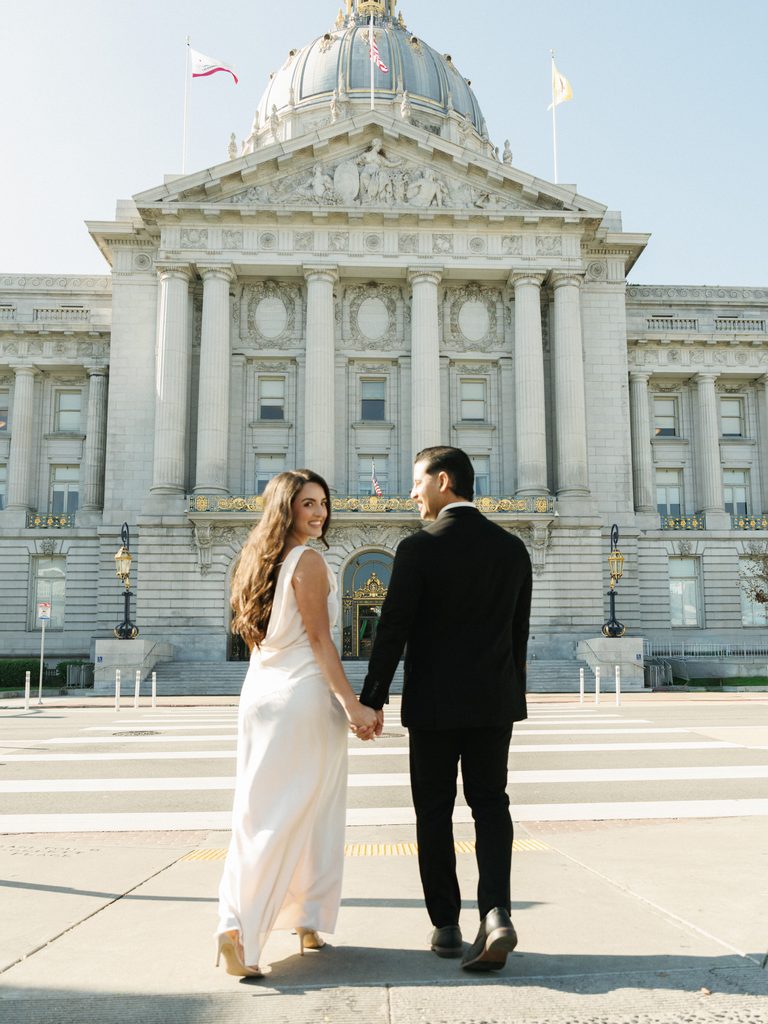
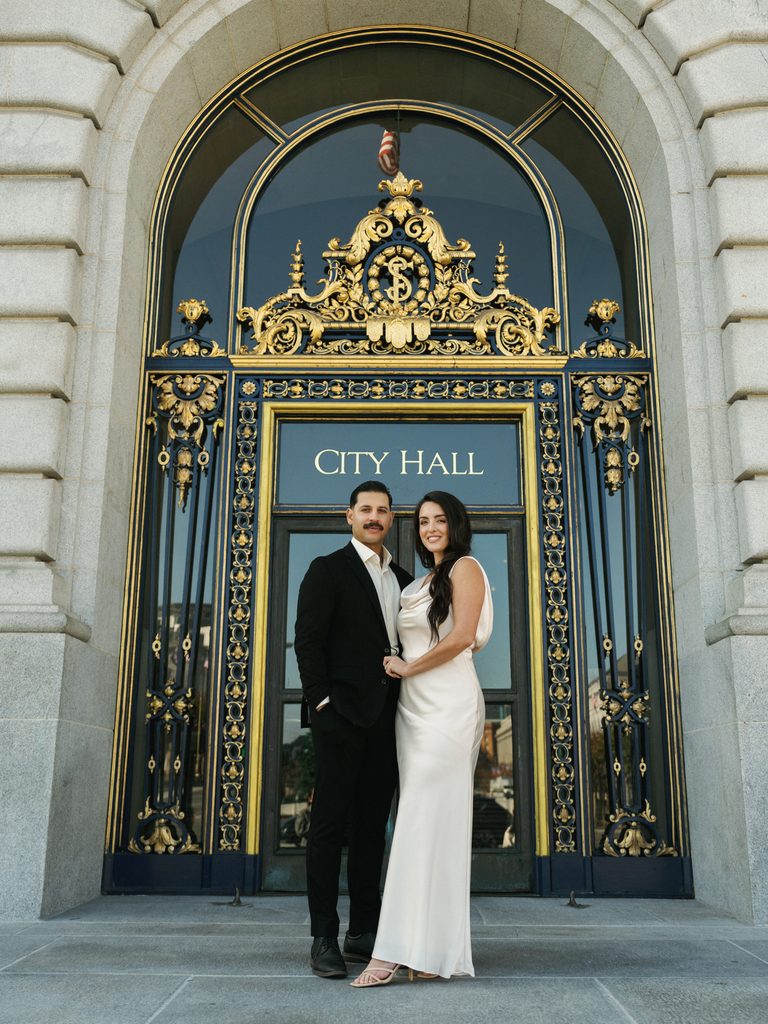
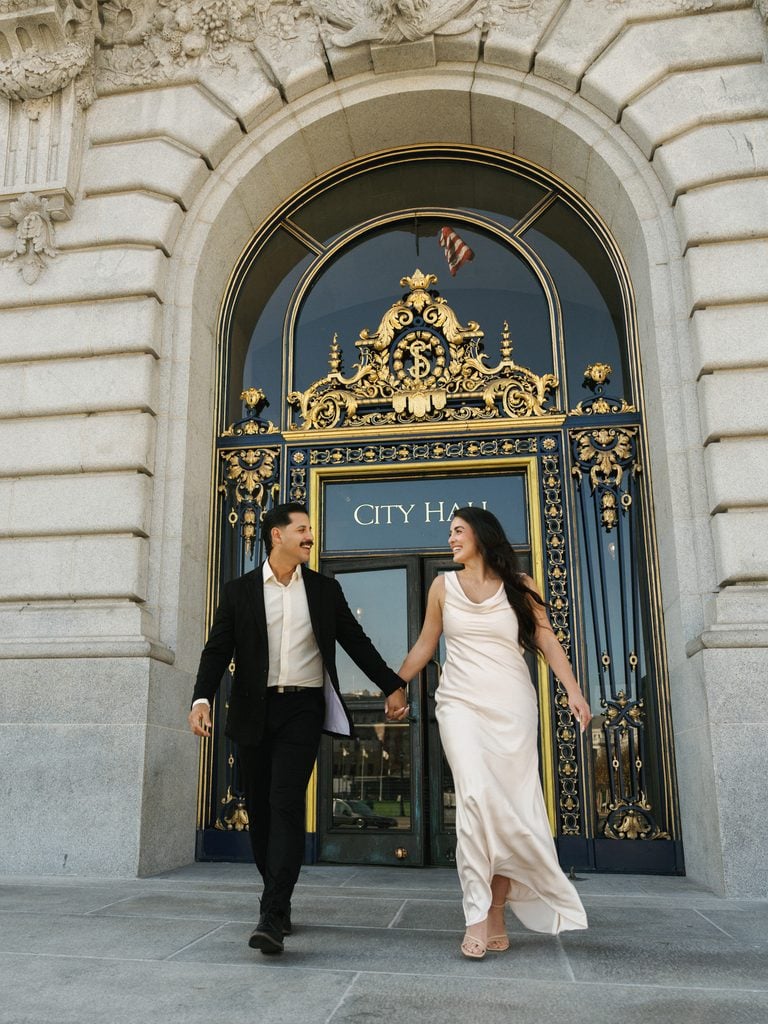
San Francisco City Hall, CA.
Building in a Transport Buffer
Winter travel can affect the photography timeline when a wedding moves between locations. Rain can slow traffic around California metropolitan areas, and New York travel may involve snow, ice, or reduced visibility. A delay matters most when the route falls between the ceremony, portraits, and reception, since a longer drive can reduce the afternoon light available for photographs.
The same conditions can affect guest transportation. If guests travel between ceremony and reception locations, the schedule needs enough time for winter road conditions, parking, walking from the vehicle, and arrival at the next venue. The planner or coordinator can also confirm how much time guests need to move between the vehicle and the venue, particularly when snow, ice, or rain affects the route.
Questions Worth Asking When Planning a Winter Wedding
A few specific questions can clarify how winter light, weather, portraits, locations, and transportation will fit into the wedding plan:
- What does the daylight window look like for the exact wedding date and venue?
- Which part of the day would work best for couple portraits?
- What indoor or covered portrait locations are available if the weather changes?
- Has the photographer considered the available light in those spaces?
- How would the portrait plan change if rain, snow, or lower temperatures shorten the outdoor portion?
- How much travel time should be reserved between the ceremony, portrait location, and reception?
- How should guest transportation be timed if winter weather affects the roads?
- What should be prioritized if the available outdoor daylight becomes shorter than planned?
FAQ
When does the sun set during a winter wedding?
It depends on the exact date and location. Daylight hours are shorter in early winter and gradually increase through January and February. Checking the specific wedding date and venue gives a more useful reference for planning portraits and the rest of the afternoon.
Can wedding photos still work well in rain or snow?
Rain and snow can both form part of a winter wedding gallery when the couple is comfortable and the photography plan accounts for the conditions. Covered locations and indoor spaces also provide alternatives when extended outdoor portraits are not practical.
How much buffer time is sensible for a winter wedding?
The appropriate buffer depends on the route, location, season, and number of venue transitions. Driving between a ceremony and reception deserves attention when winter weather can affect road conditions. Guest transportation needs the same consideration when several locations are involved.
Is an indoor backup plan necessary if the forecast looks clear?
A confirmed indoor or covered option remains useful. Winter forecasts can change, and the space can also provide a place to warm up between outdoor portraits. Knowing the available options in advance avoids having to find an alternative during the wedding.
Do portraits in cold weather require more planning?
They usually require more planning around clothing, warm-up periods, daylight, and location. The outdoor session can remain short when the best light, a suitable portrait location, and a nearby warm space have already been considered.
How does winter wedding photography differ between California and New York?
California contains several distinct winter environments, including wet coastal areas, drier inland regions, and mountain locations with snow. New York also varies across the state, with winter conditions ranging from snow and freezing rain to rain, cold temperatures, and wind. The exact venue and wedding date provide more useful planning information than the state name alone.