A Temporary Ruin Made Permanent
The Palace of Fine Arts stands in San Francisco’s Marina District beside a lagoon near Lyon and Baker Streets. Bernard Maybeck designed it for the 1915 Panama-Pacific International Exposition, where it was one of ten exhibition palaces. He envisioned a classical ruin gradually reclaimed by nature. Built from wood, burlap, and plaster, the original structure was intended to last only for the duration of the exposition. After the fair closed, San Franciscans campaigned to preserve it.
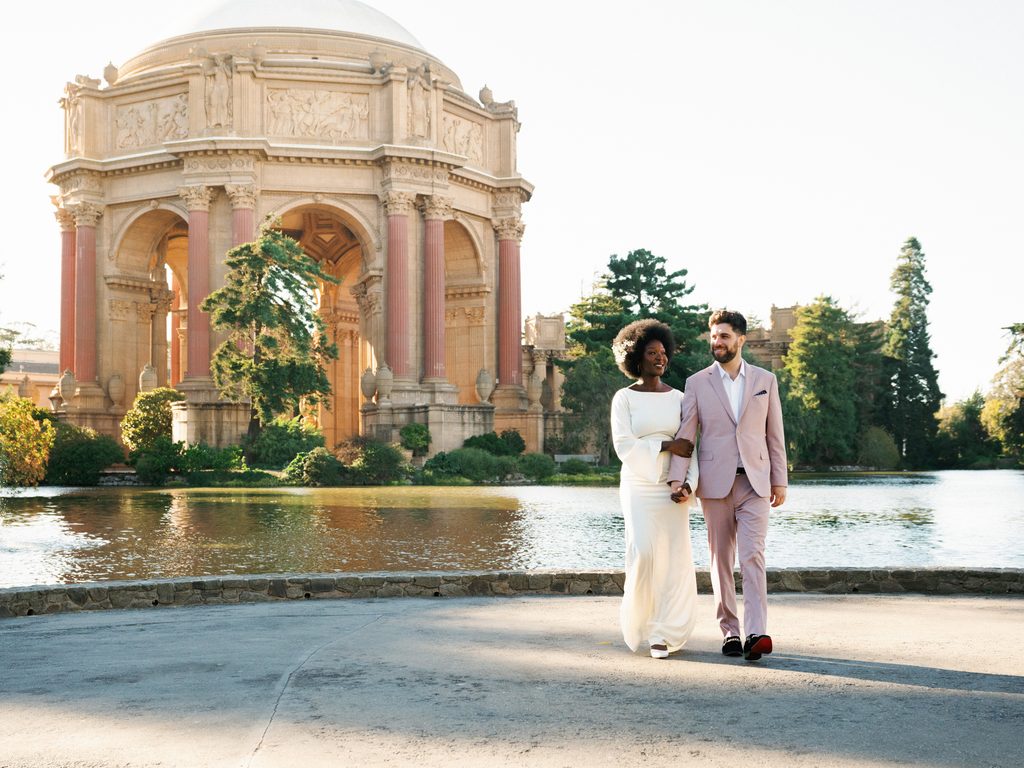
The original structure deteriorated over the following decades. In the 1960s, the Palace was reconstructed in permanent materials, with its rotunda and colonnades recreated in concrete. Later restoration work renewed the architecture and lagoon, along with seismic improvements to the structure. The Palace retains its curved colonnades, sculpted figures, lawns, flower beds, and water framed by the surrounding architecture.
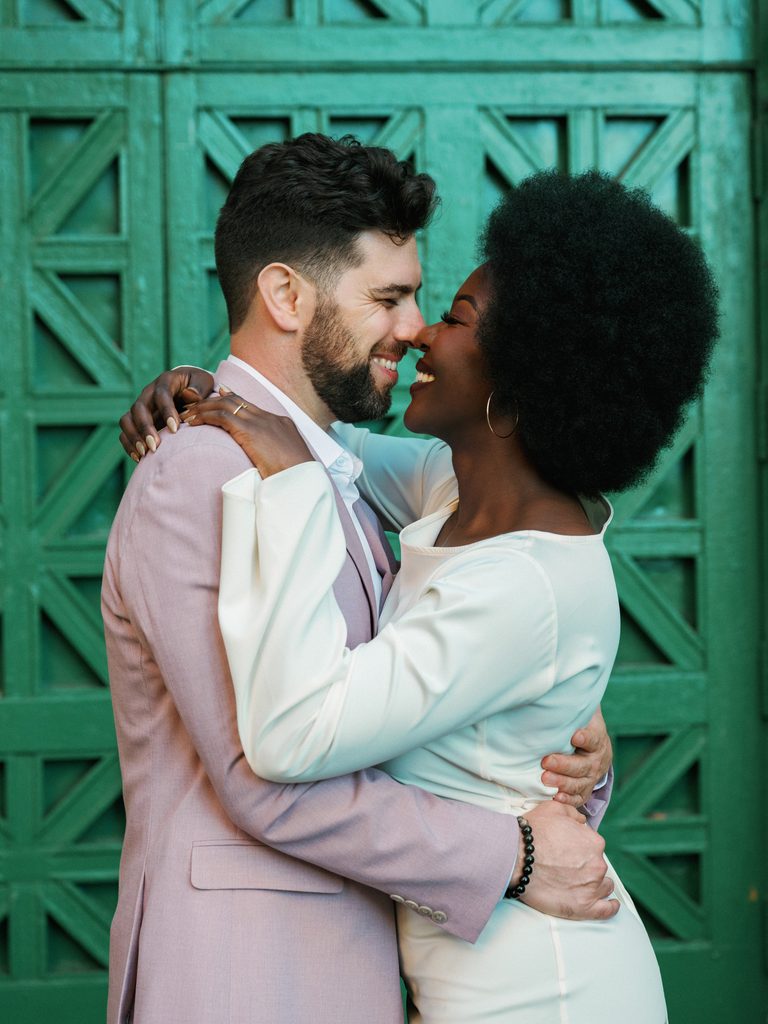
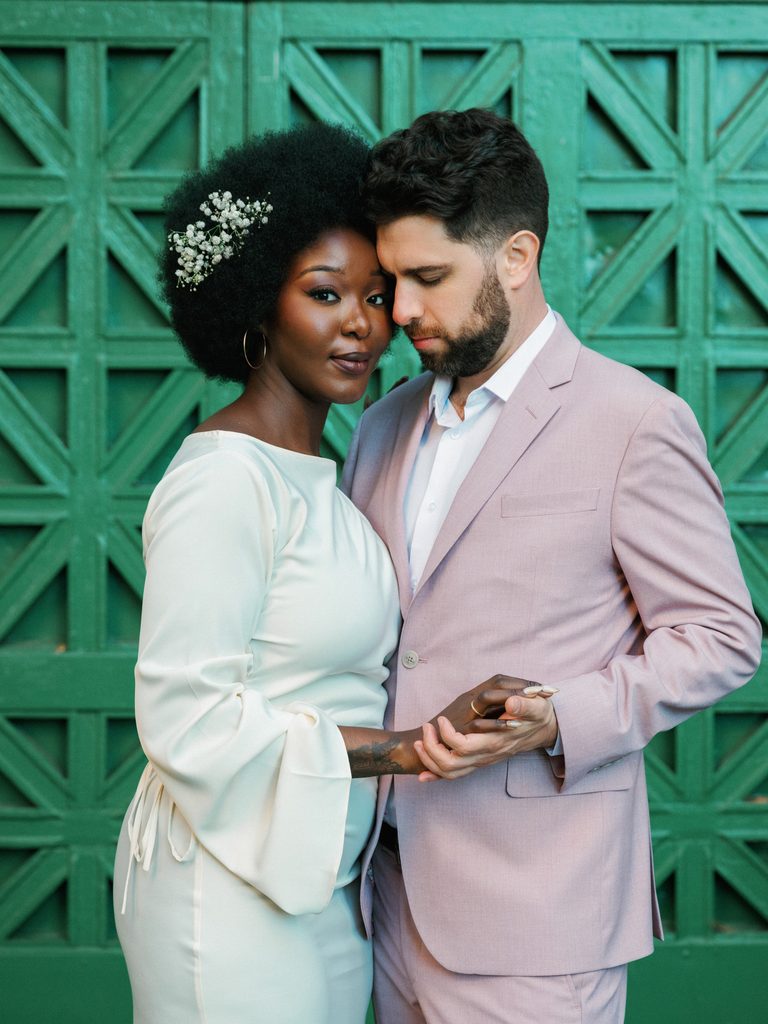
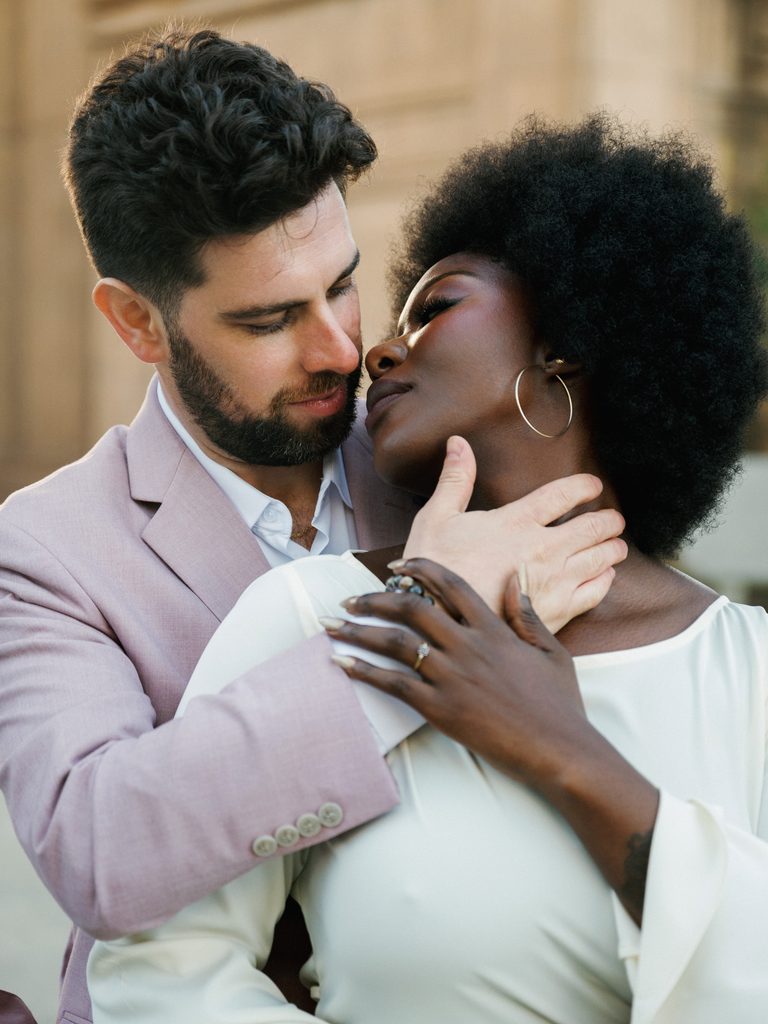
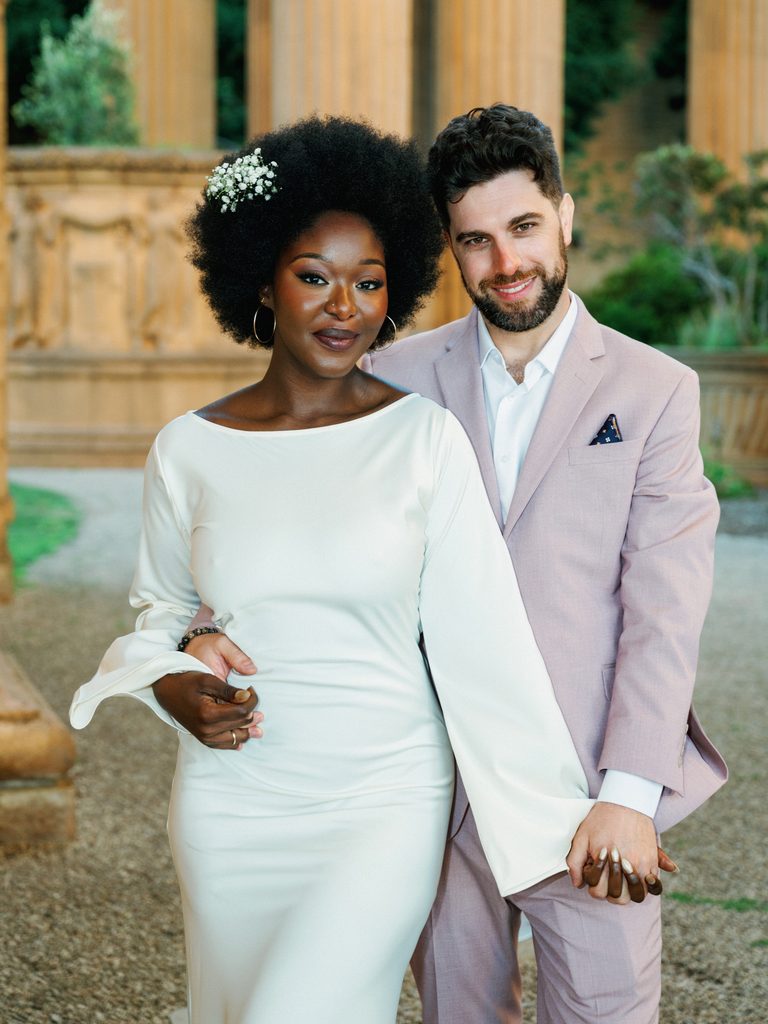
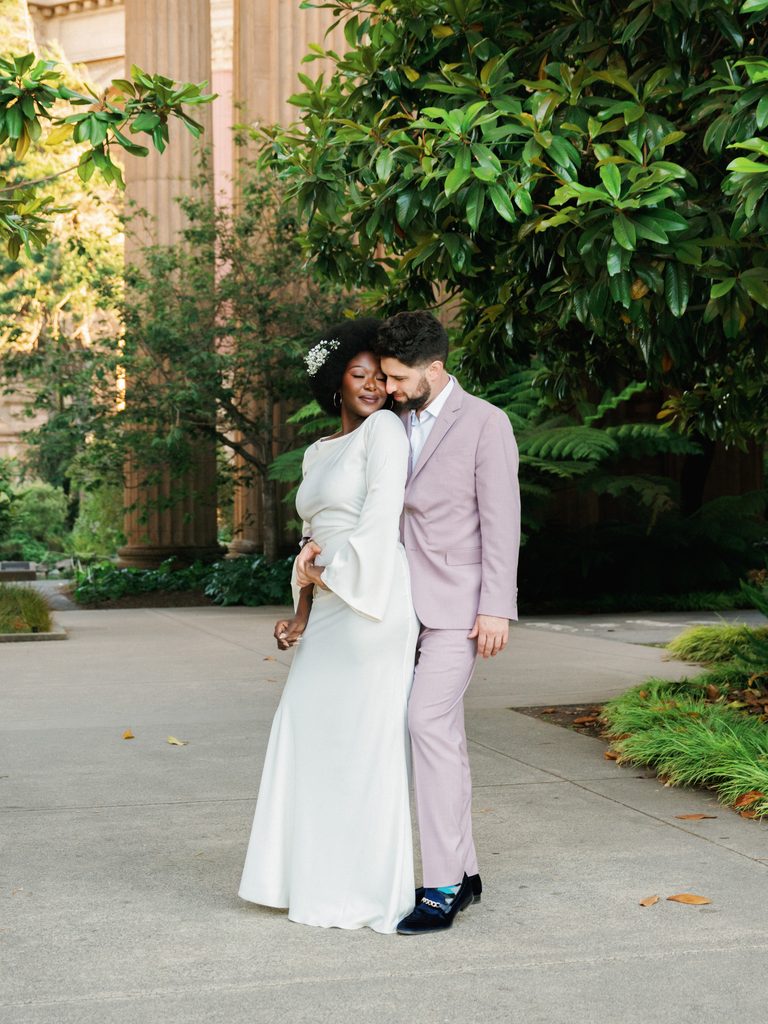
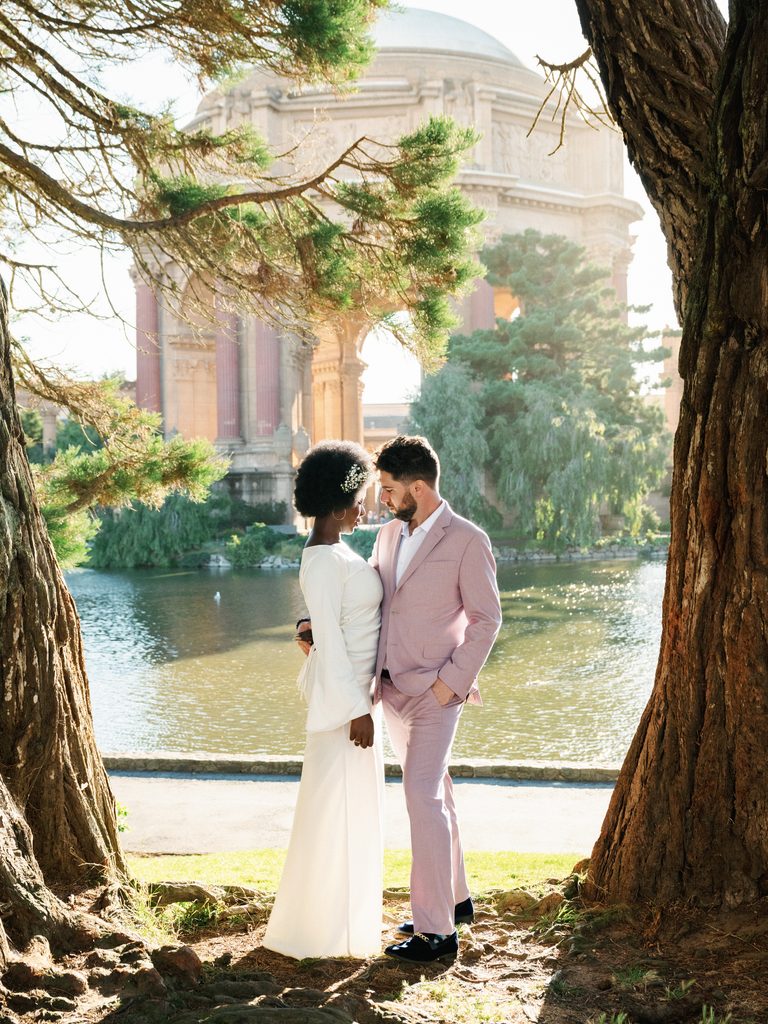
Couples are drawn to the Palace of Fine Arts for its symmetry, reflective water, and monumental scale. The architecture gives engagement photographs a strong sense of place, with several distinct settings within the same complex. The rotunda establishes the scale of the location, the colonnades introduce repeating lines and arches, and the lagoon opens the composition to reflections and views across the grounds. These features provide the visual foundation for an editorial session, with the couple’s direction and the choice of framing shaping how the setting appears in the finished photographs and film.
What Editorial Means for an Engagement Session
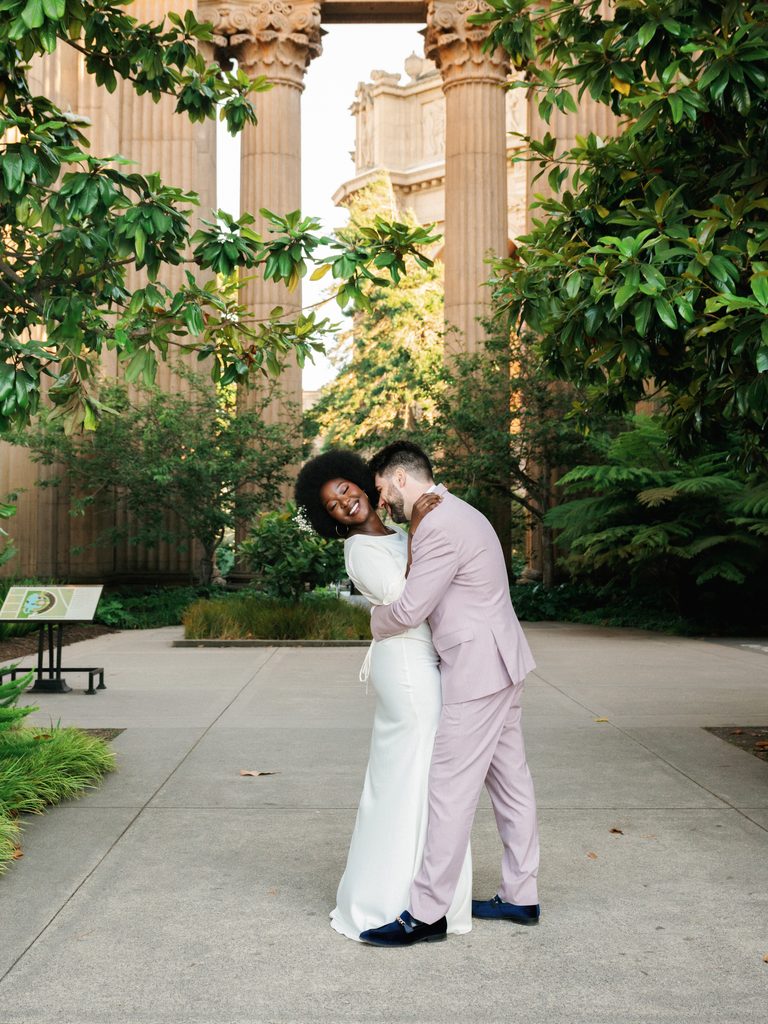
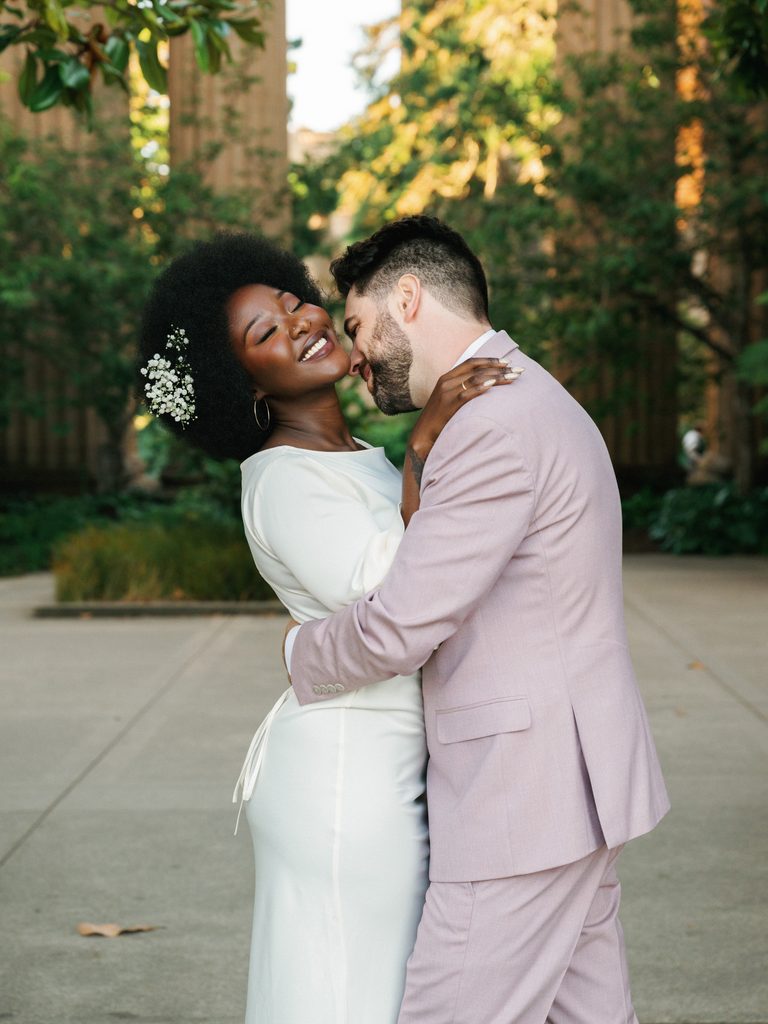
An editorial engagement session uses deliberate composition and direction to create a considered visual sequence. The photographer chooses the framing, suggests where to stand, and guides small adjustments in posture and movement, much as a magazine shoot builds an image with intention. A documentary approach places more emphasis on observing moments as they happen. Many sessions combine the two, with composed portraits alongside walking sequences, conversation, and quieter interactions.
The balance depends on how the couple prefers to be photographed. Some enjoy clear guidance throughout the session, while others feel more comfortable with a few suggestions and room to interact naturally. Discussing these preferences in advance gives the photographer a sense of how to direct the session without making it feel overly choreographed.
The Palace of Fine Arts provides a strong architectural setting for editorial portraits, so composition can carry much of the visual direction. Film can follow the same approach through movement and changes in pace, connecting composed frames with walking sequences and quieter moments between portraits.
Using the Architecture Without Letting It Take Over
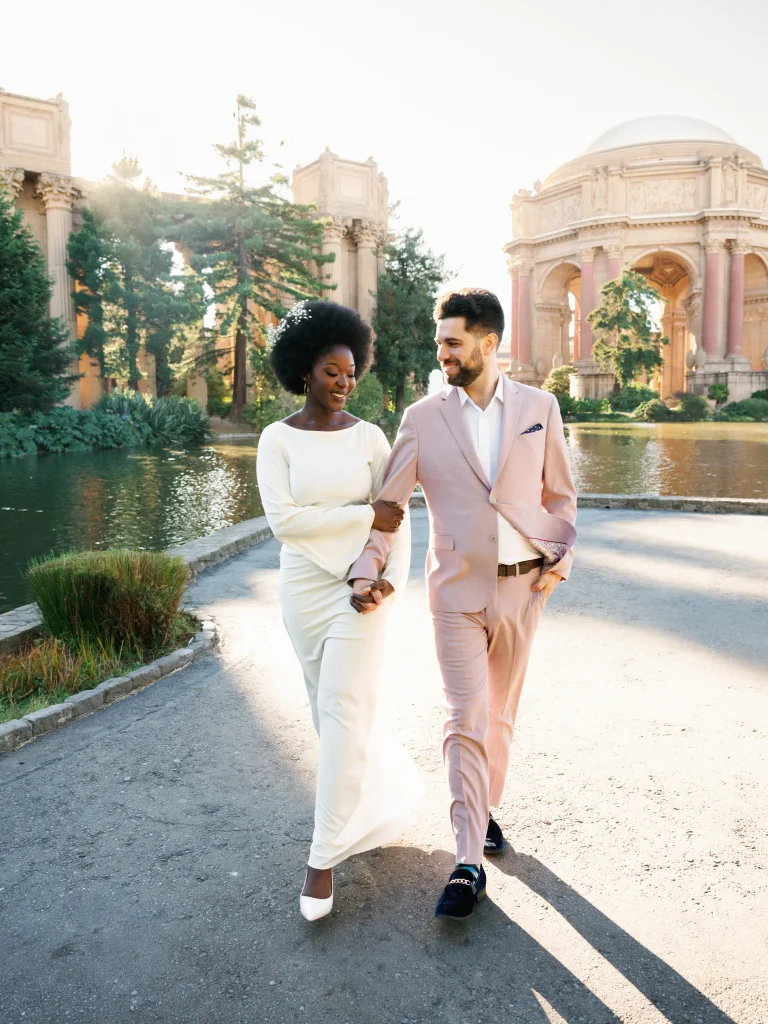
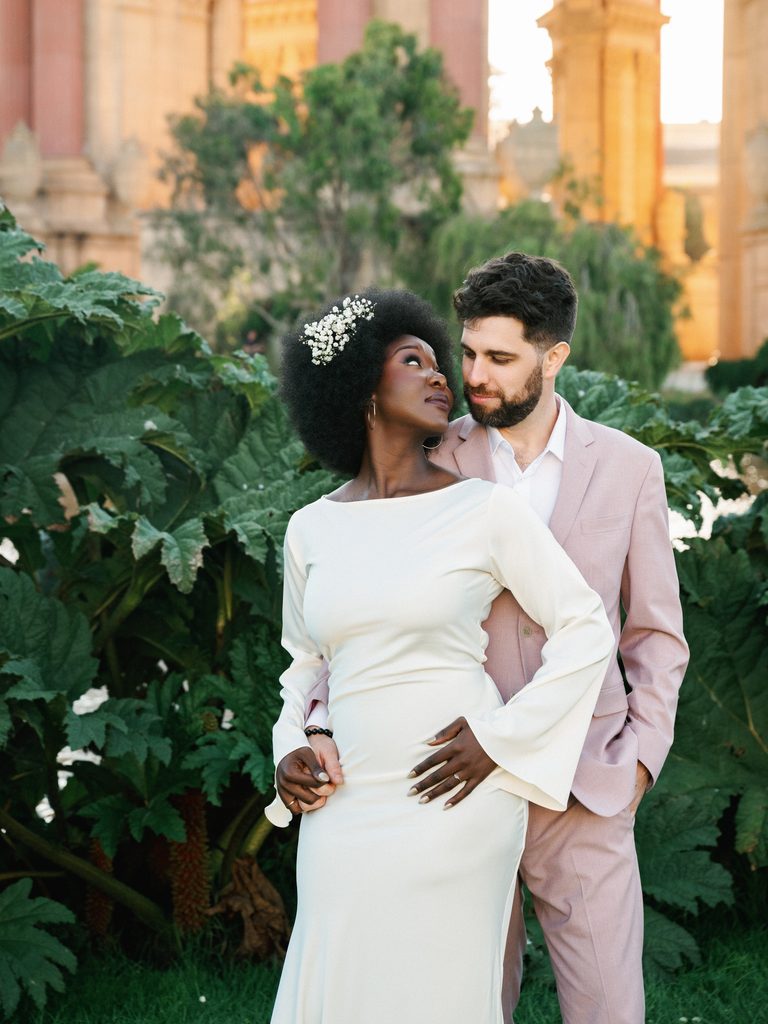
The rotunda lends itself to wide portraits that show the scale of the architecture around the couple. A frame from farther back can include the dome and curved colonnades, with the couple occupying a smaller part of the image. Closer photographs can focus on expressions and gestures, retaining the dome or a section of columns behind them.
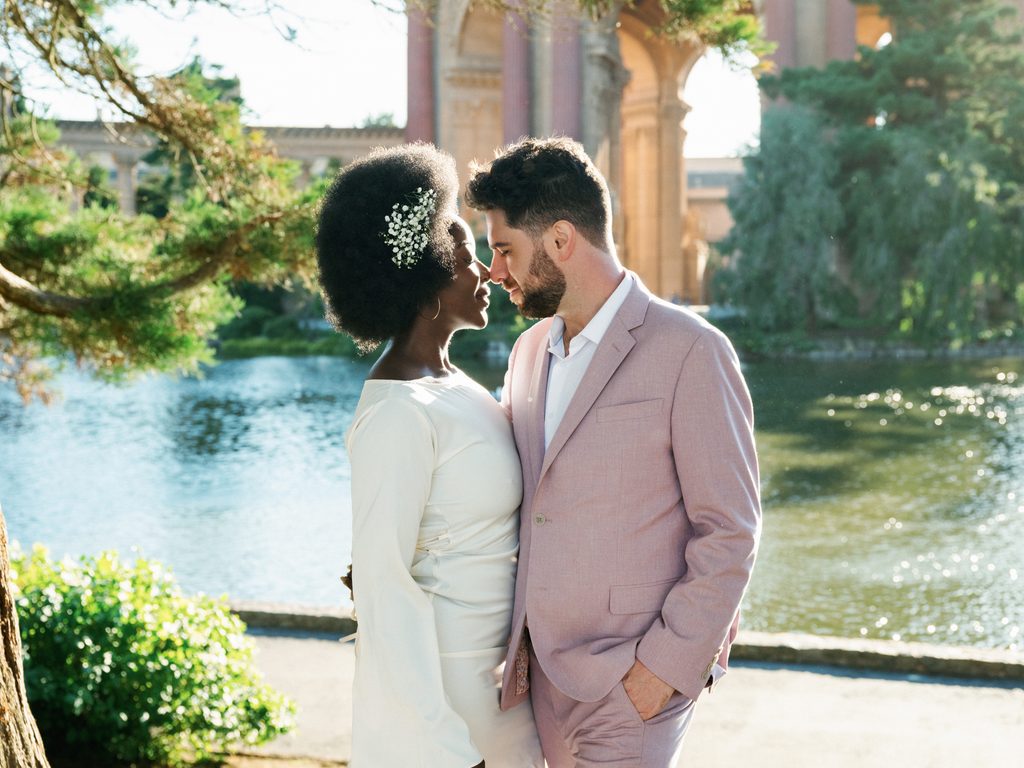
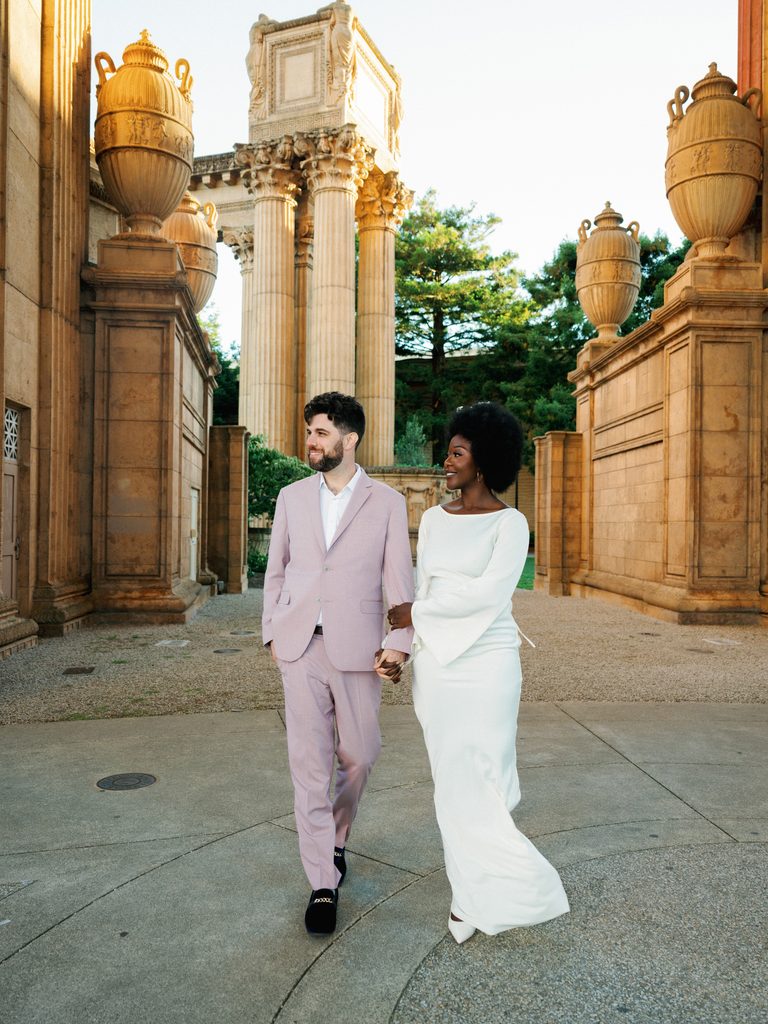
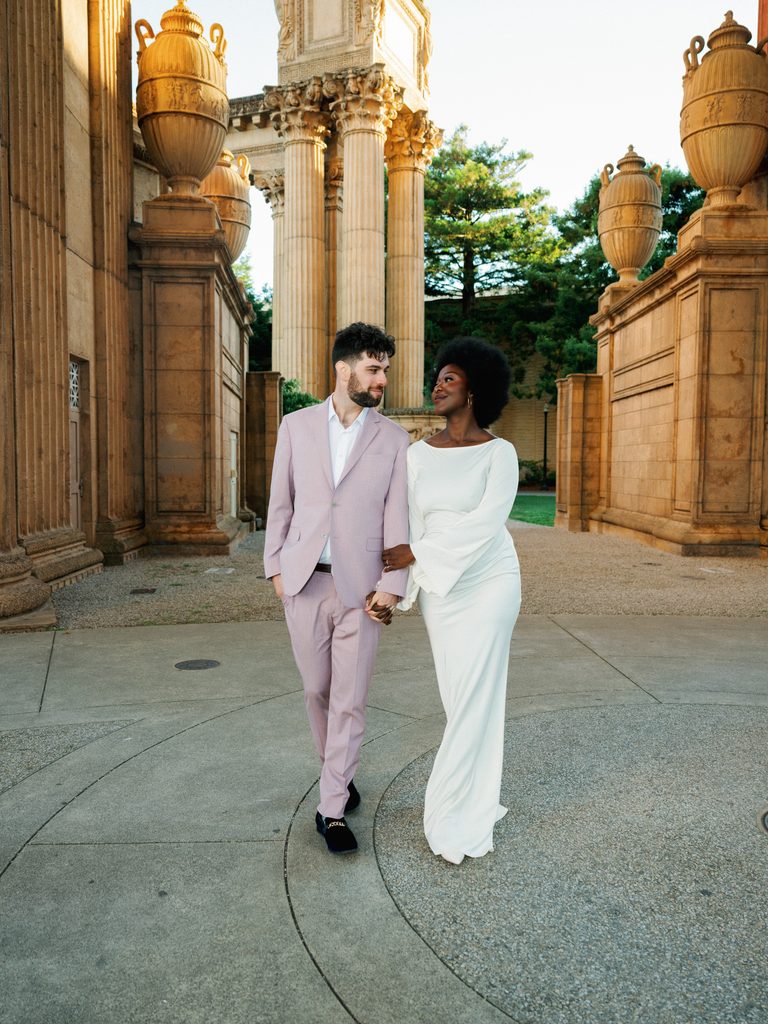
The colonnades offer several ways to compose a portrait. Shooting from one end emphasizes the depth of the walkway, while a side angle brings the columns and arches closer to the couple. A wider lens includes more of the structure; a longer focal length brings the columns closer together visually and gives the portrait a tighter composition.
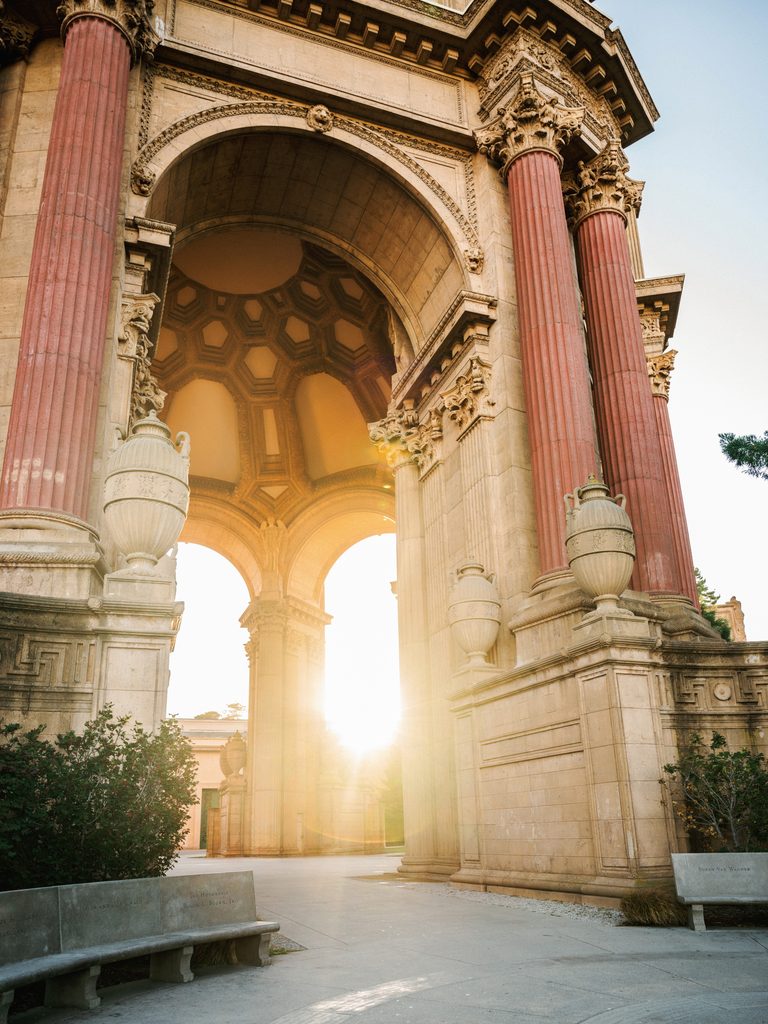
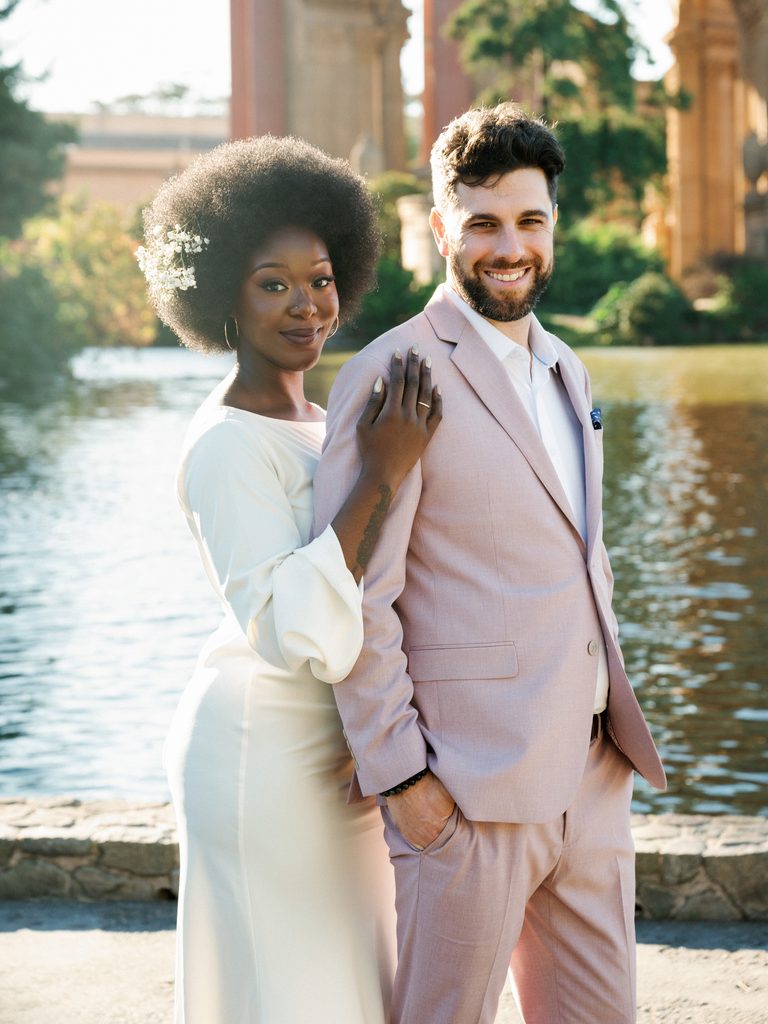
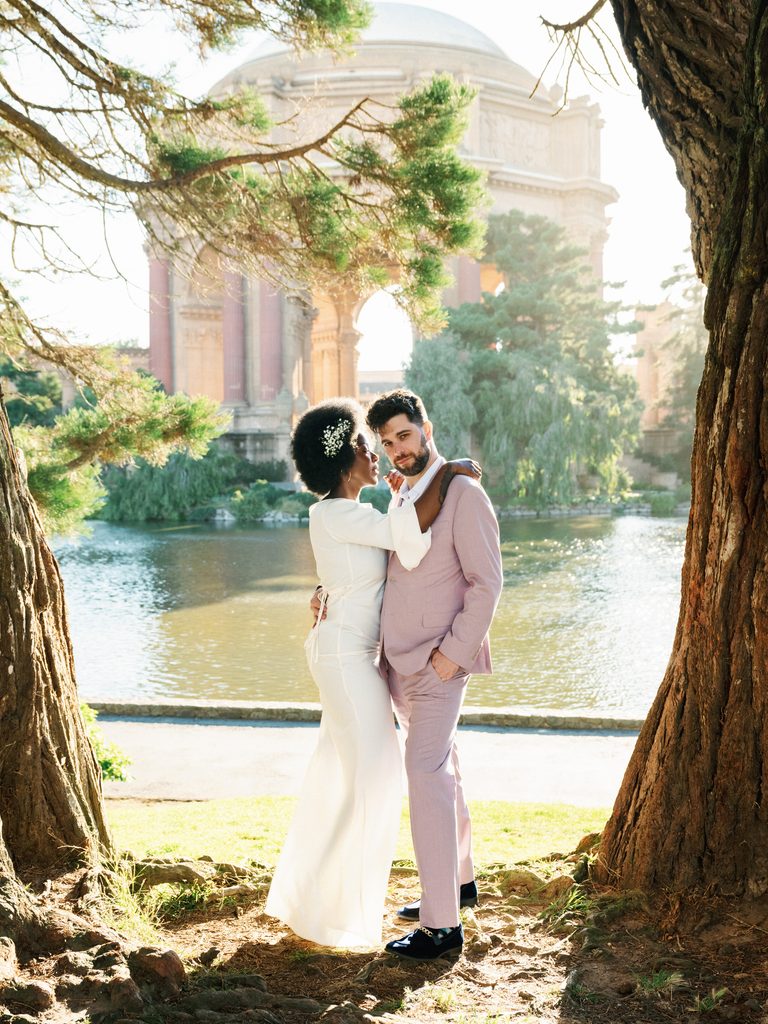
Beside the lagoon, the photographer can work with reflections, open water, and views toward the rotunda. A still surface may mirror the architecture, creating a composition that connects the couple with its surroundings. From another angle, the water can occupy less of the frame, leaving more attention on the couple and the details of their interaction.
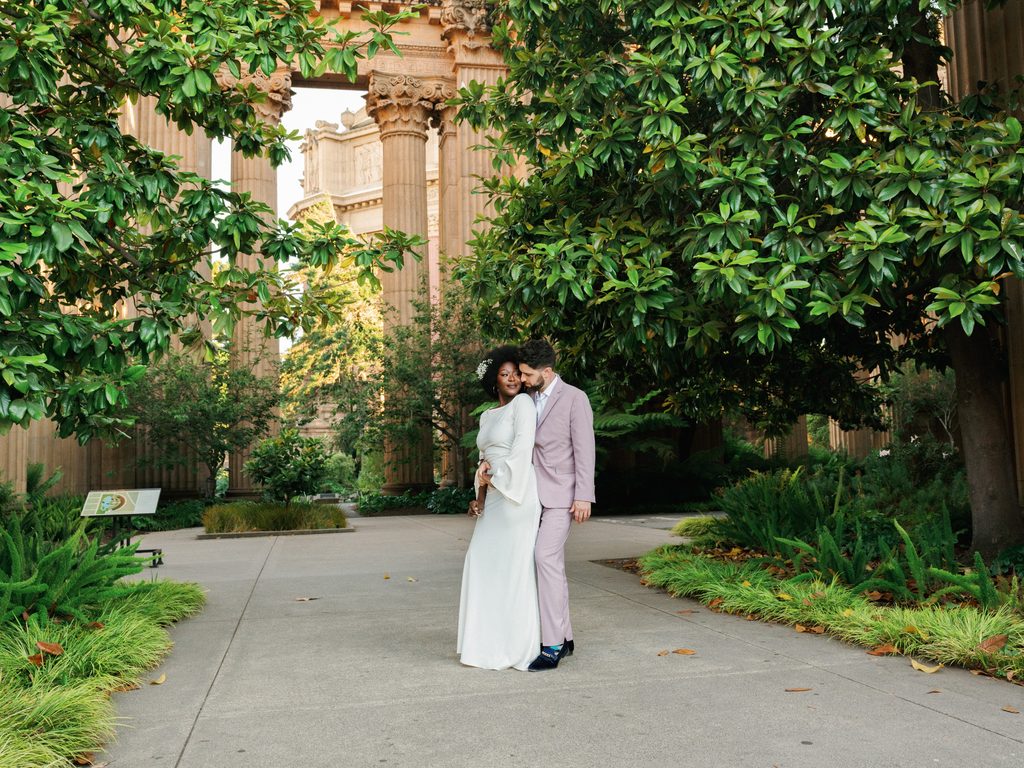
Film can move between these settings with a change in pace. A slow walk beneath the colonnades gives the filmmaker a sequence of movement and changing angles. Beside the lagoon, a stationary shot can leave space for a quieter exchange. Birds, water, and the sounds of the surrounding park can also be recorded as part of the location’s atmosphere. If the couple plans to speak on camera, a sheltered position can make clean audio easier to capture near the exposed waterfront.
A Manageable Route Through a Public Setting
The Palace of Fine Arts is a public park and a popular San Francisco destination. Visitors, other photographers, and groups moving through the grounds can affect which backgrounds are available at a particular moment. A short route with a flexible order gives the session room to adapt without depending on every area being clear.
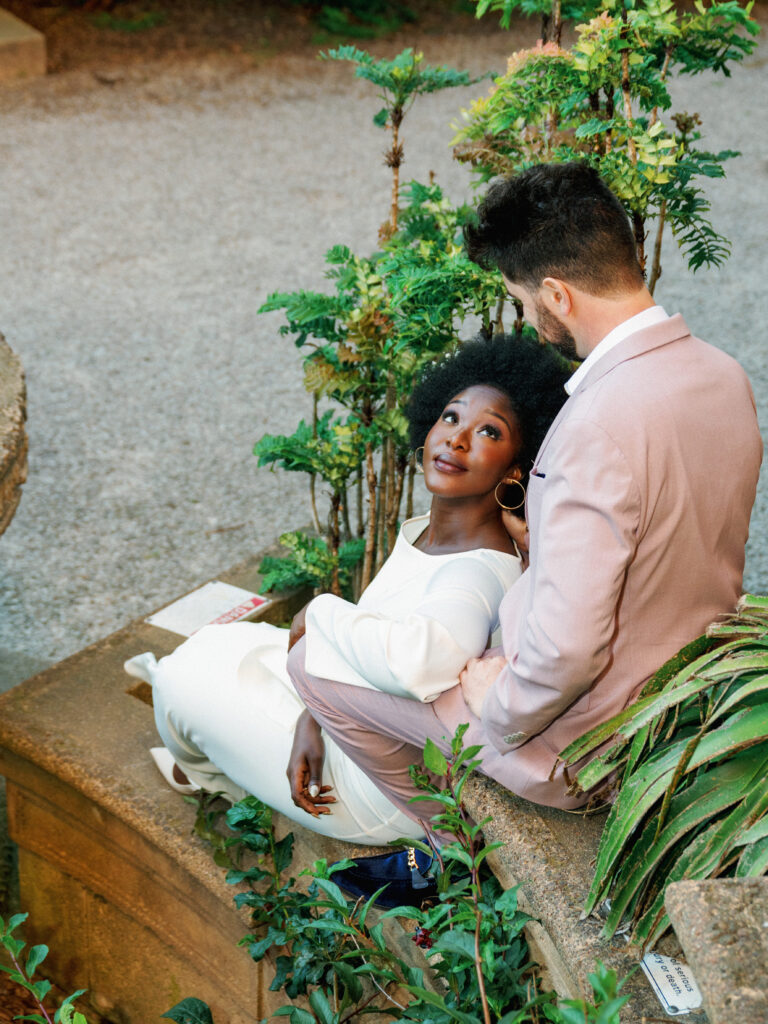
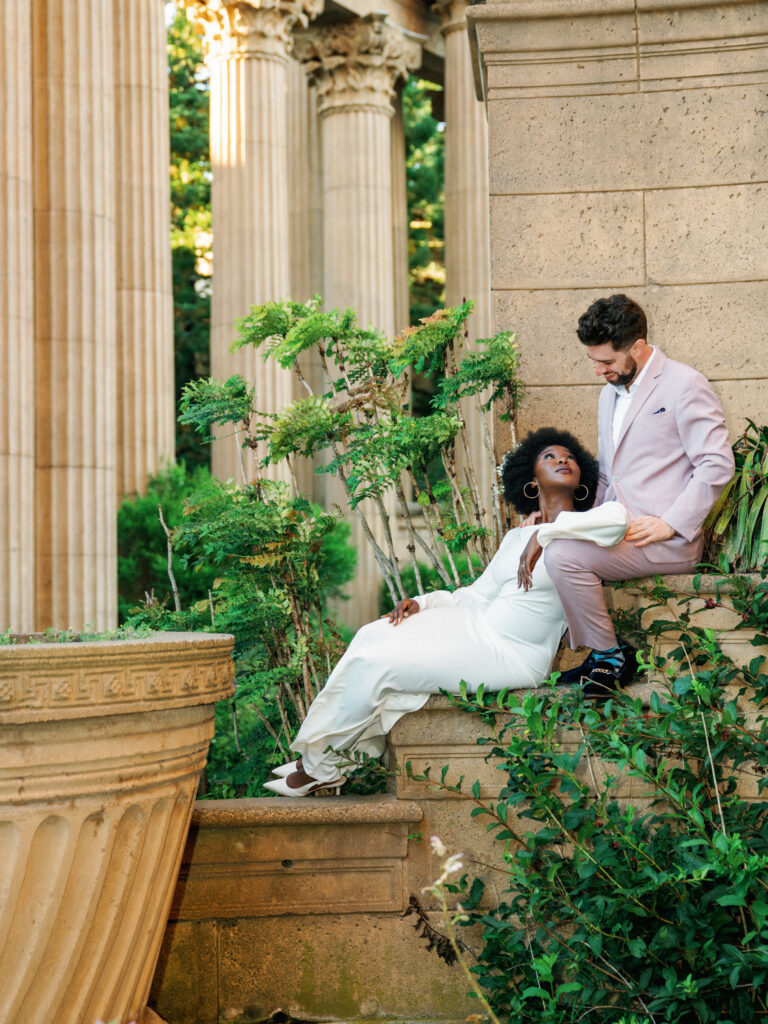
The lagoon, a stretch of colonnade, and a quieter part of the lawn can provide three distinct settings within roughly an hour. The photographer can choose the order according to visitor activity and available light, returning to a preferred spot later if it becomes less crowded. The rotunda can remain a priority for a wide architectural frame without determining the entire route.
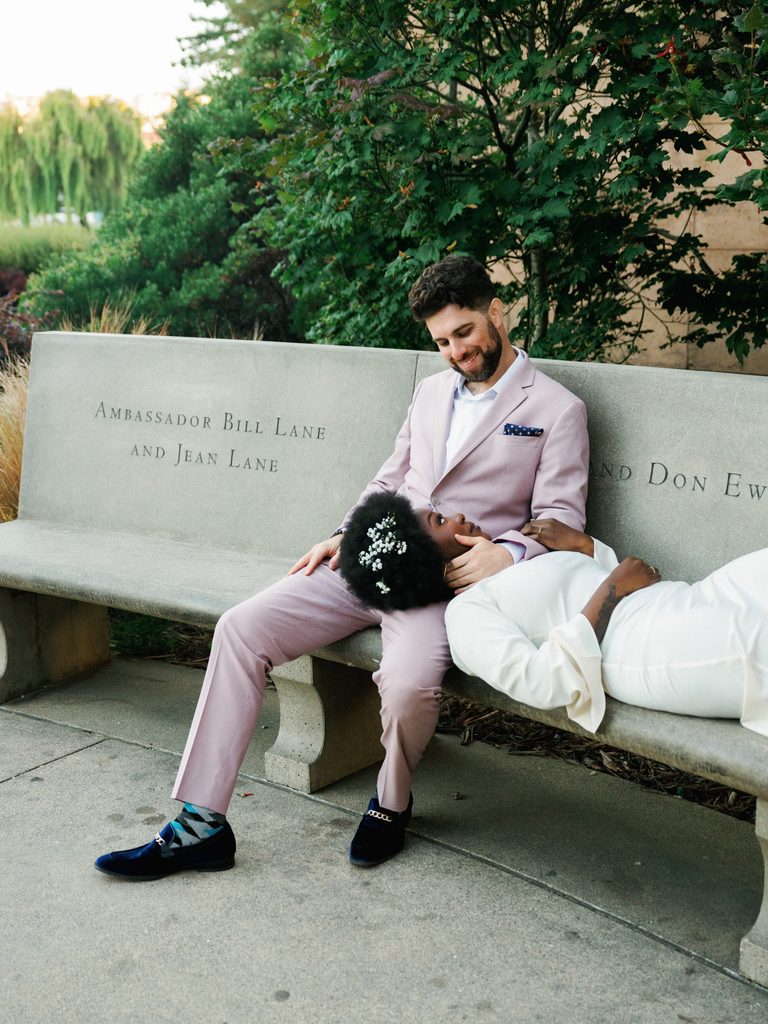
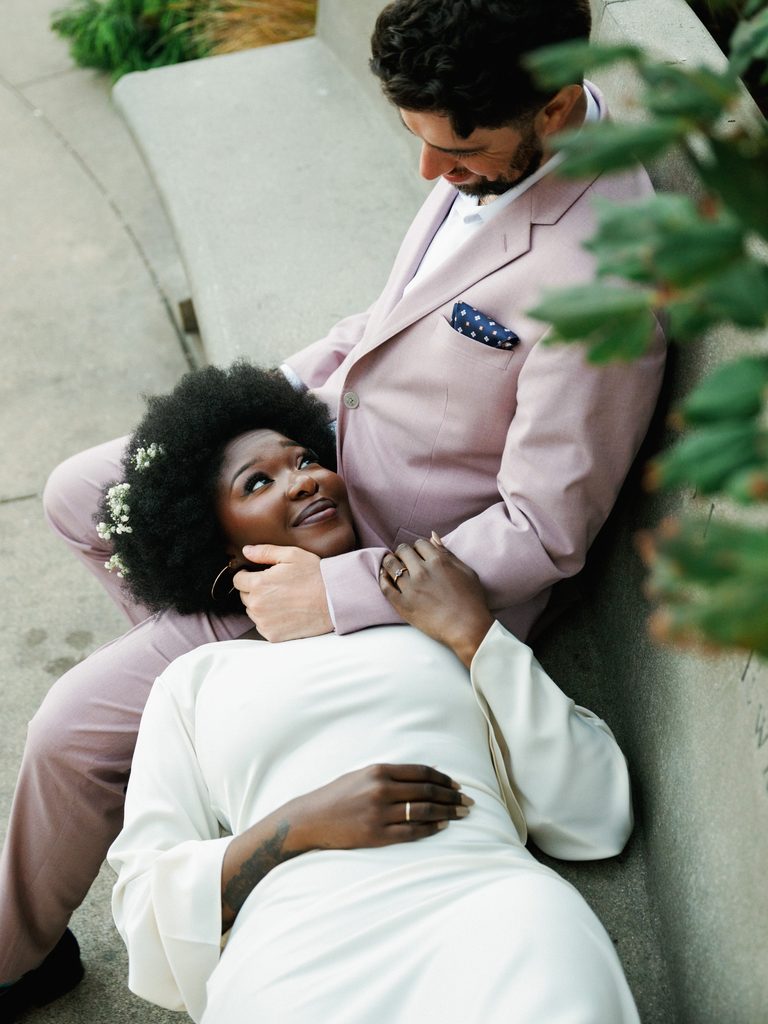
Walking time belongs in the schedule. The colonnades extend roughly 1,100 feet across the site, and moving between settings takes several minutes. The pace should suit both partners, including their footwear and comfort on paths and grass. Pauses also give the photographer and filmmaker time to prepare for the next composition.
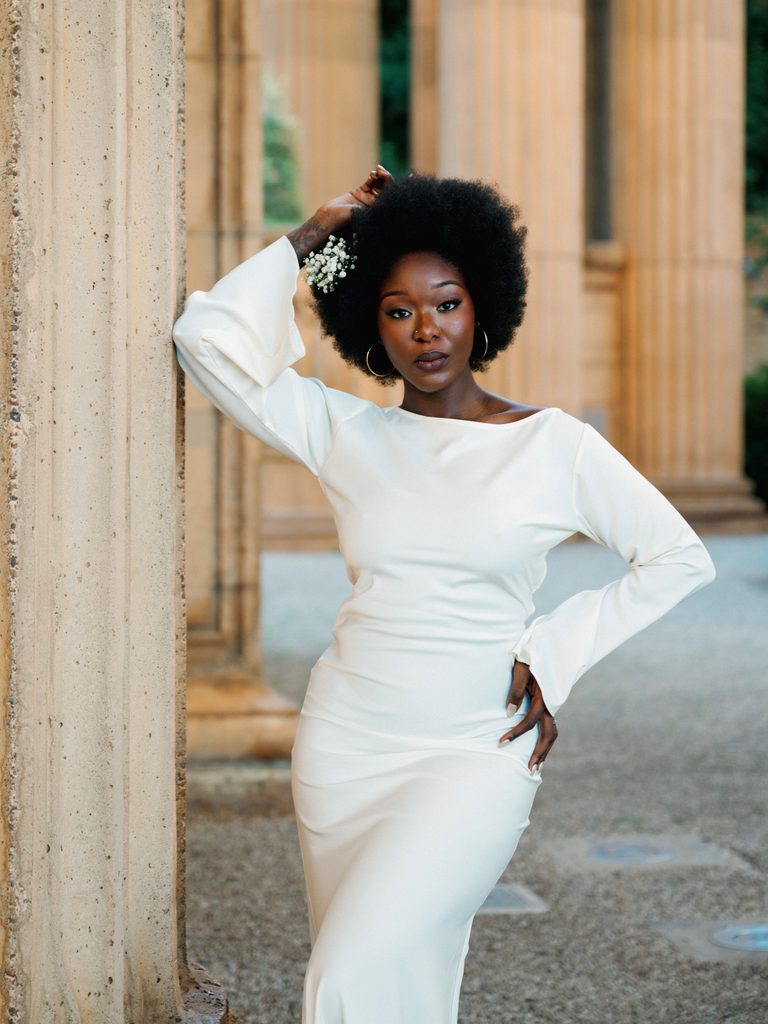
Equipment affects how the team moves through the grounds. A camera on a stabilizer needs more room than a handheld camera, and a tripod can occupy space used by other visitors. Discussing the planned equipment in advance gives the team an opportunity to choose a setup suited to the route and the intended coverage.
Arrival arrangements deserve the same attention. Agreeing on a meeting point, parking or drop-off details, and the walk to the first setting keeps the session from losing time before photography begins. An alternate starting location can also be useful if the preferred area is occupied.
Access and permit requirements should be confirmed before the session with the authority responsible for the site. San Francisco Recreation and Parks states that paid commercial photography and filming on its property require a permit, including wedding photography when the wedding is not taking place on department property. Its guidance asks applicants to allow at least five business days for review and processing. Current requirements and location availability should be checked directly with the department before finalizing the route or equipment setup.
Direction That Feels Comfortable to Both Partners
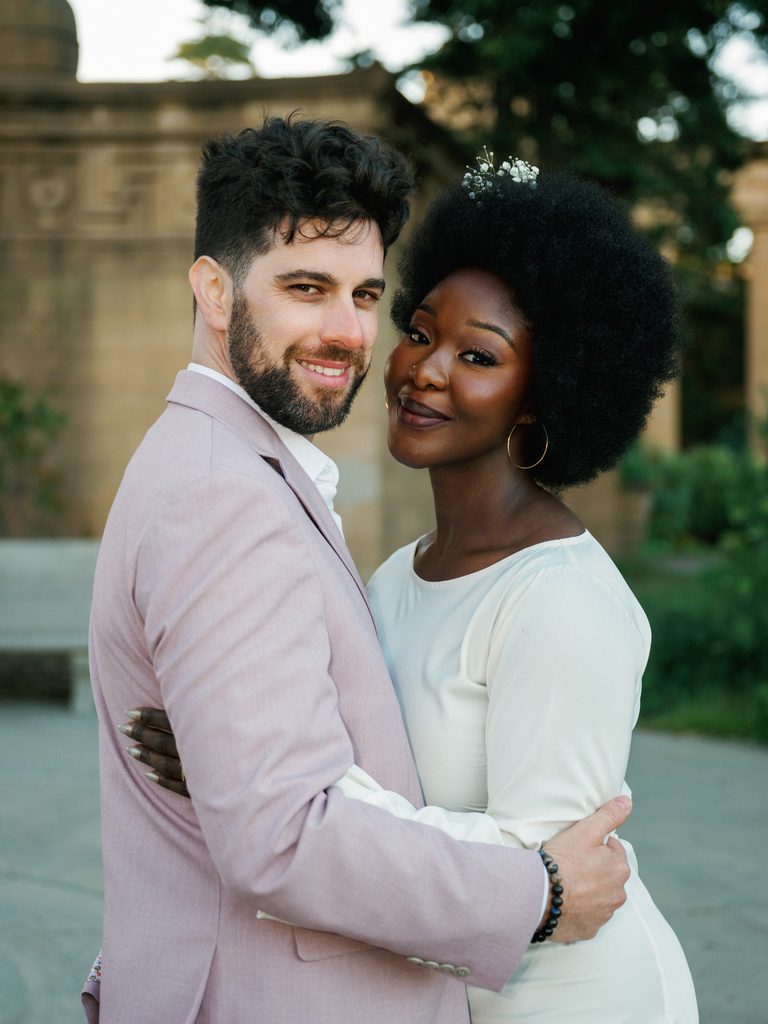
Partners can differ in how much direction they want during a session. One may enjoy clear guidance about where to stand and how to move, while the other prefers a few suggestions and more room to interact naturally. Discussing these preferences in advance gives the photographer a starting point for directing both people without defaulting to one person’s comfort level.
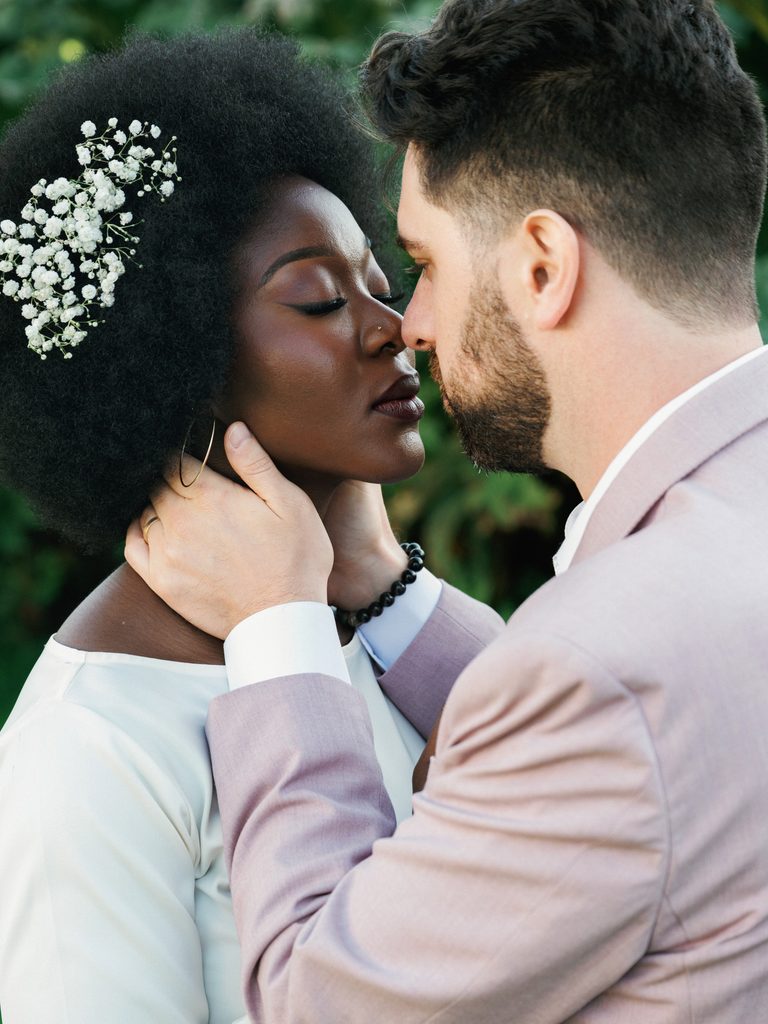
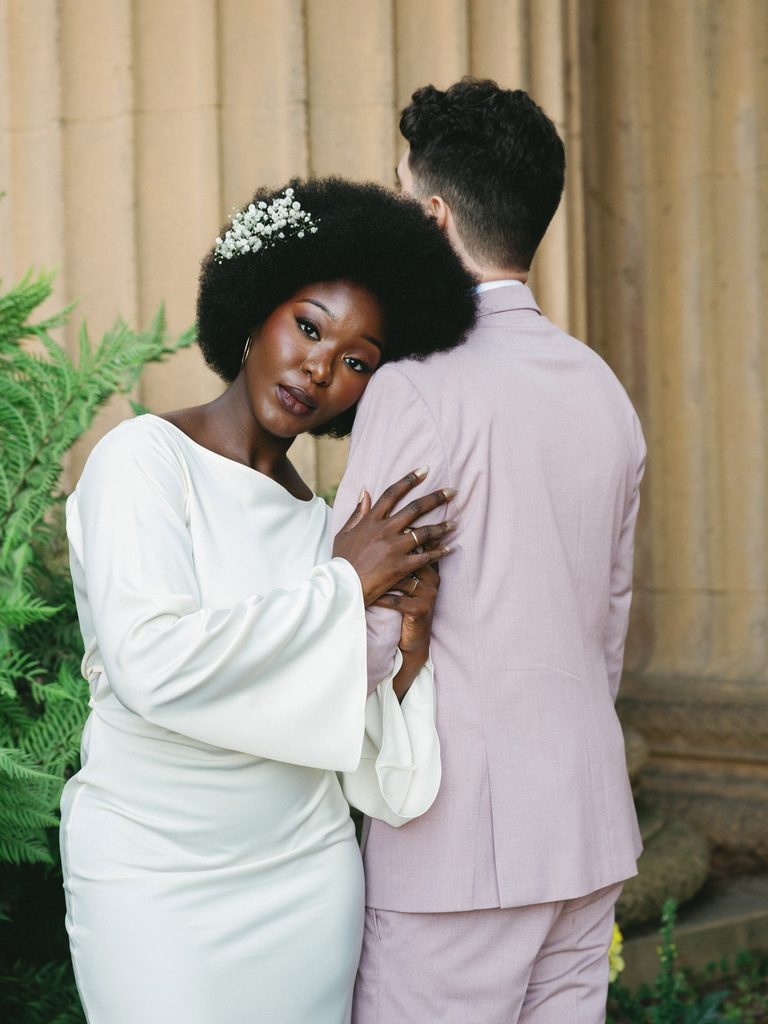
Small adjustments can provide enough direction for a composed portrait. The photographer might suggest moving closer, shifting weight, slowing a step, or turning slightly toward the light. A pause between suggestions gives the couple time to settle into a position, with their expressions and gestures remaining natural.
The couple can also share a few preferences about the pace and style of the session. They may want clear direction for some portraits and more freedom during others, or prefer to move between these approaches as the session progresses. Three or four concise notes give the photographer a useful starting point without prescribing every pose or requiring an extensive reference board.
Light, Weather, and Clothing in One Plan
The light at the Palace of Fine Arts changes across the day. The rotunda and colonnades cast shifting shadows, while the lagoon and open lawns have a different relationship with the sky. Morning can bring softer light and calmer water, while later hours may introduce warmer tones and stronger contrasts across the architecture. The dome is also described as illuminated in the evening, although current lighting details should be confirmed before planning a session around that feature.
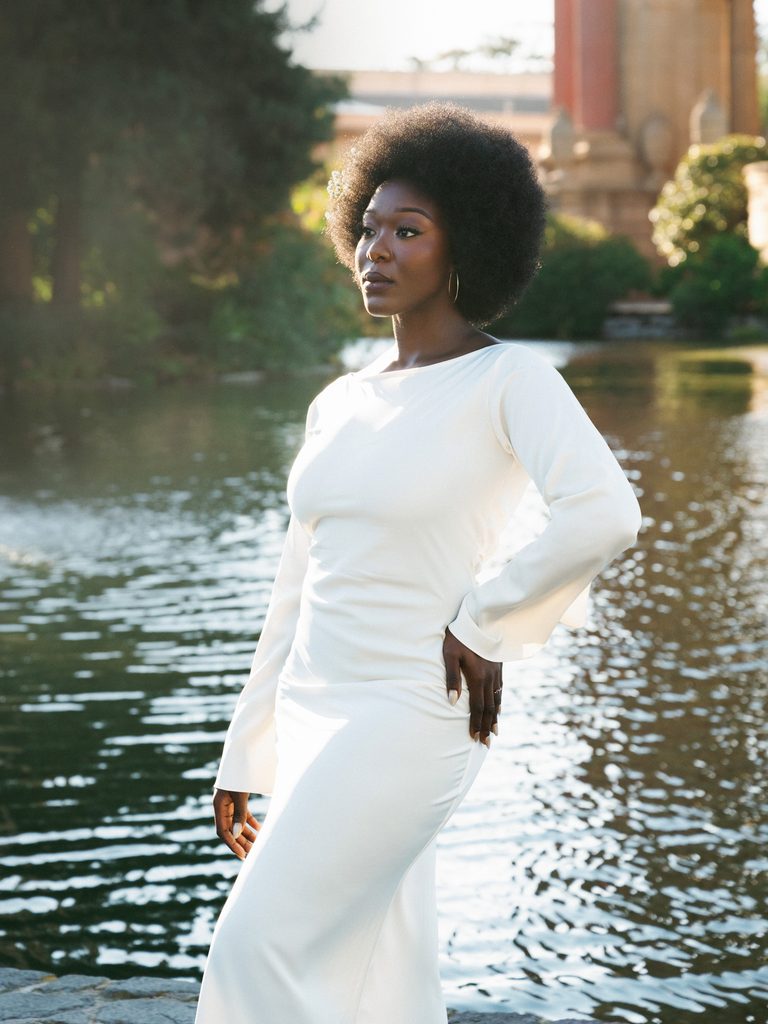
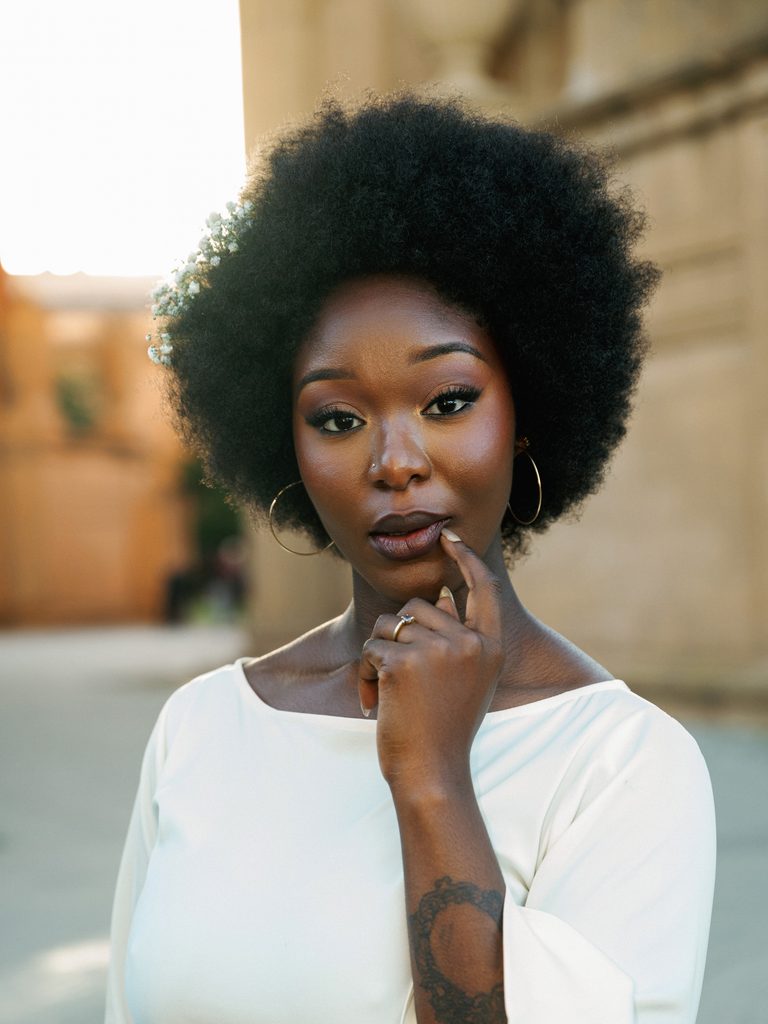
San Francisco’s waterfront can feel cool and windy even when temperatures elsewhere in the city are mild. Layers that can be removed for portraits and put back on between settings keep the couple comfortable during the walk. Clothing that moves naturally in the breeze can add movement to photographs and film, while shoes suited to paths and lawns make it easier to move between locations without interrupting the pace.
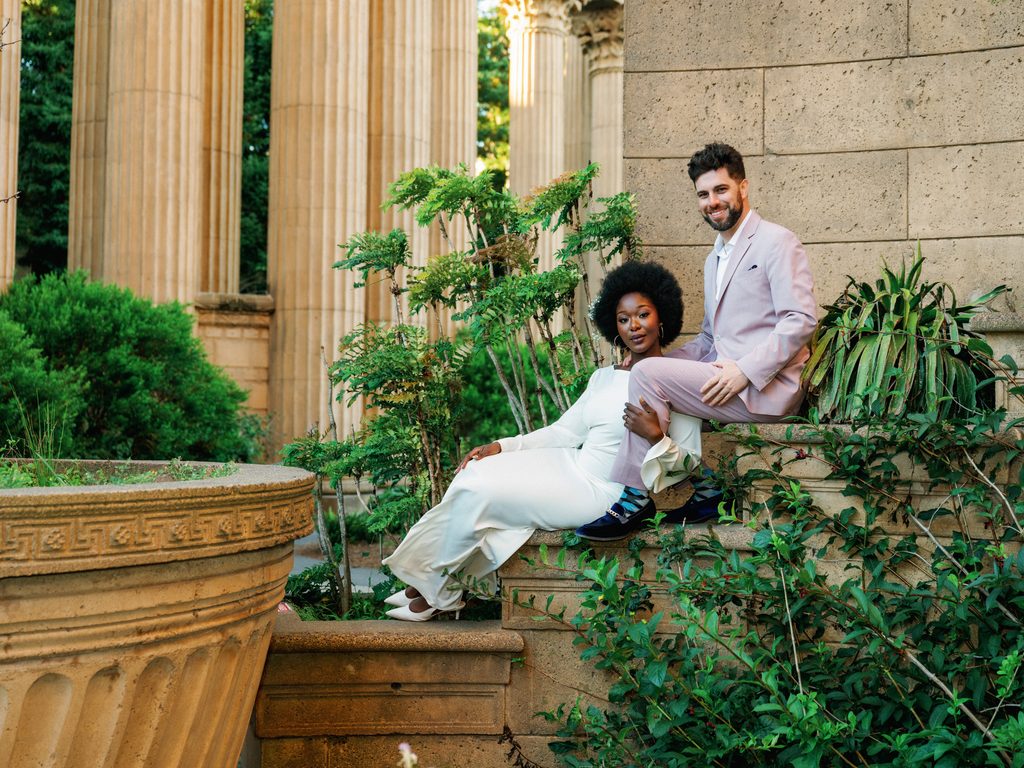
Wind also changes the surface of the lagoon, affecting how clearly the architecture appears in its reflections. Hair and fabric may move more noticeably in exposed areas, giving the photographs a different character from those made in sheltered parts of the grounds. Rain can change the available options, so an indoor alternative is worth considering if the couple has access to a suitable space.
The photographer can assess the light and weather on arrival and choose the order of the settings accordingly. A session can begin with the locations that suit the available conditions, then move to other parts of the grounds as the light changes.
FAQ
Do editorial engagement photos require modeling experience?
No. The photographer can provide detailed direction or offer a few simple prompts, depending on what feels comfortable for the couple. These preferences can be discussed before the session.
Can the Palace of Fine Arts be busy during an engagement session?
Yes. Visitors may be present near the rotunda, colonnades, and lagoon. A flexible route gives the photographer alternative settings to use if a preferred area is occupied.
Should a couple bring a large reference board?
A few references and concise notes about direction, composition, and setting can communicate the intended style without prescribing every pose. The photographer can then adapt the approach to the location.
What if the preferred area is unavailable?
The session can move to another part of the complex, with the preferred area revisited later if it becomes available. Current access information is worth checking before the session.
Are permits required for engagement photos at the Palace of Fine Arts?
San Francisco Recreation and Parks requires permits for certain commercial photography and filming on its property, including paid wedding photography when the wedding takes place elsewhere. Couples should ask their photographer to confirm the applicable requirements directly with the department before the session.
Let’s Plan Your Palace of Fine Arts Engagement Session
We would be happy to plan your engagement session together, discussing the locations, timing, and visual direction that reflect your preferences.