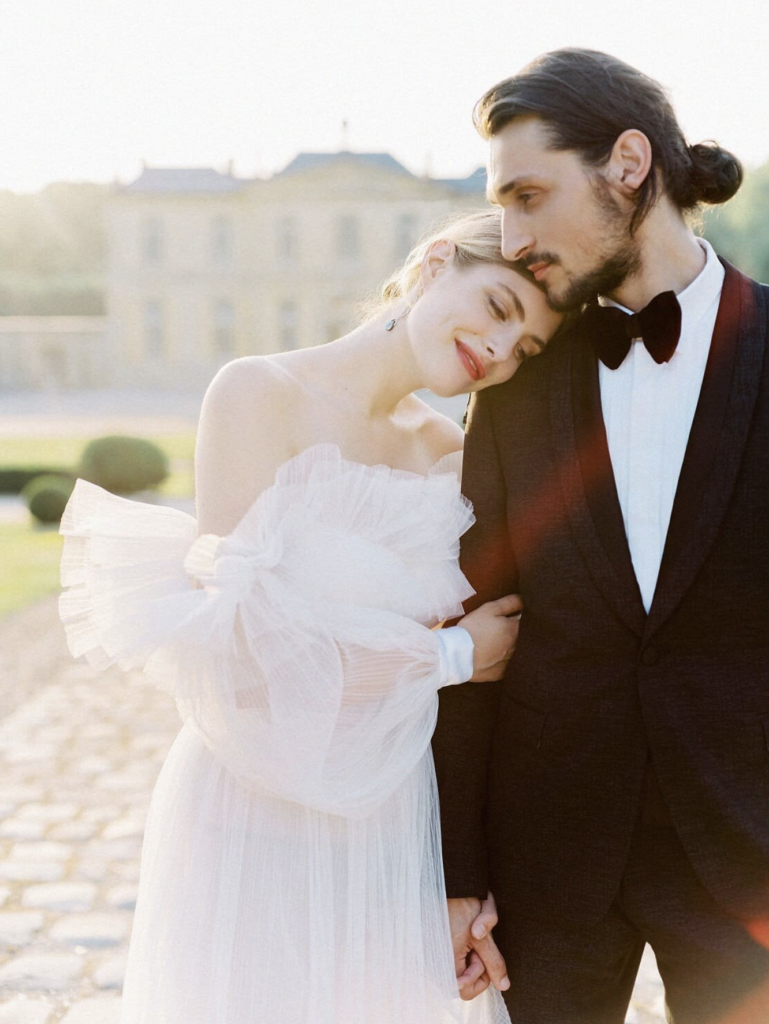
A Sonoma wedding photographer is not planning a sequence of backdrops. The real work is turning one property, or a small group of confirmed spaces, into a day that moves naturally from preparation to ceremony, portraits, dinner and dancing. When that route is clear, photographs can stay composed and film can keep the voices, pauses and movement that made the celebration feel like itself.
Start with the venue agreement and the current property plan. Confirm which rooms, grounds and portrait areas belong to the booking, who controls each transition and what changes if an outdoor moment moves inside. The wedding venue checklist can hold those answers before a coverage timeline is built.
Think in transitions, not in a list of locations
A Sonoma property can contain several visual worlds within a short walk: a getting-ready room, an open ceremony setting, a shaded edge for family photographs and a reception space that changes again after sunset. They should not become four separate productions. Give every space one job in the day and protect the movement between them.
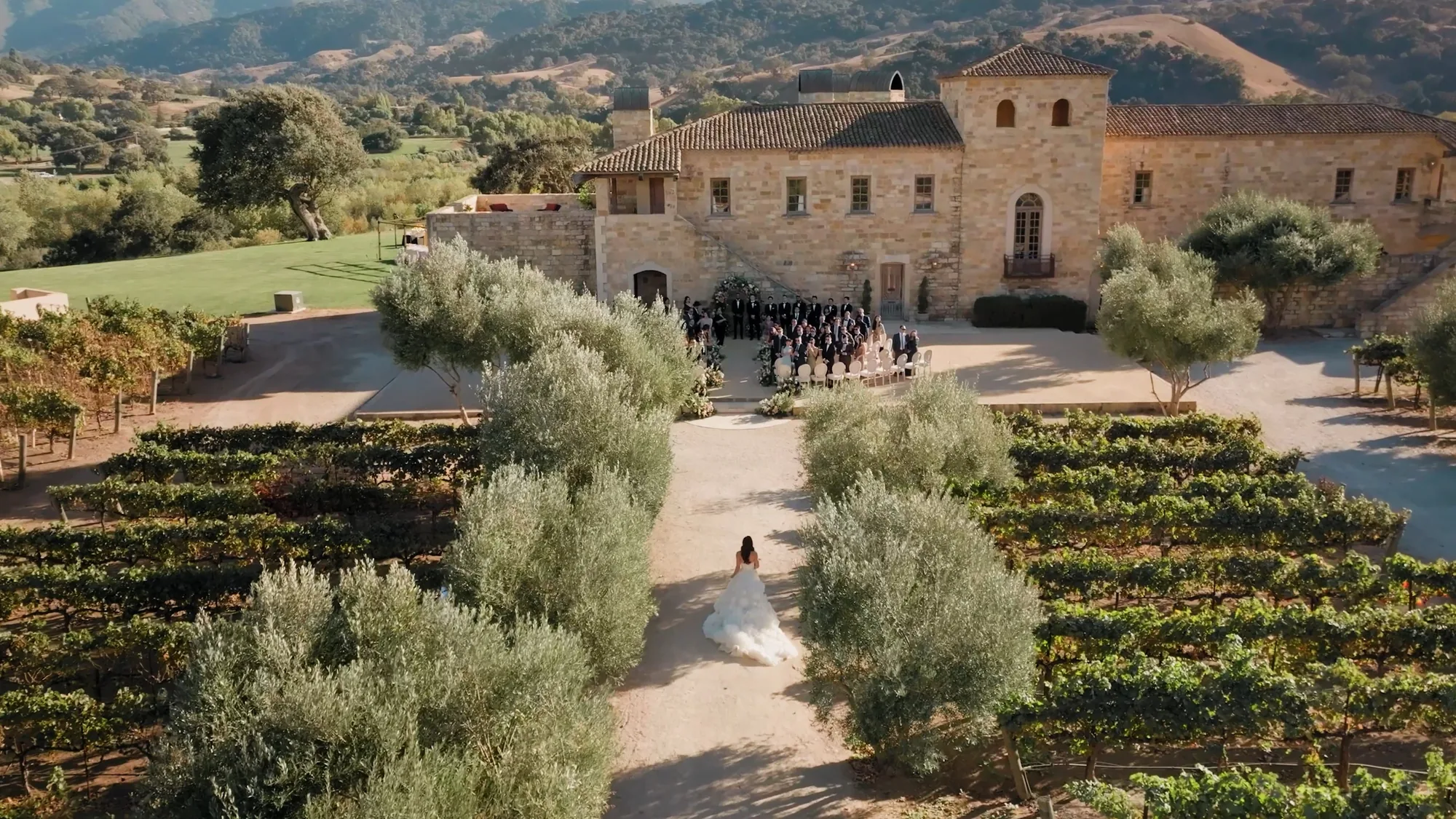
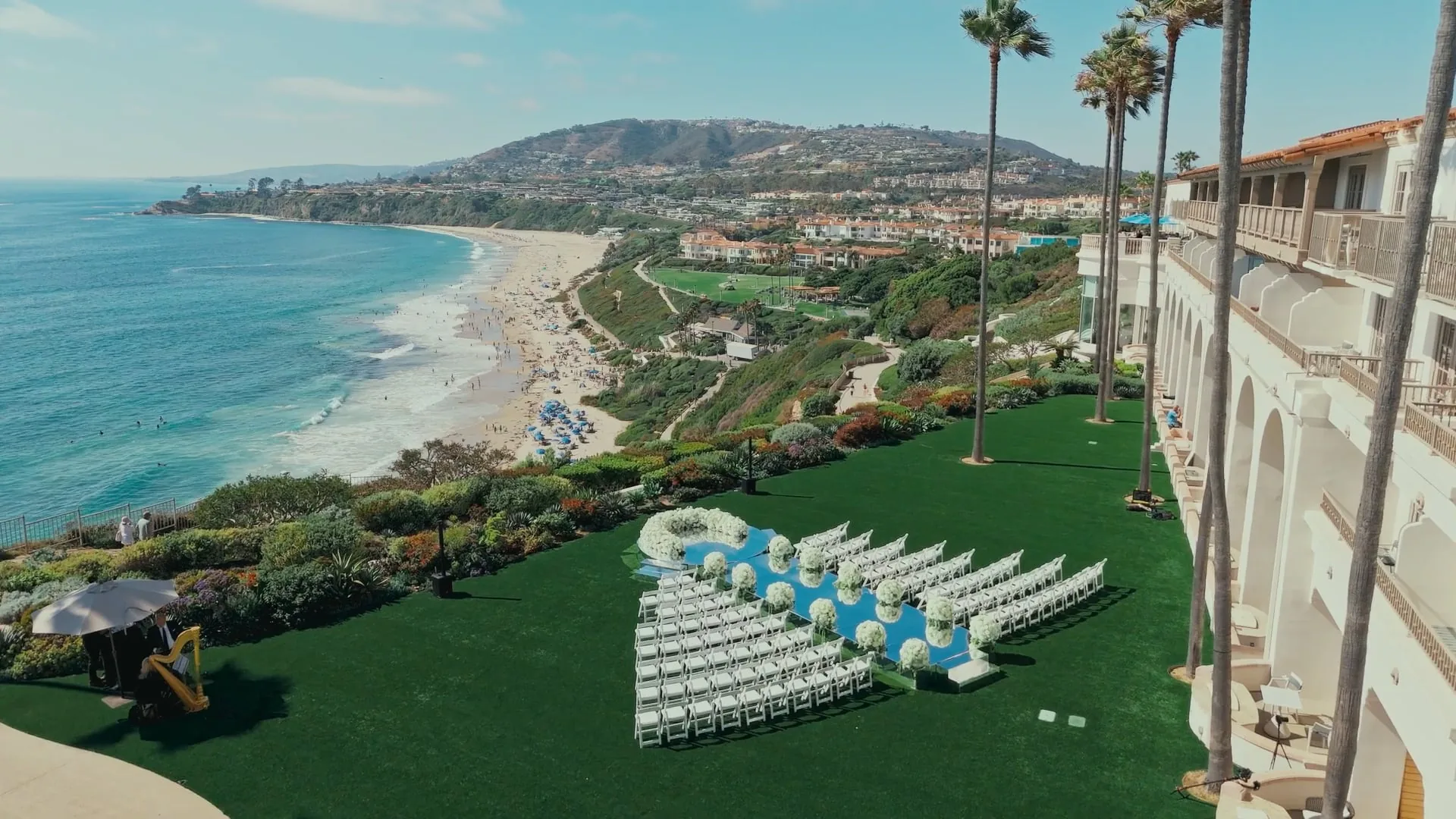
The aerial image is a Dreamwood portfolio reference, not evidence of a Sonoma event or venue relationship. It shows the planning question clearly: where do guests gather while portraits happen, which route stays clear for the couple and how does the team return to the celebration without losing momentum?
Write the property route before the shot list
The first room
Confirm where coverage begins, how many people will be in the space and whether personal details can be arranged without crowding the room. A calm beginning gives photo and film a visual language before the ceremony begins.
The ceremony handoff
Name the person who confirms that the ceremony space is ready, seats are filled and the processional may begin. The same handoff helps the film team prepare for vows, readings and live sound.
The portrait window
Choose one short window that fits guest movement. Record the approved areas, family-group location and rain alternative so the couple is not asked to solve access questions on the wedding day.
The reception return
Plan how the couple moves from portraits or cocktail hour into dinner, speeches and dancing. That transition is part of the story, not empty time between photographs.
Let the property decide when portraits make sense
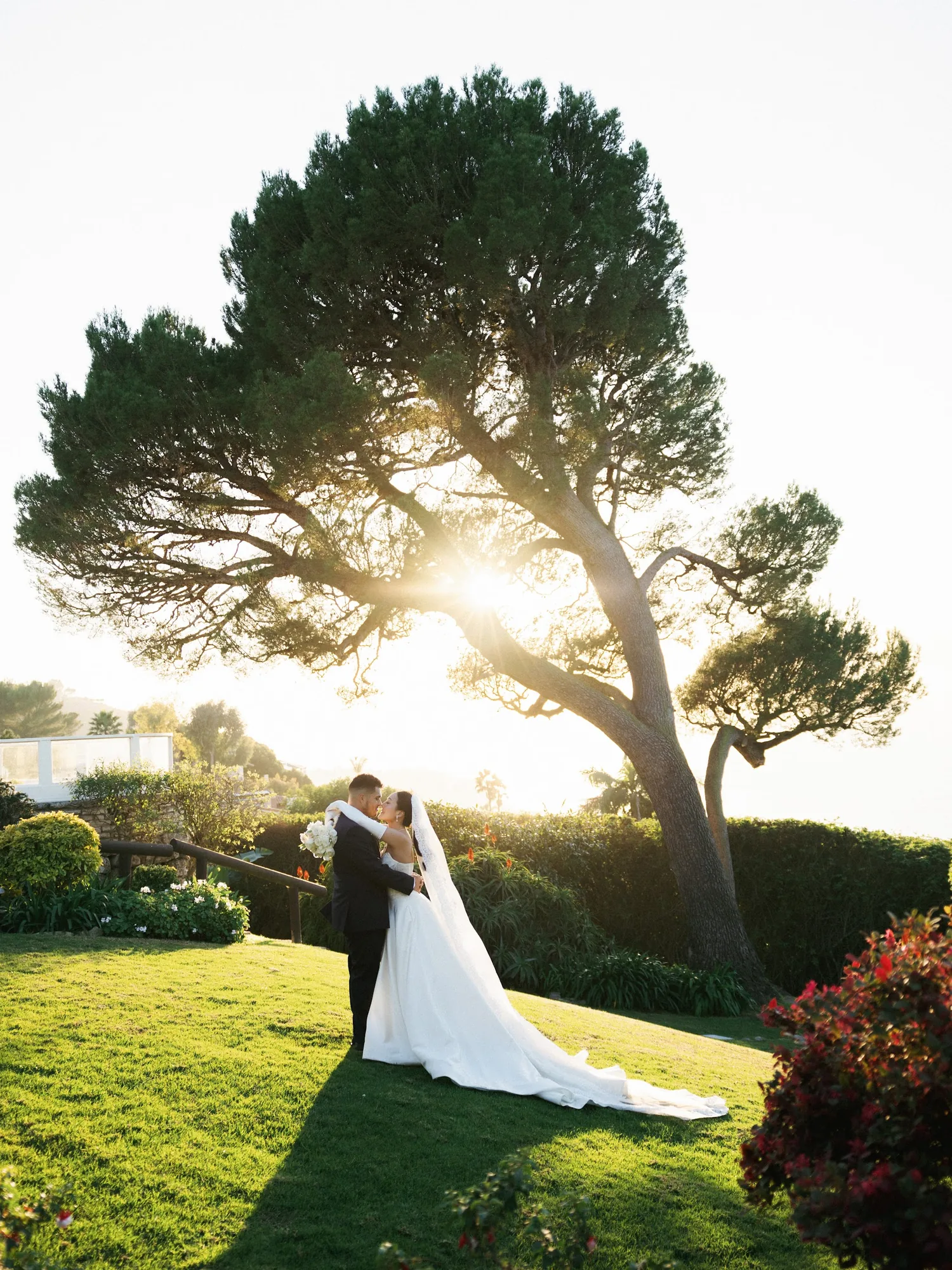
Soft light is useful, but it should not become the schedule. Begin with the ceremony time, the guest experience and the areas the venue confirms. Then choose a portrait interval that fits those facts. A brief walk through two connected settings can create more variety than a long drive to a famous viewpoint.
If the light changes or the preferred outdoor area is unavailable, move to a planned interior, shaded edge or architectural space. The goal is not to imitate a venue gallery. It is to make photographs that belong to this couple, this route and this amount of time.
A venue page is not permission
Sonoma Parks says that a historic park building or grounds may be available for a wedding or special event and directs inquiries to its events contact. The important word is may. Published inspiration does not confirm date availability, access, portrait permission or the spaces included in a private event.
Use the same standard for every estate, winery, hotel or outdoor setting: ask the current operator what the agreement includes. Dreamwood does not turn a public listing or an image into a relationship claim.
Build the family photographs around people, not scenery
Family photographs are usually the most coordination-heavy part of the day. Keep them close to the ceremony exit or cocktail-hour route, identify the people who must be present and assign one relative or planner to gather each group. That protects the portrait window and keeps guests from waiting without knowing where to go.
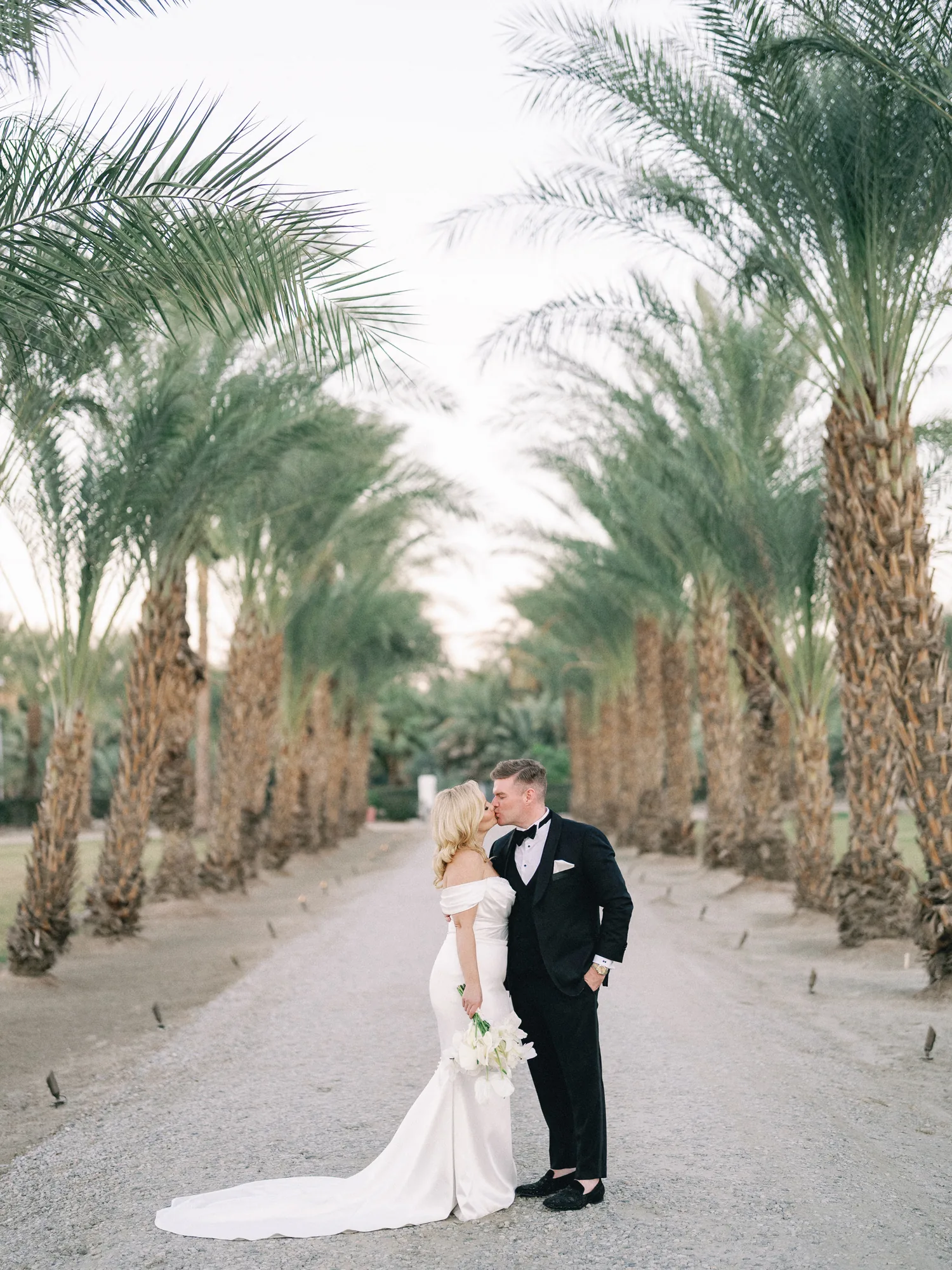
After the essential groups are finished, let the couple have a quieter interval. The reference image beside this section is included for pacing and composition, not as a Sonoma location claim.
Give film a sound map, not only a timeline
Photography can hold a fraction of a second. Film needs the sentence before it, the reaction after it and clean enough sound to make the moment usable. Share the ceremony order, readings, vows, introductions and speech plan before the day. Confirm who supplies microphones and who can answer a sound question at the venue.
The Dreamwood film below shows how voices, room changes and guest movement connect a wedding story. It is a portfolio example and is not presented as a Sonoma celebration.
Keep the outdoor alternative inside the same story
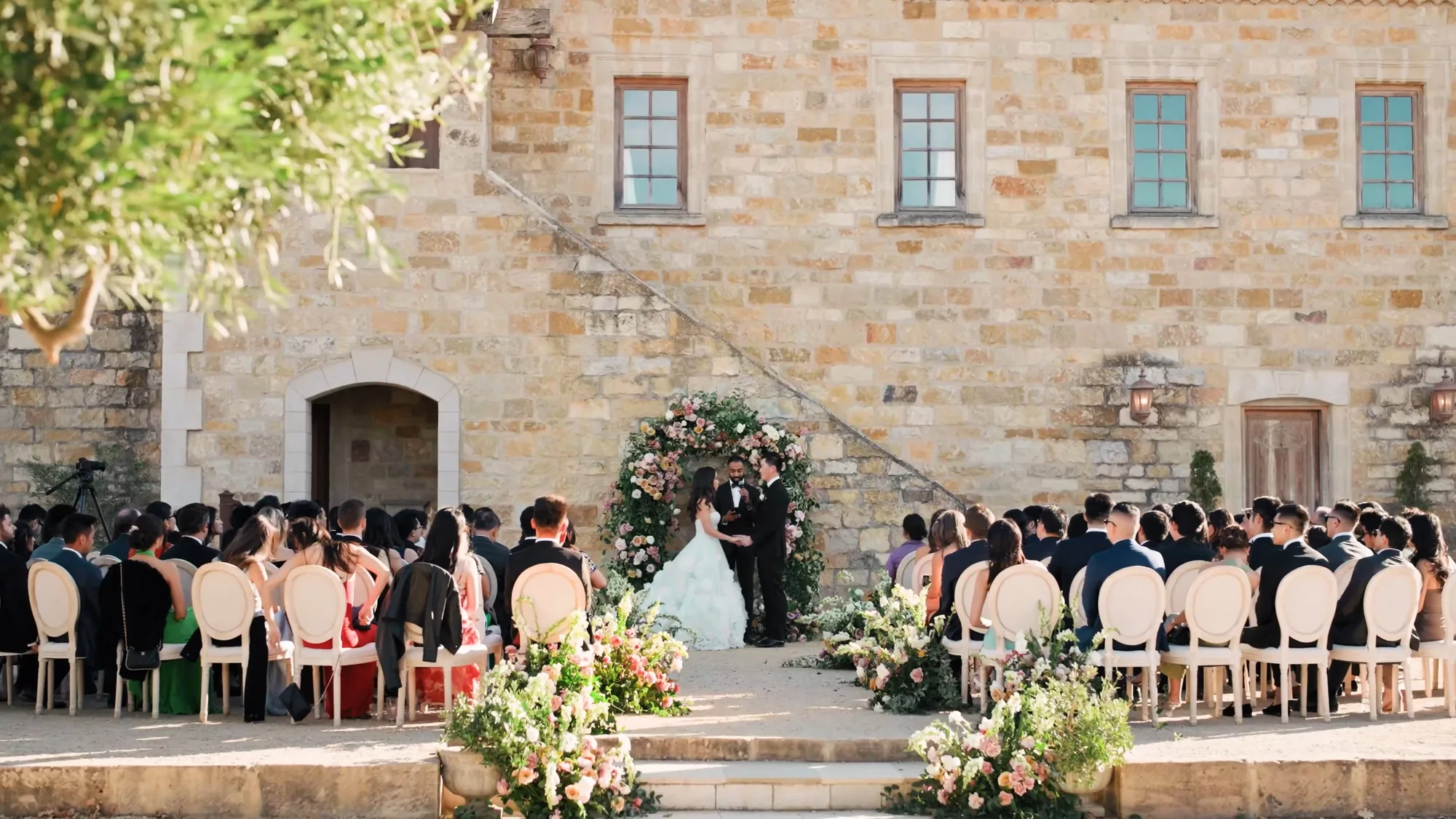
An outdoor ceremony is not a promise of a particular photograph. Ask who decides when the plan changes, where guests move, what the indoor sightlines are and whether the sound plan changes with the room. Photo and film can adapt quickly when the alternative is known before guests arrive.
The ceremony reference shown here illustrates scale and sightlines. It does not identify a Sonoma venue. The useful lesson is to plan the people, audio and transition first, then work with the setting that is actually available.
Have the Sonoma route in hand?
Share the date, confirmed property spaces, ceremony time and whether you are considering photography, film or both. We can begin with the transitions you want to protect and the access questions still open.
Review complete work for the parts no mood board shows
A portfolio should answer more than whether the portraits feel polished. Look for preparation in ordinary rooms, family groups, a ceremony in difficult light, expressions during speeches and the point when the reception becomes unpredictable. If film matters, listen for vows and toasts as carefully as you watch the images.
This final estate reference is visual context only. For Dreamwood work, continue to the gallery and wedding films. Use complete examples to discuss consistency, then bring the actual Sonoma venue plan into the conversation.
Frequently asked questions
How much time should we reserve for Sonoma wedding portraits?
There is no useful universal number. Start with the ceremony time, family-group list, guest route and approved portrait areas. A short, well-planned window on one property can feel calmer and produce more variety than several disconnected stops.
Do we need an off-site portrait location?
Usually not unless it has a clear role and confirmed access. First use the spaces included in the wedding agreement. If an off-site stop remains important, confirm travel, parking, permission and the person responsible for keeping the timeline moving.
What should we ask about an outdoor ceremony?
Ask which space is contracted, who makes the weather decision, where guests move, what the indoor sightlines are and whether microphones or vendor access change. Record the answer in the timeline rather than relying on a marketing photograph.
How can photography and film stay unobtrusive?
Share the ceremony order, portrait priorities, important people and sound moments in advance. A common route lets both teams choose positions before the day and reduces the need to redirect the couple or guests.
Bring five confirmed answers to the planning call
Have the starting room, ceremony location, portrait access, indoor alternative and reception route ready. Add the moments that matter most to you and whether you want photography, film or both. Those facts make the conversation specific without turning the wedding into a production schedule.
For a broader comparison, use the Dreamwood City Pages hub and Wedding Venue Photography. Review the current service structure on the pricing page, then use the protected inquiry form below when the route is ready to discuss.