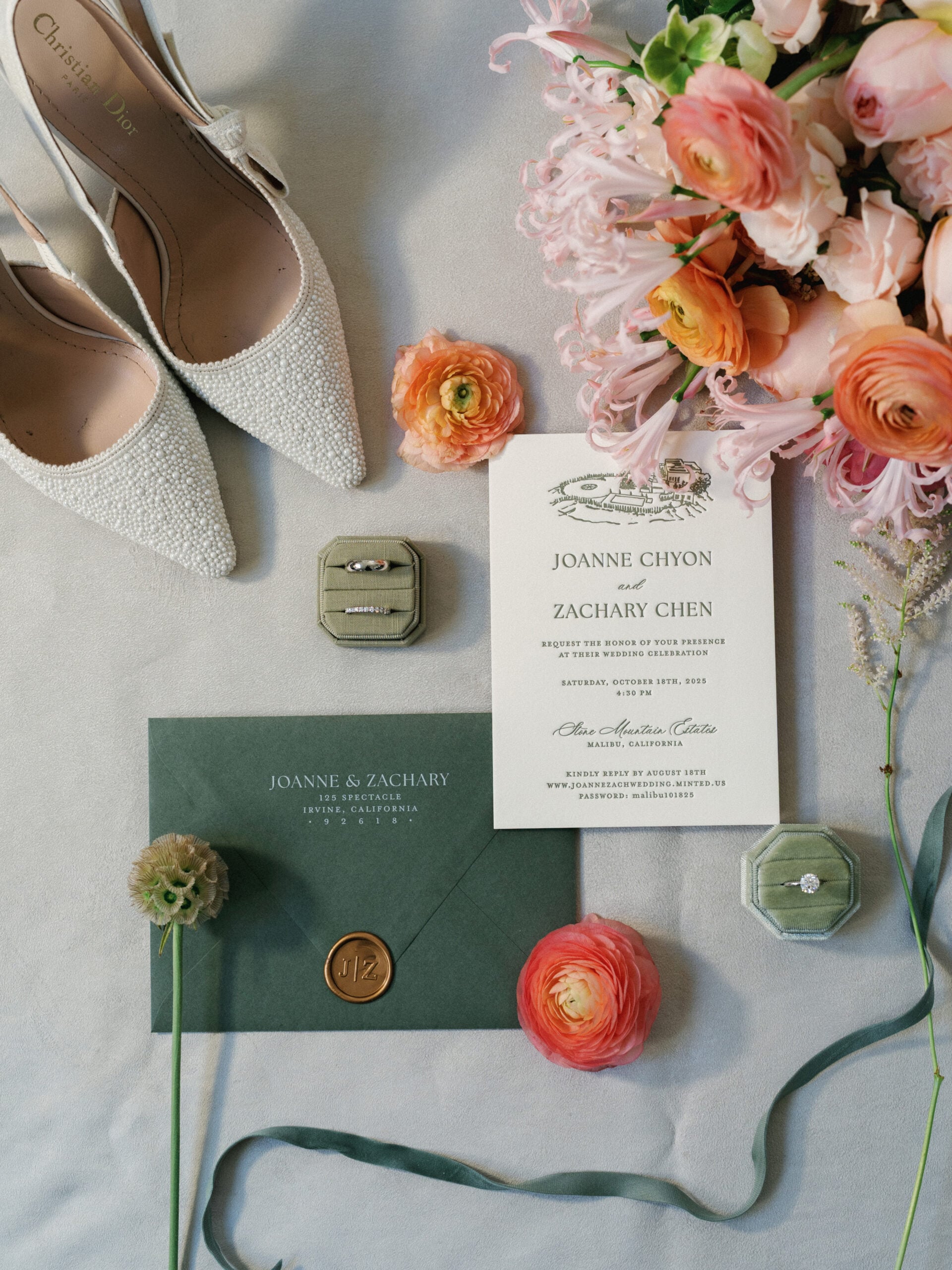
Why Detail Photos Matter for the Full Wedding Story
Wedding detail photos are often the first images created on the wedding day.
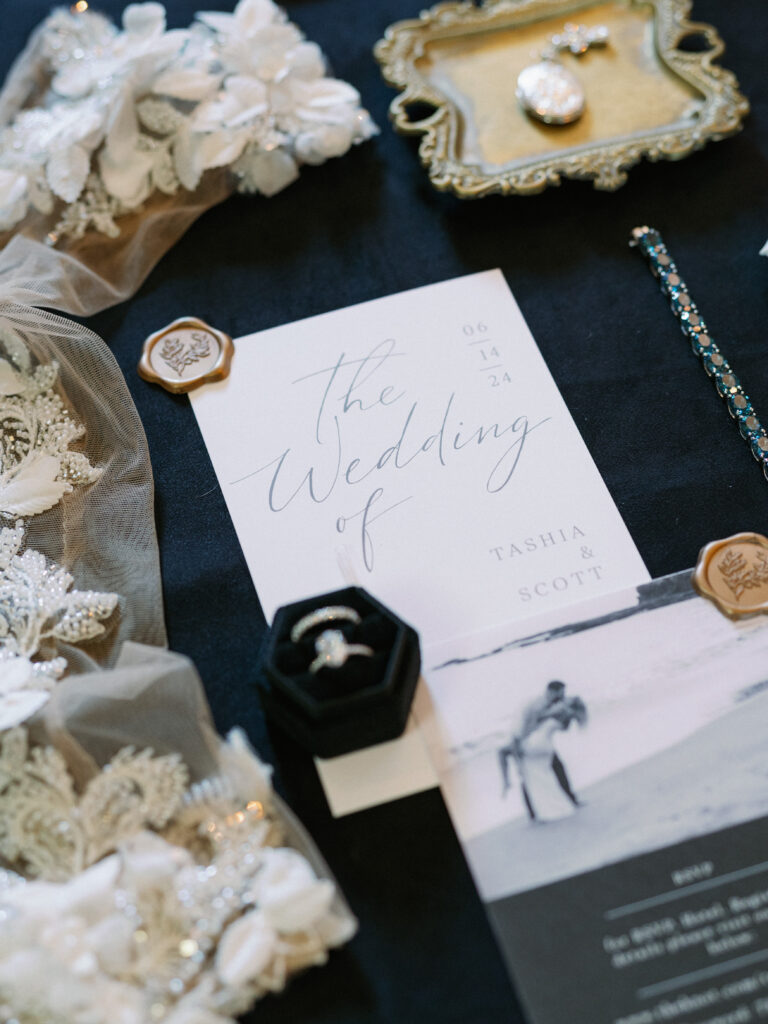
Before guests arrive, before the ceremony begins, before the room fills with movement, these photographs introduce the visual language of the celebration. The invitation suite, the rings, the jewelry, the perfume, and the heirlooms tell the story of the people behind the day.
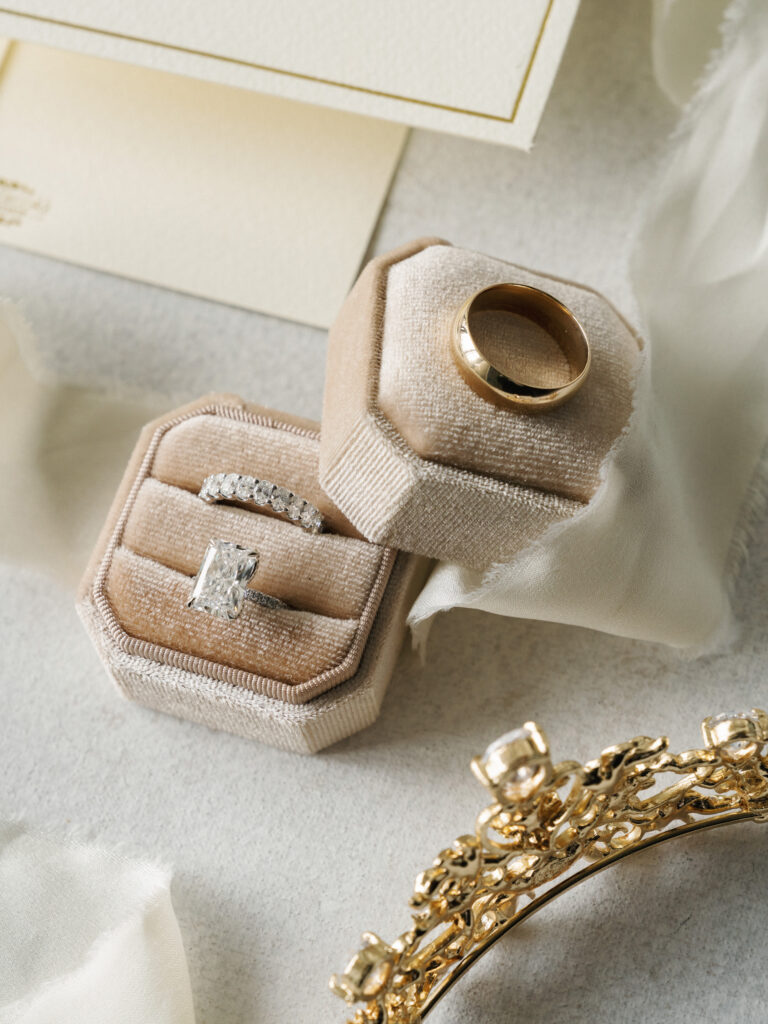
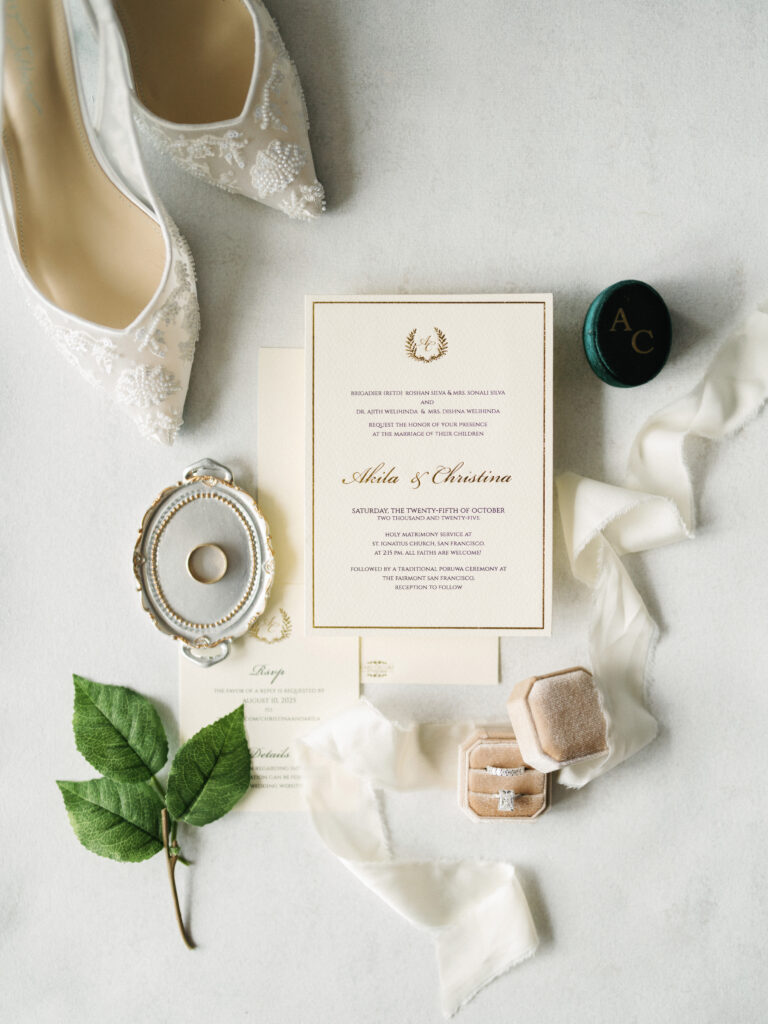
Alongside portraits and ceremony coverage, detail photographs add another layer to the wedding story. They focus on the objects that have already been chosen with intention: a handwritten note, a family heirloom, a pair of earrings passed down through generations, or a carefully designed invitation suite. These details can reveal personal elements of the celebration that may not appear anywhere else in the gallery.
These images also serve a practical purpose. They create transitions in both the wedding album and film, giving the story space to unfold before the larger moments begin.
Why Detail Photos Matter for the Full Wedding Story
The ceremony, portraits, and reception create the emotional structure of the celebration, but smaller details provide context and a personal touch.
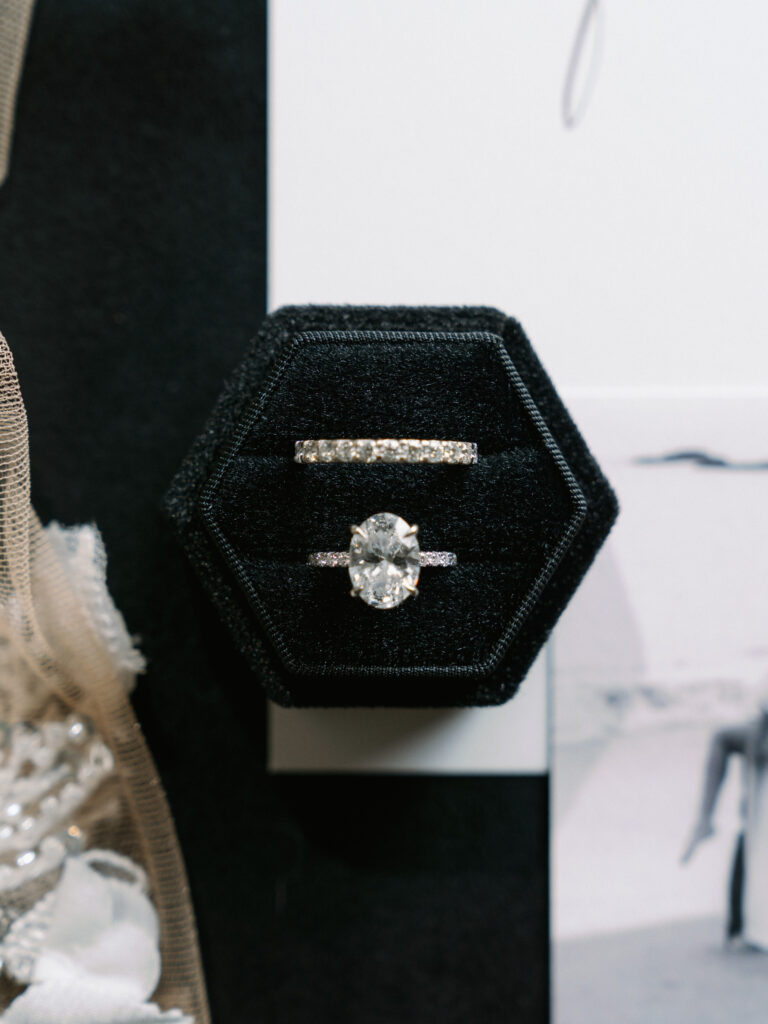
An invitation suite photographed beside a ribbon or floral element connects the design of the wedding to the finished images. A close photograph of the rings before the ceremony preserves a moment when they were still untouched. A grandmother’s brooch or a handwritten letter carries a personal history that does not need explanation once it appears in the story.
For the photographer, these details create visual continuity.
A wedding album often begins with quiet images before moving into preparation, ceremony, and celebration. In film, close-up shots of paper texture, jewelry, fabric, and meaningful objects create natural transitions between scenes.
These photographs require relatively little time compared with the rest of the wedding day, but they influence how complete the final story feels.
When details are gathered and ready before the photographer arrives, the images can be created calmly.
What to Prepare Before the Photographer Arrives
The most useful thing couples can do is gather everything they want photographed in one place. This does not require a complicated setup. It simply prevents the photographer from spending the first part of the morning looking for individual items while the timeline is already moving. When the photographer arrives during getting ready, there is usually thirty to sixty minutes available for detail work before the pace of the morning accelerates.
Before the wedding day, set aside a small box, tray, or pouch to keep everything together. A small box, bag, or tray can keep everything together and make the process easier. A bedside table by a window, a cleared vanity surface, or a section of the bed near the window all work.
Items commonly included are:
1. heirlooms or sentimental objects.
2. complete invitation suite with envelopes and inserts;
3. both wedding rings;
4. engagement ring;
5. jewelry that will be worn;
6. perfume or cologne;
7. shoes;
8. veil or hair accessories;
9. cufflinks, watch, tie clips, or other personal pieces;
The photographer does not need every accessory. A smaller collection of meaningful items usually creates a stronger set of images than a large group of unrelated objects.
Expert Note
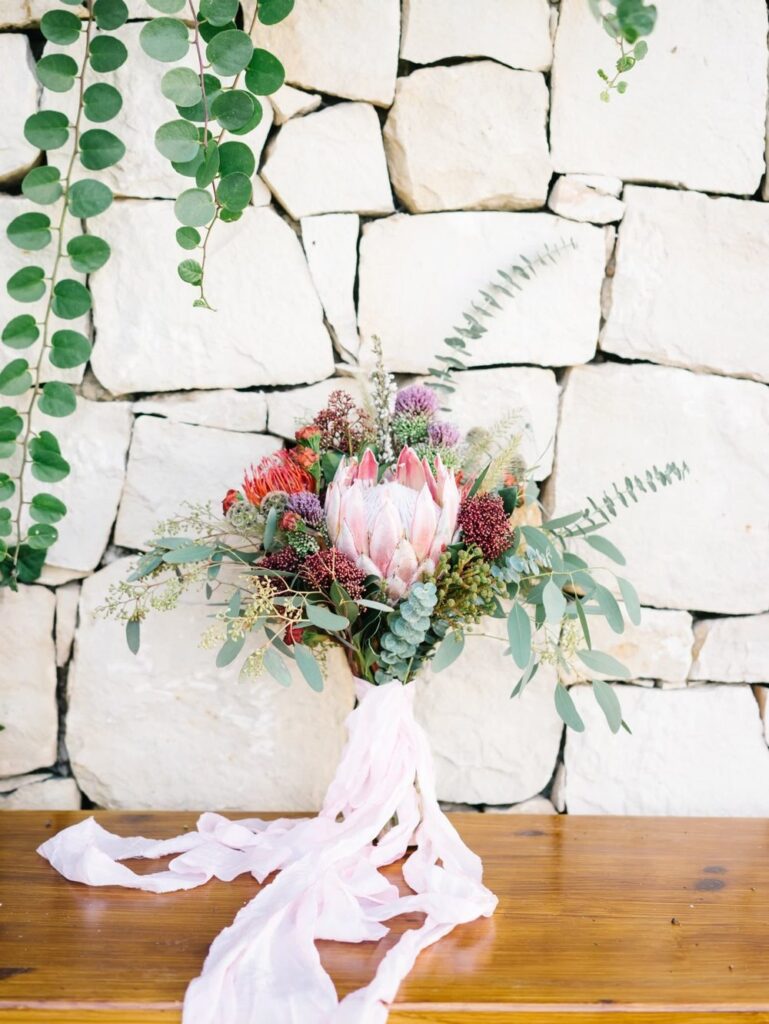
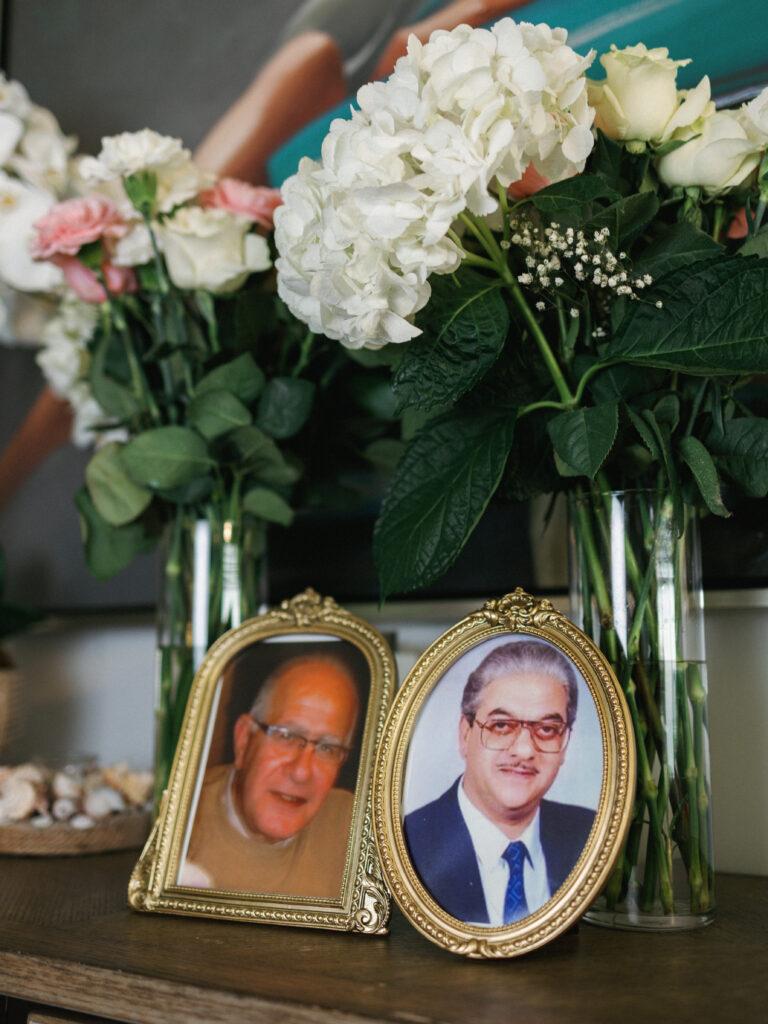
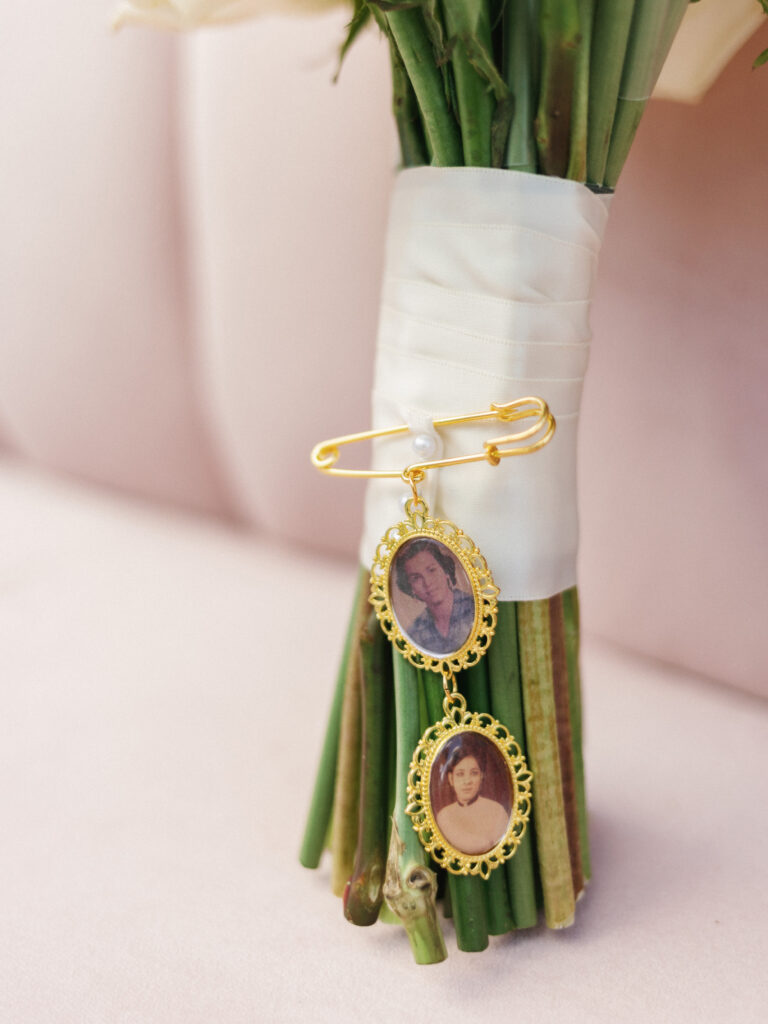
If something has a story, mention it. A photographer can photograph a bracelet as a beautiful object. Knowing that it belonged to a grandmother changes the way it is photographed. The same applies to a handwritten note exchanged before the ceremony, a vintage accessory, a family photograph included in the bouquet, or any item chosen because of its connection to someone important.
Invitation Suite: The Foundation of the Detail Set
Invitation Suite
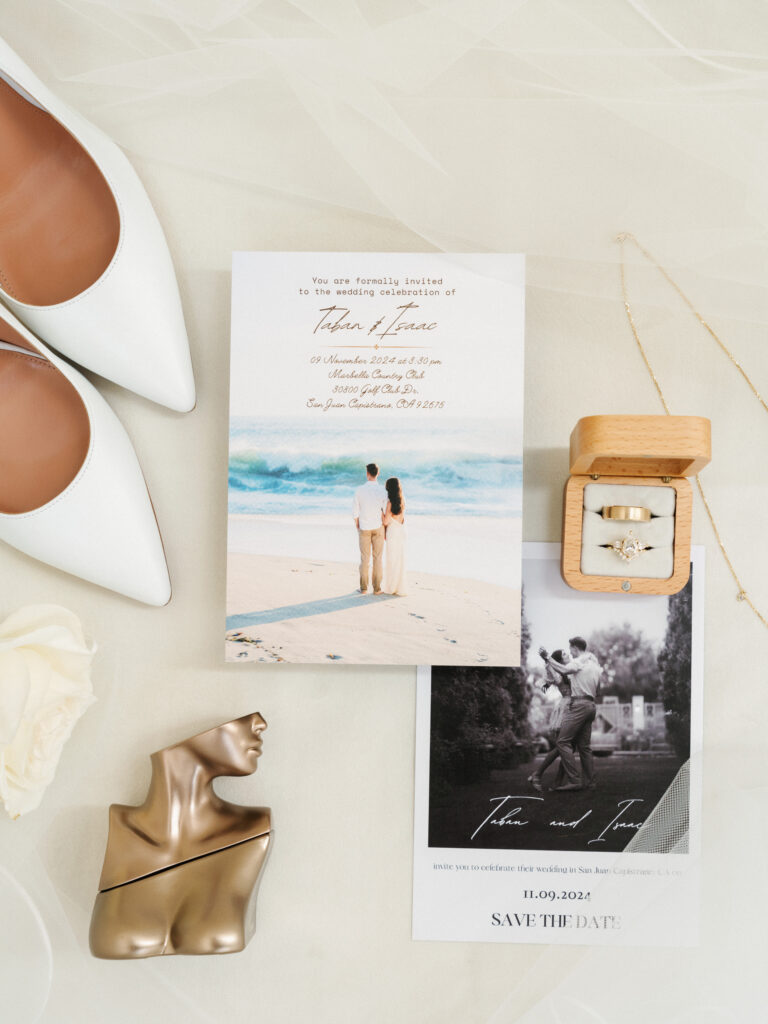
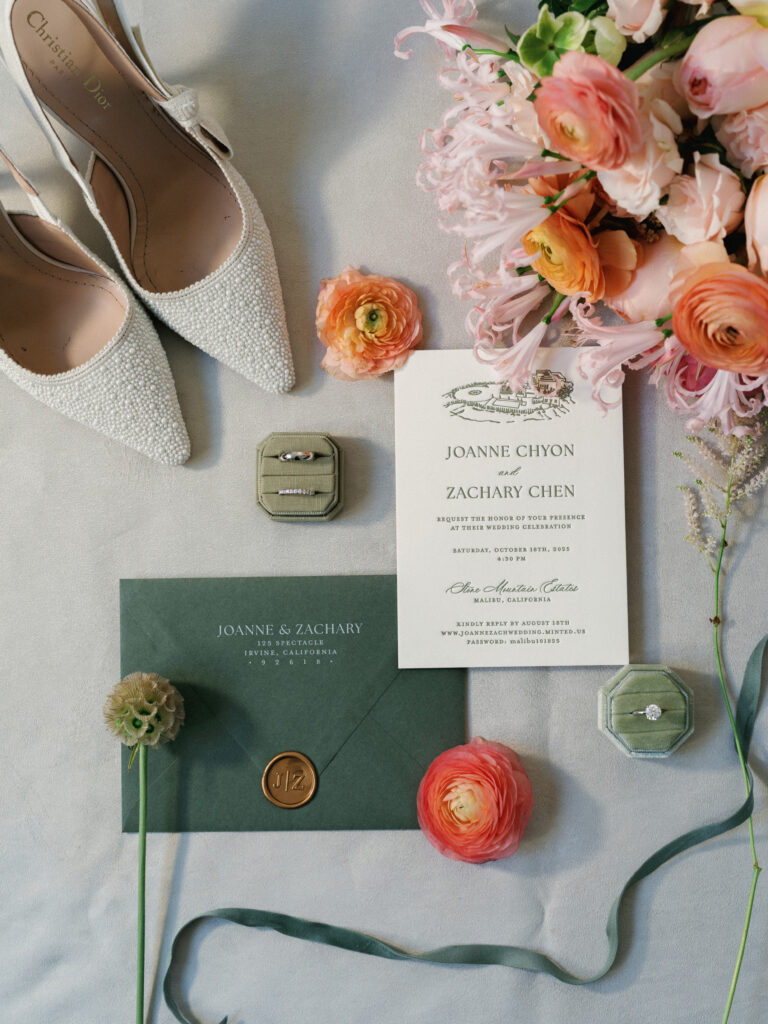
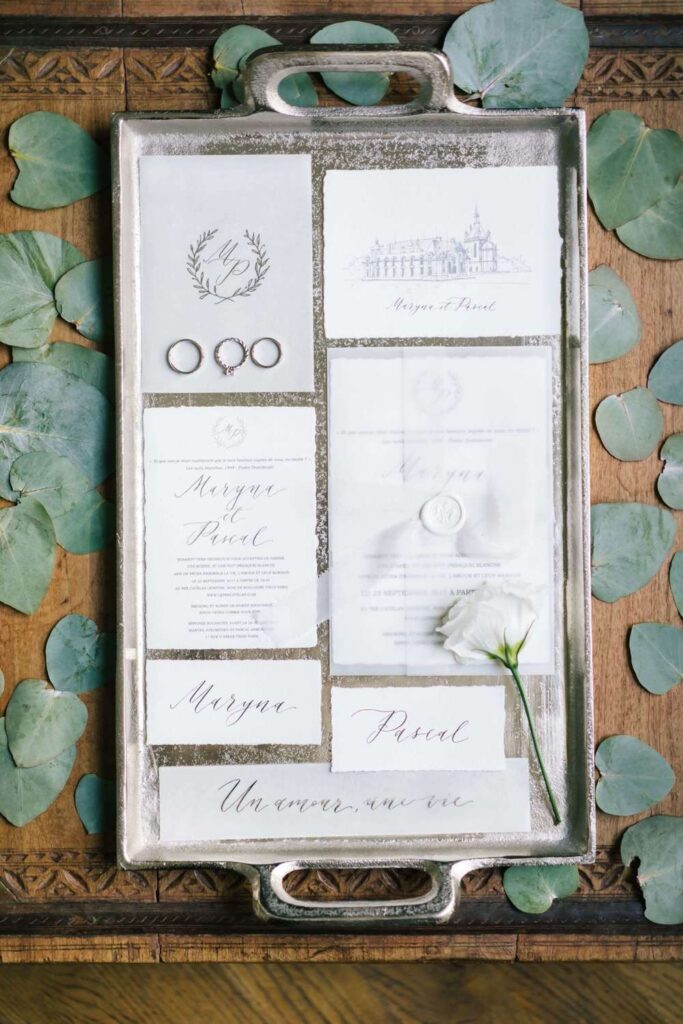
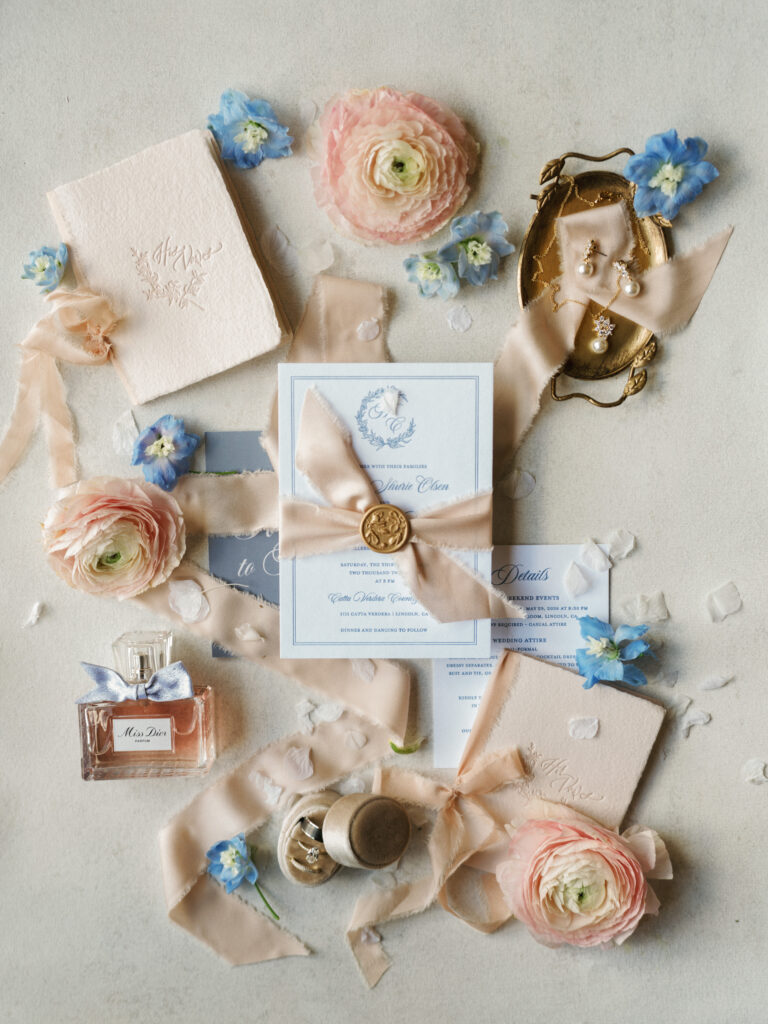
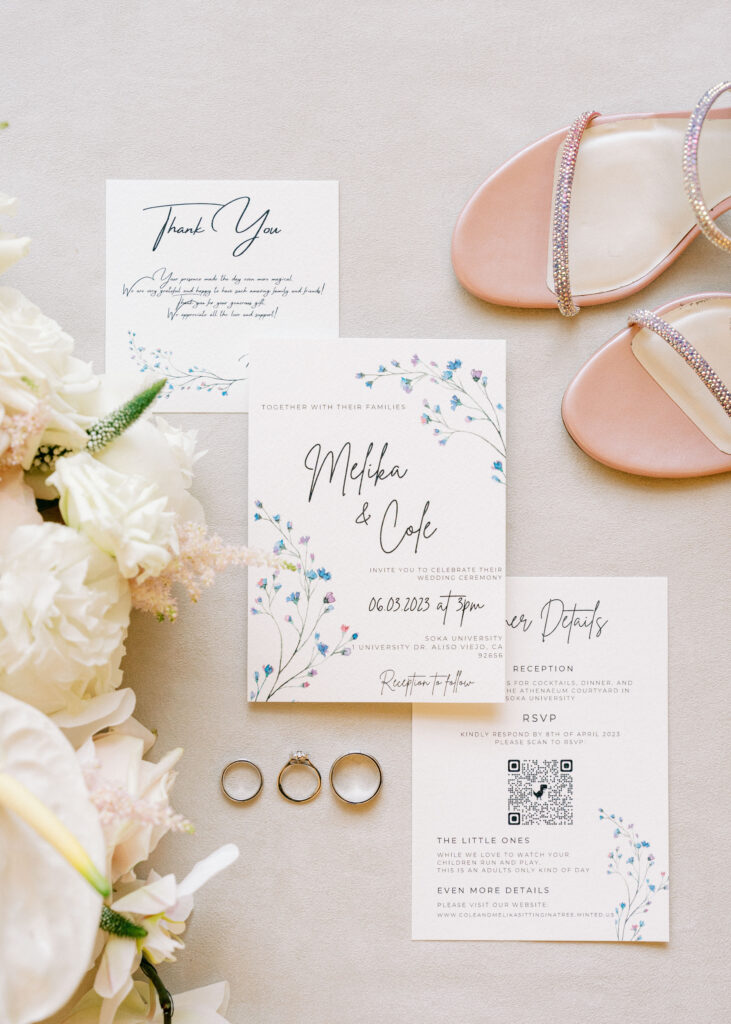
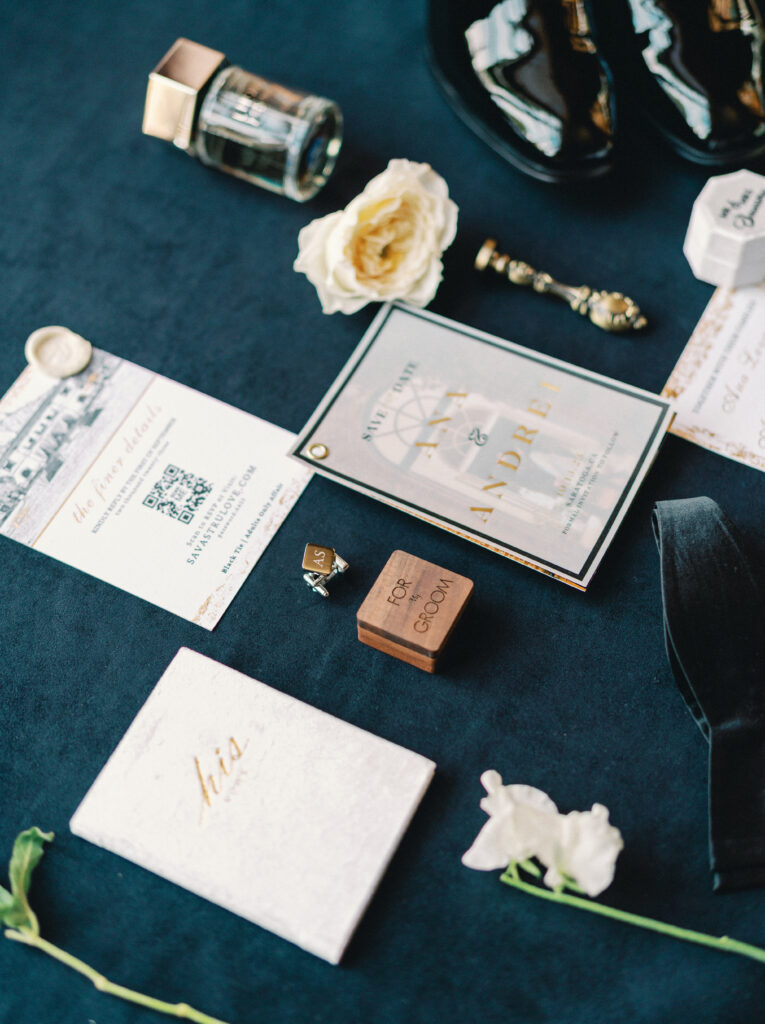
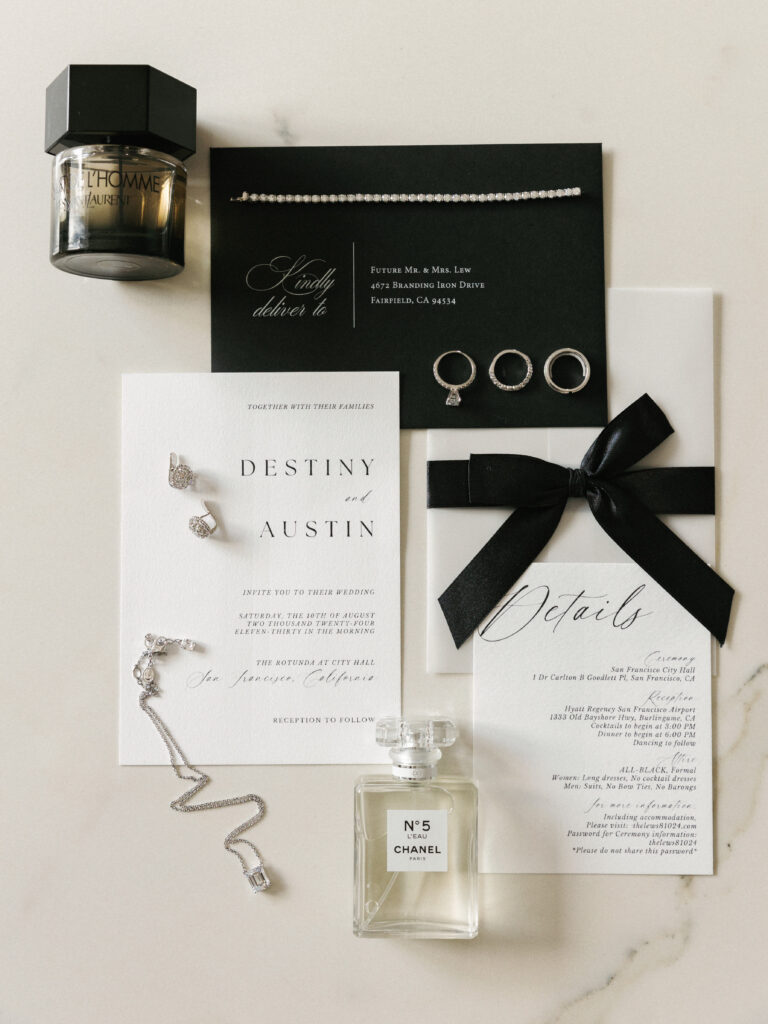
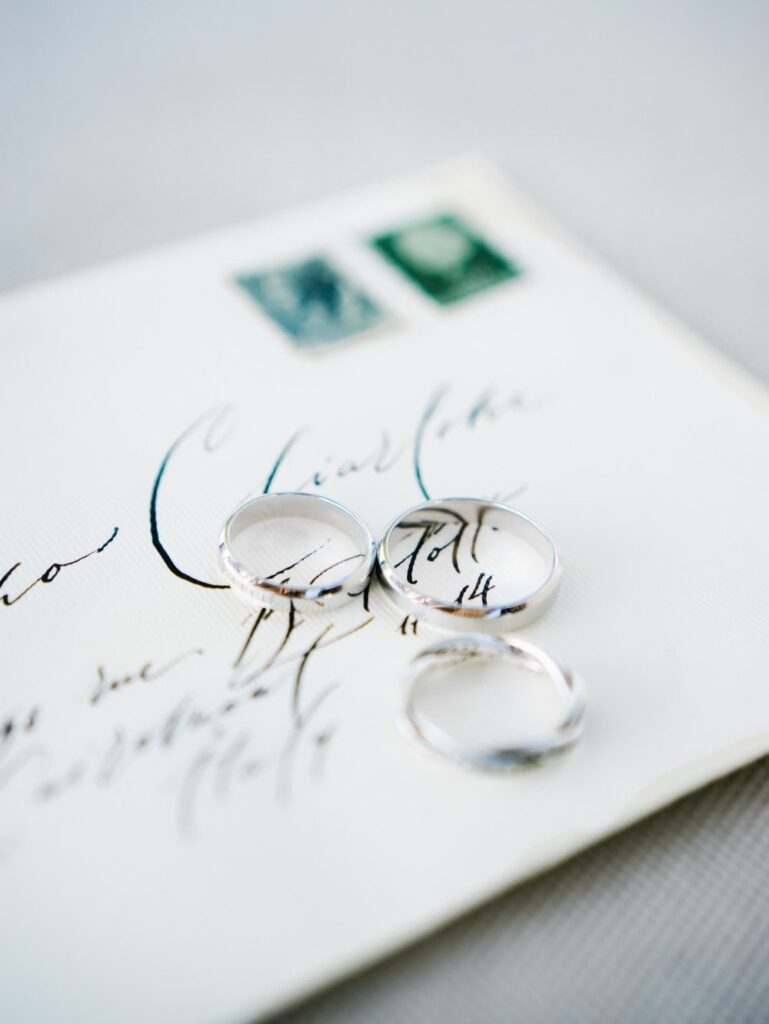
The invitation suite is typically the most visually layered detail available on the wedding morning. Outer envelope, inner envelope, the invitation itself, the details card, the RSVP card, the wax seal, a sprig of something from the florist: assembled together, these create a flat lay with texture, depth, and color that represents the day’s visual identity before it has begun.
Keeping the full invitation suite intact specifically for photography is worth doing. Guests who have received their invitations do not need to return them. Ask for one complete set to be held aside, including all inserts, and bring it to the getting ready location.
Rings
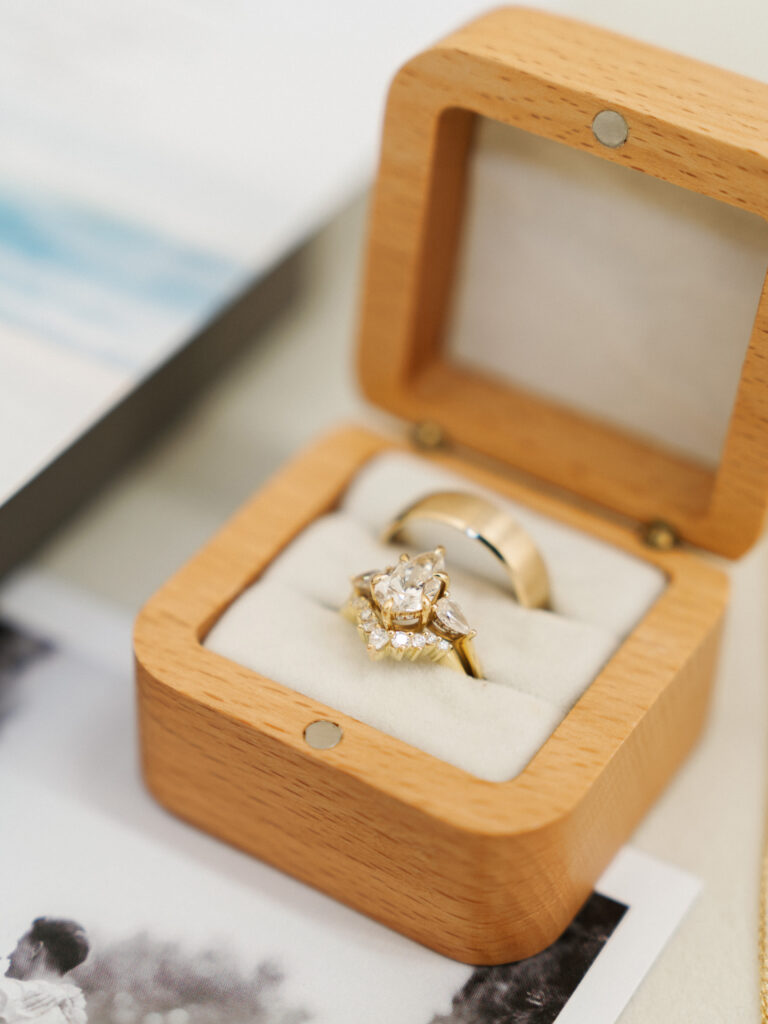
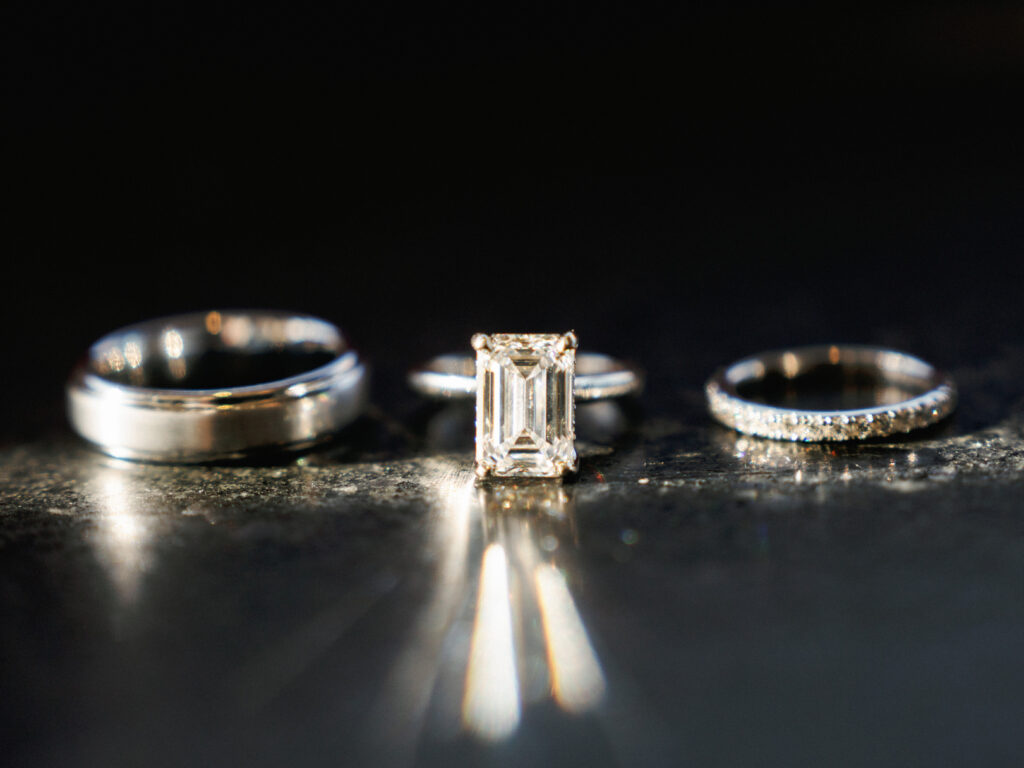
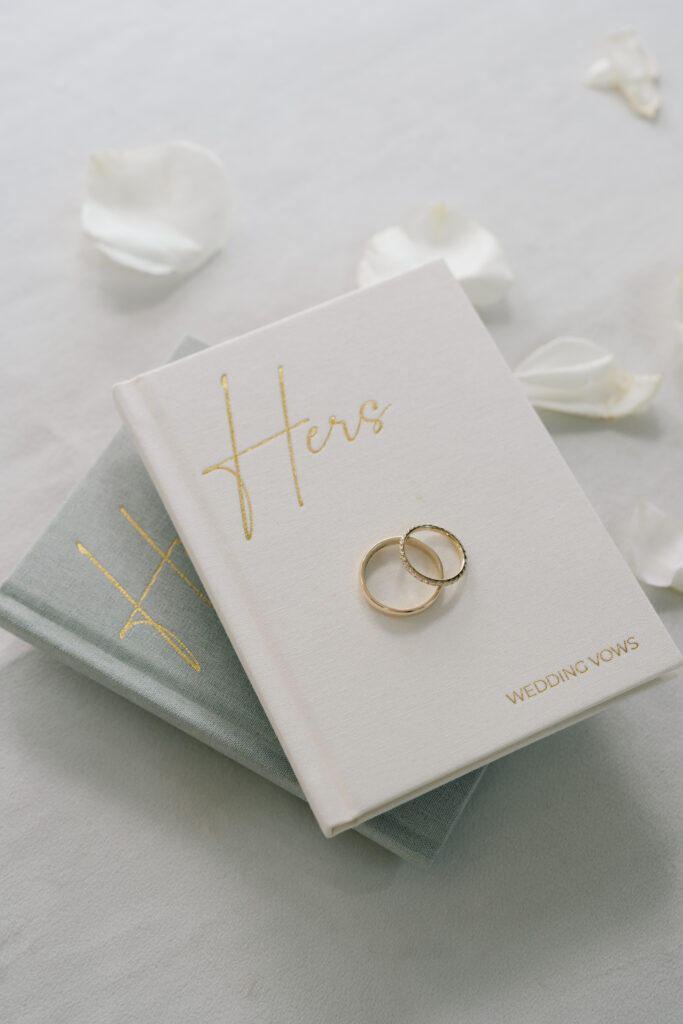
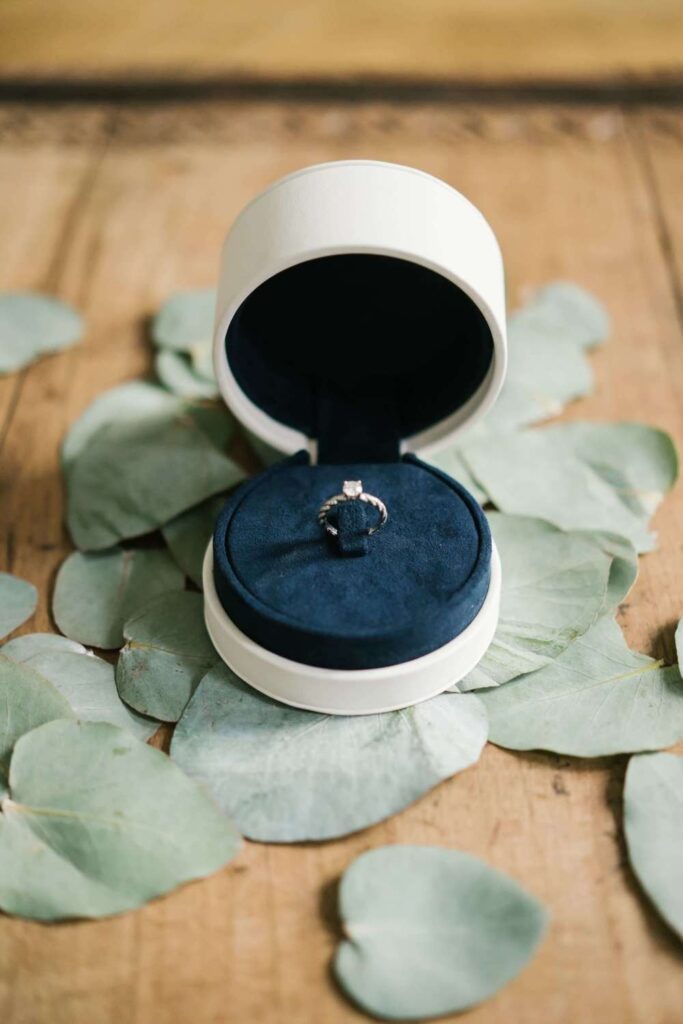
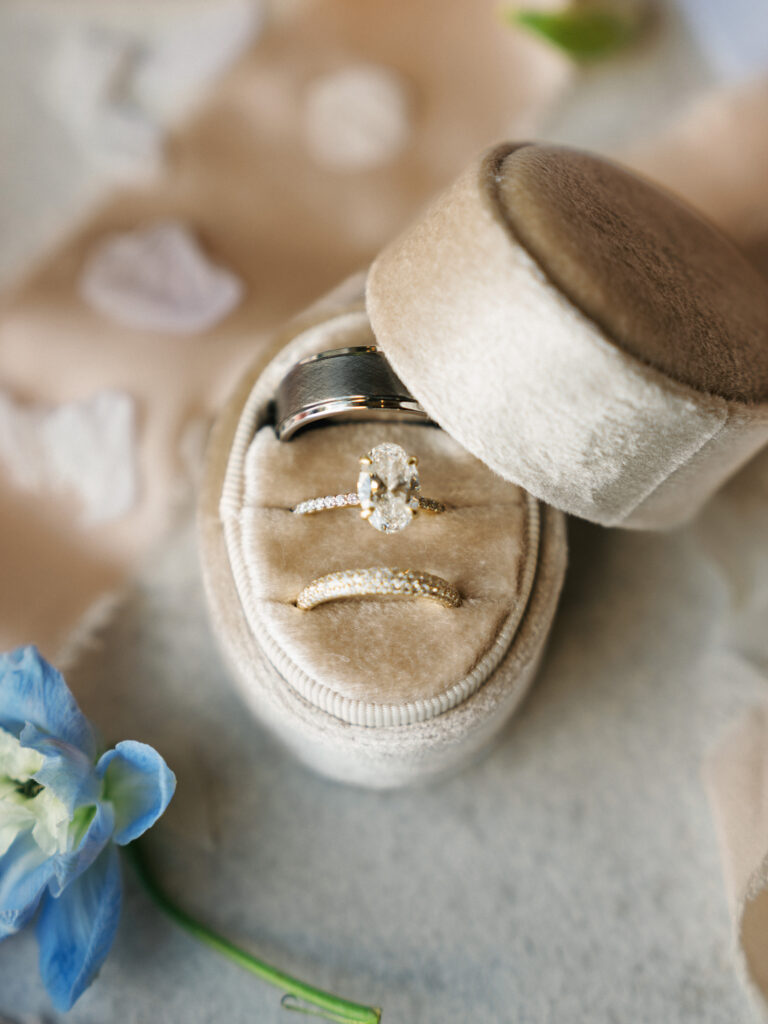
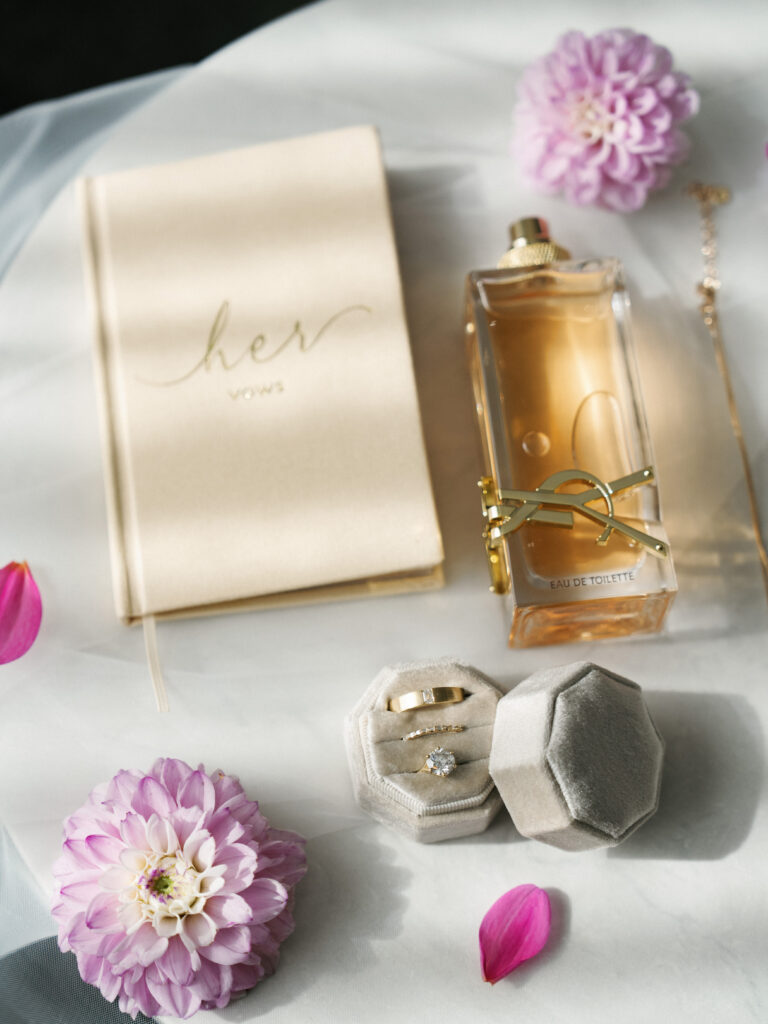
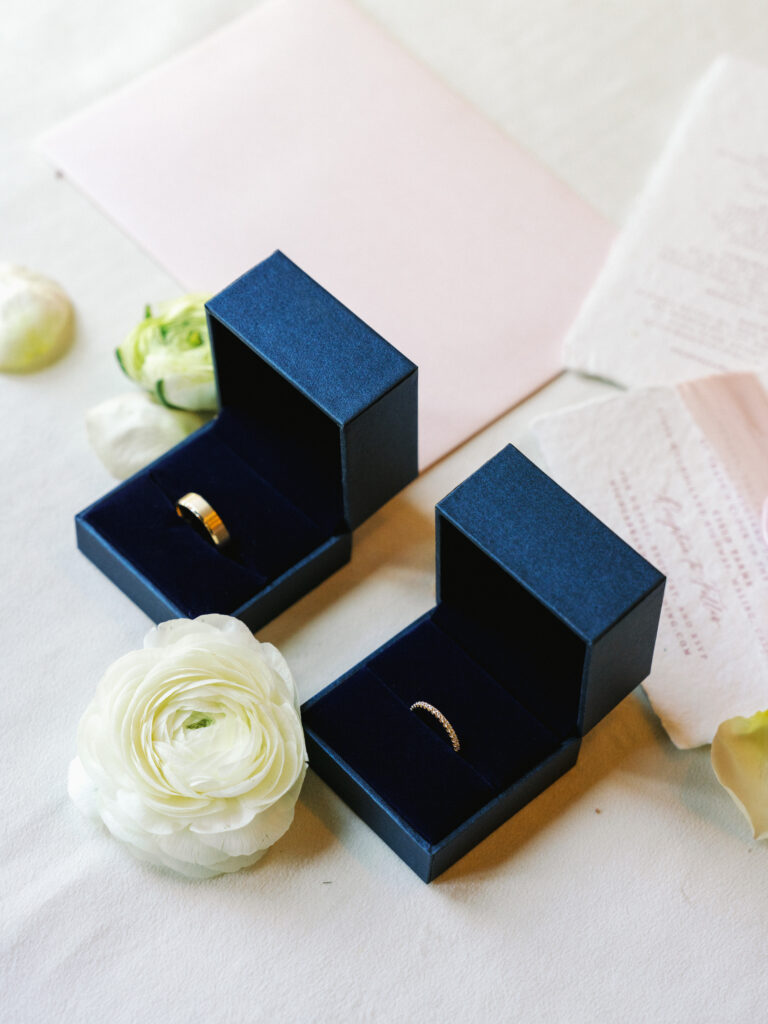
Both rings photograph together and separately. The engagement ring and wedding band together beside the wedding band and engagement ring of the partner, stacked or flat, placed on a natural texture like linen, wood, a book, or a flower petal from the florist. Rings photographed this way carry more visual interest than rings photographed on a neutral surface alone.
Jewelry
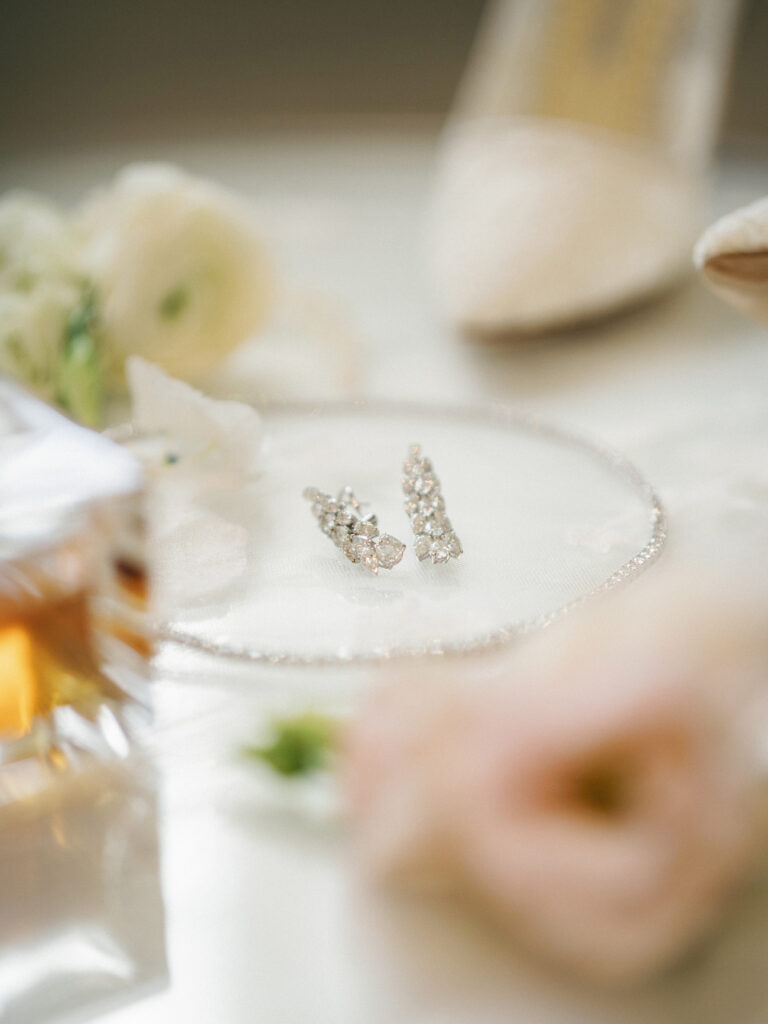
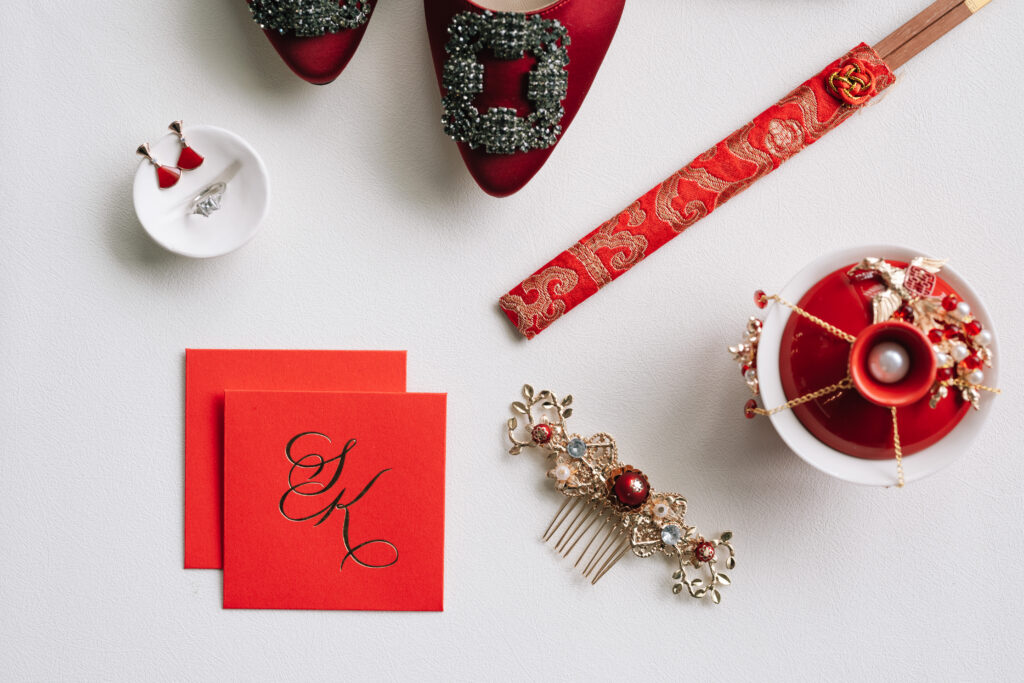
Earrings, necklace, bracelet, and any hair accessories that are not yet in use can all be laid flat or positioned naturally near other objects. Earrings photograph particularly well placed on a tactile surface or leaning against a perfume bottle. A necklace draped over the edge of the invitation suite adds both visual interest and a connection between different elements of the detail set.
If any piece of jewelry has personal significance beyond its appearance, a brief note to the photographer is useful. An earring that belonged to a grandmother, a bracelet given as a wedding morning gift, a ring worn by the groom that has been in his family: when the photographer knows what it is and why it matters, the image is made with more attention.
Perfume and Personal Objects
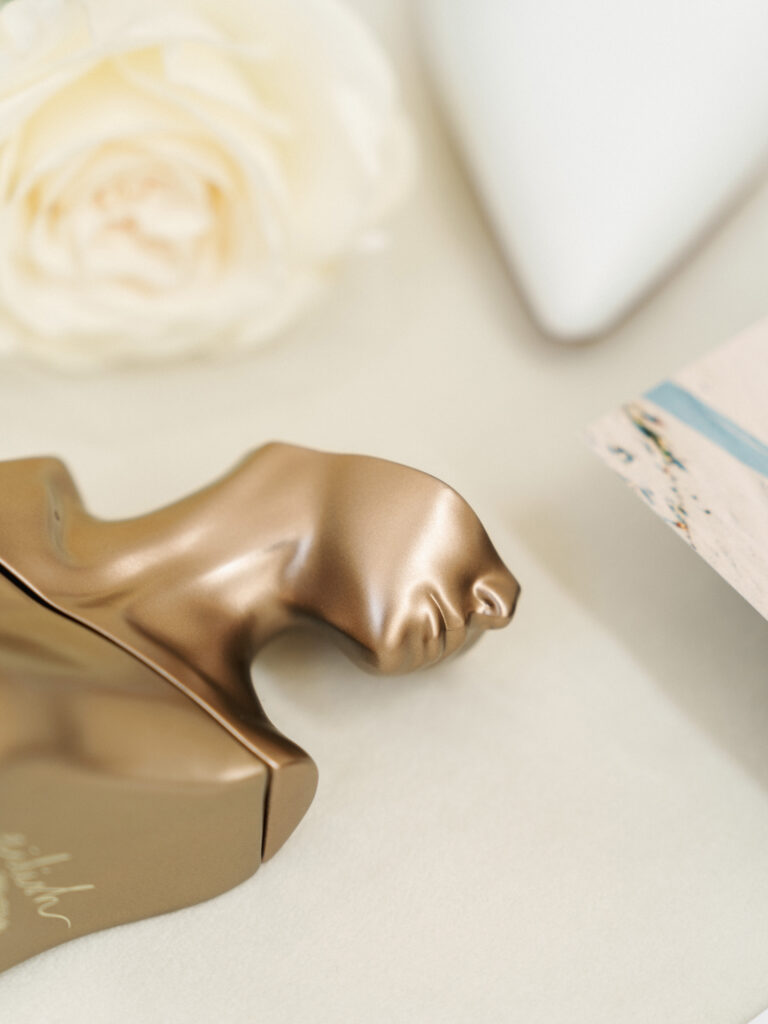
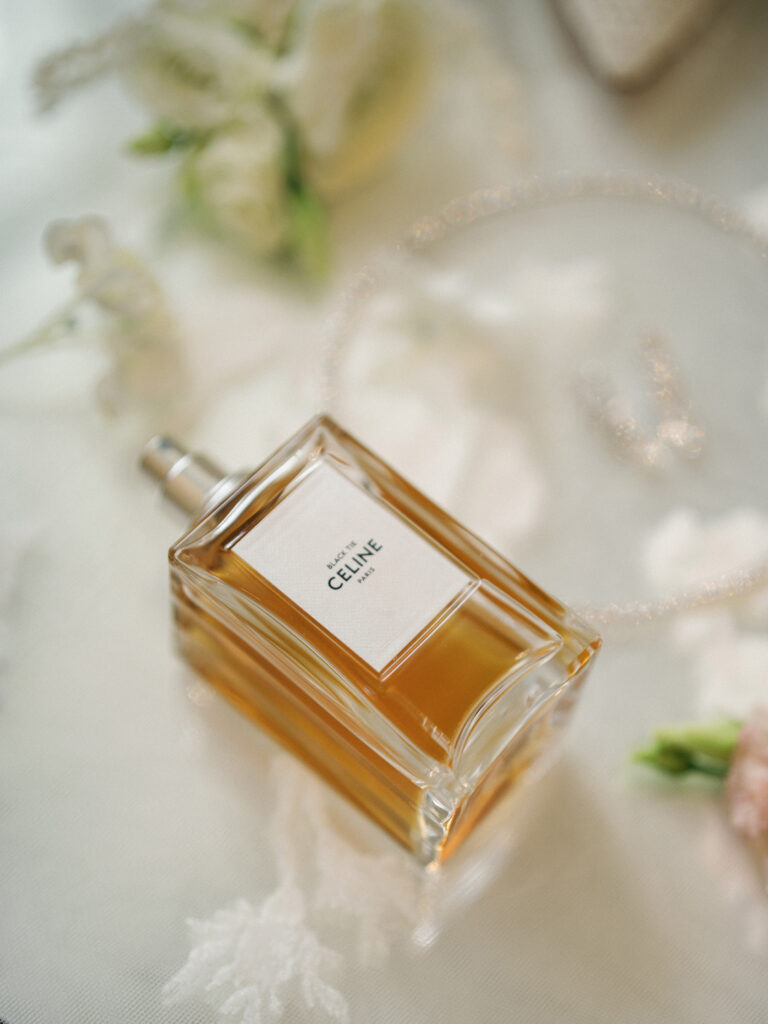
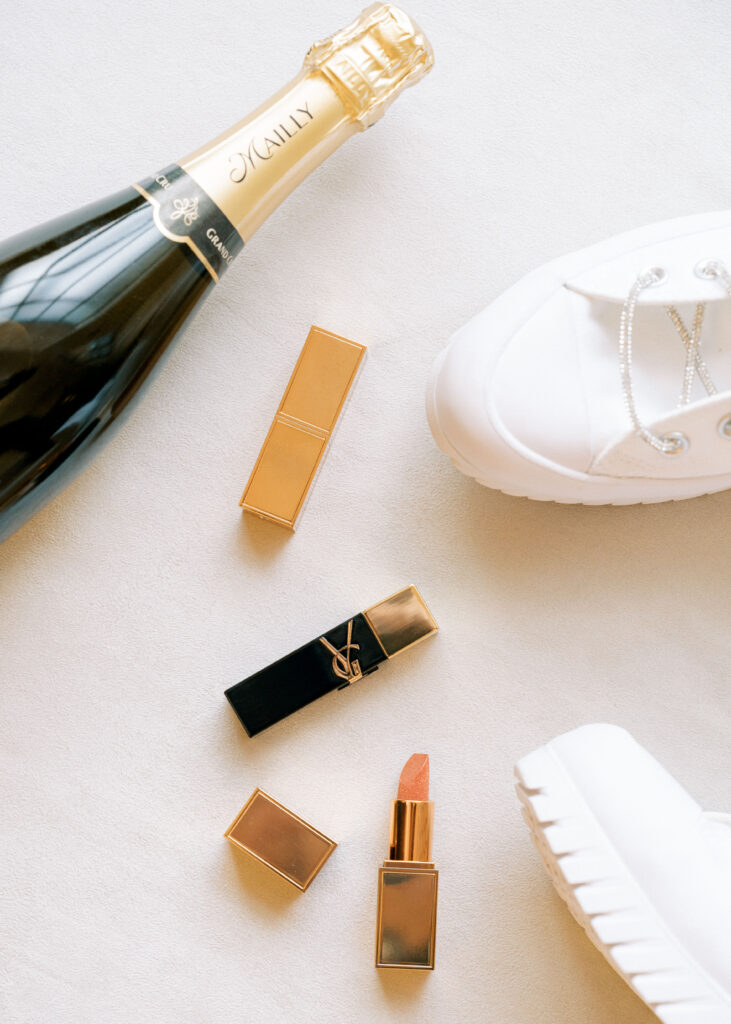
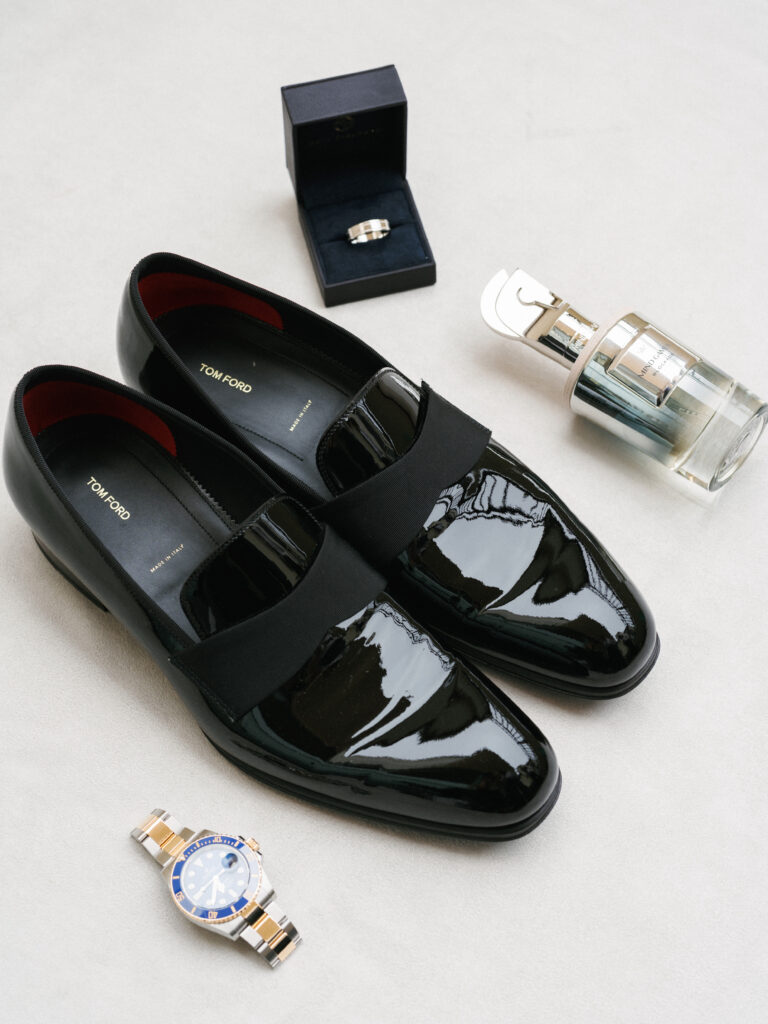
A perfume bottle is a frequent editorial detail element precisely because it photographs with elegance without requiring any arrangement. The shape, the label, and the light refraction through glass create natural visual interest. If there is a specific perfume worn on the wedding day, set it out with the rest of the details.
Other personal objects that photograph well: a handwritten note or letter if it will be exchanged before the ceremony, cufflinks or tie clips, a watch that has been worn for a long time, a small object brought as something borrowed or something old.
Shoes
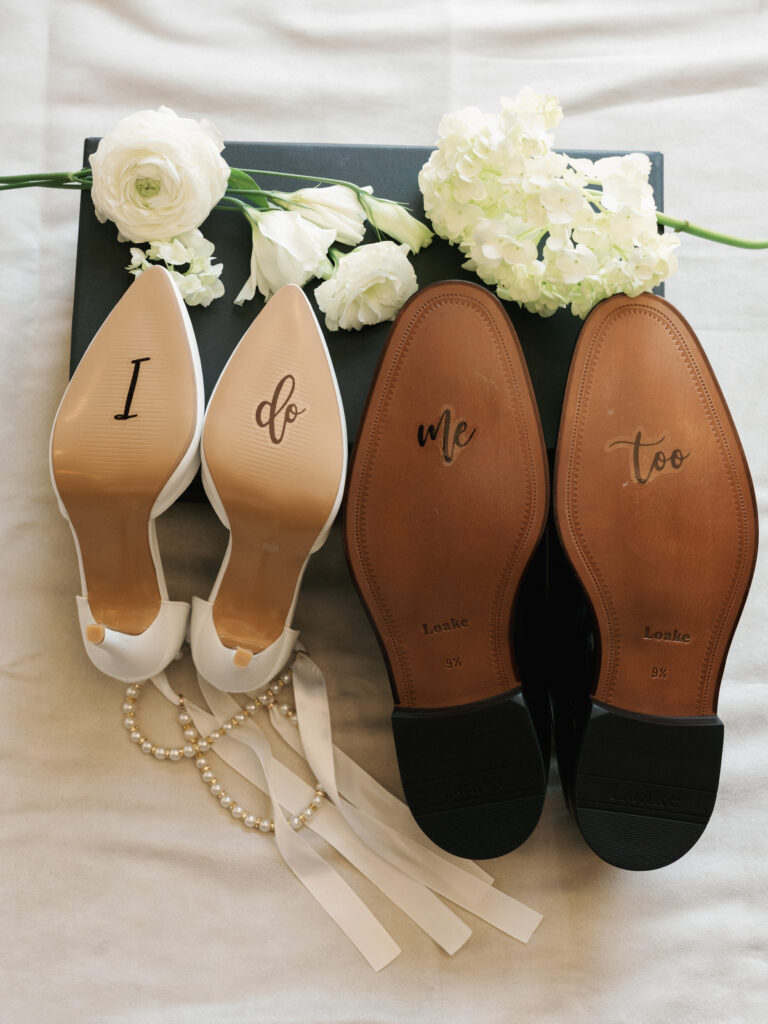
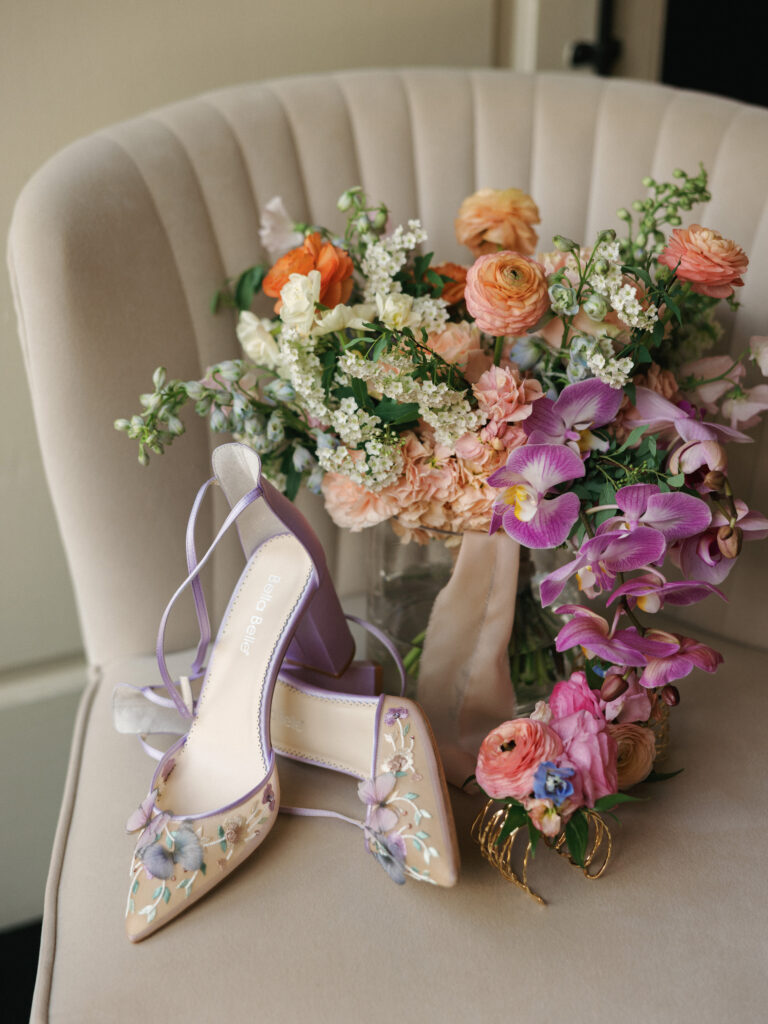
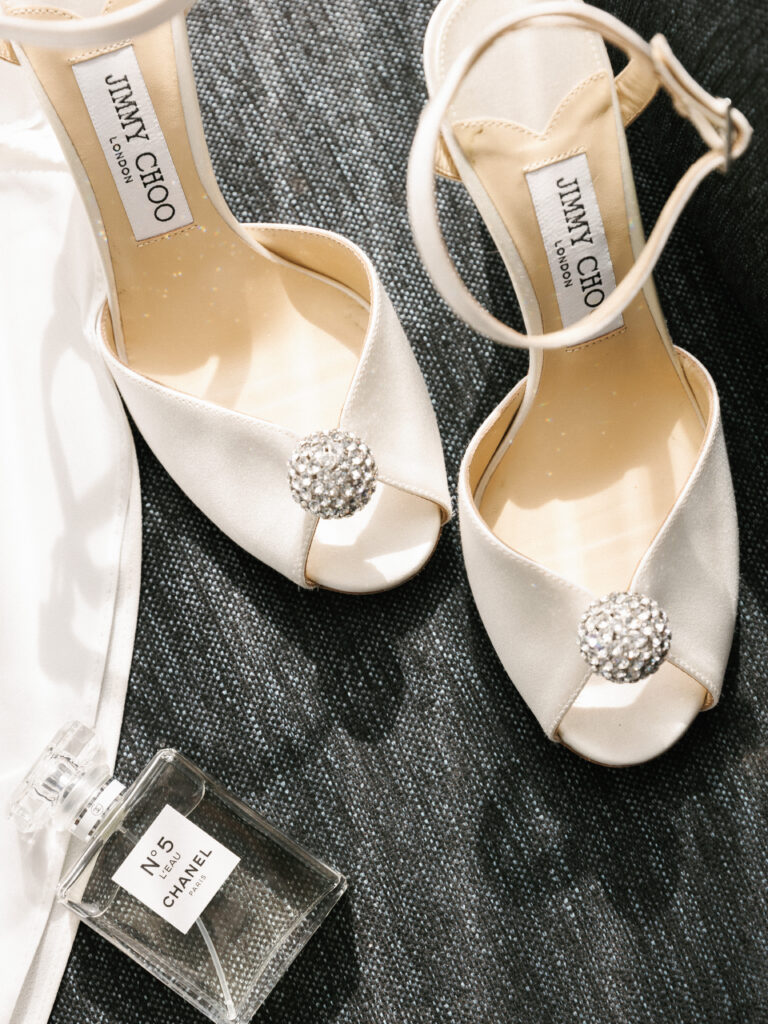
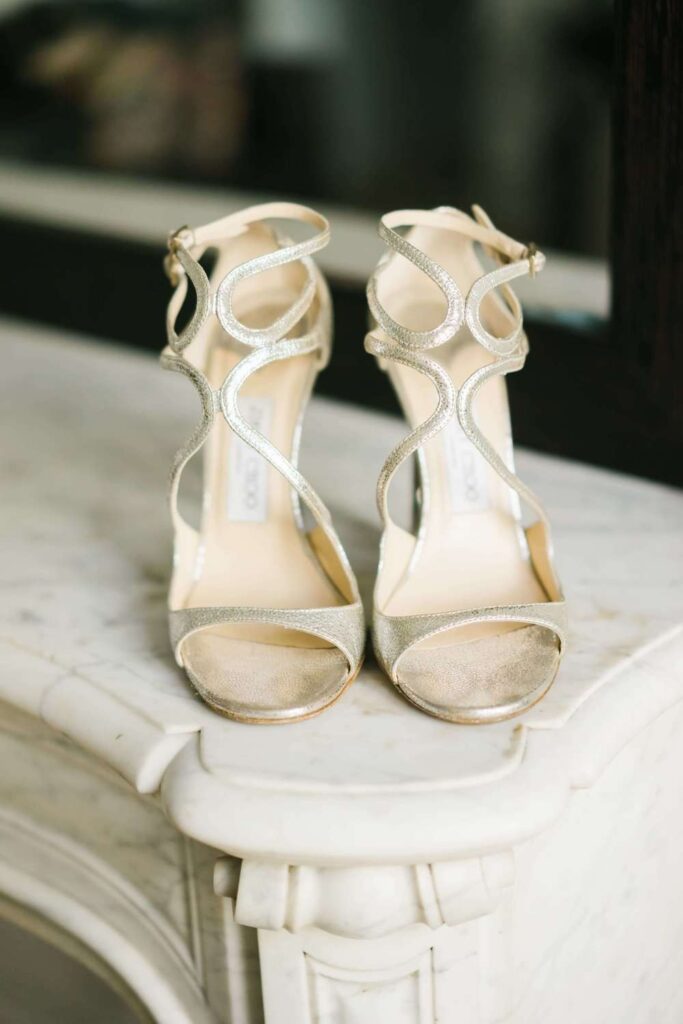
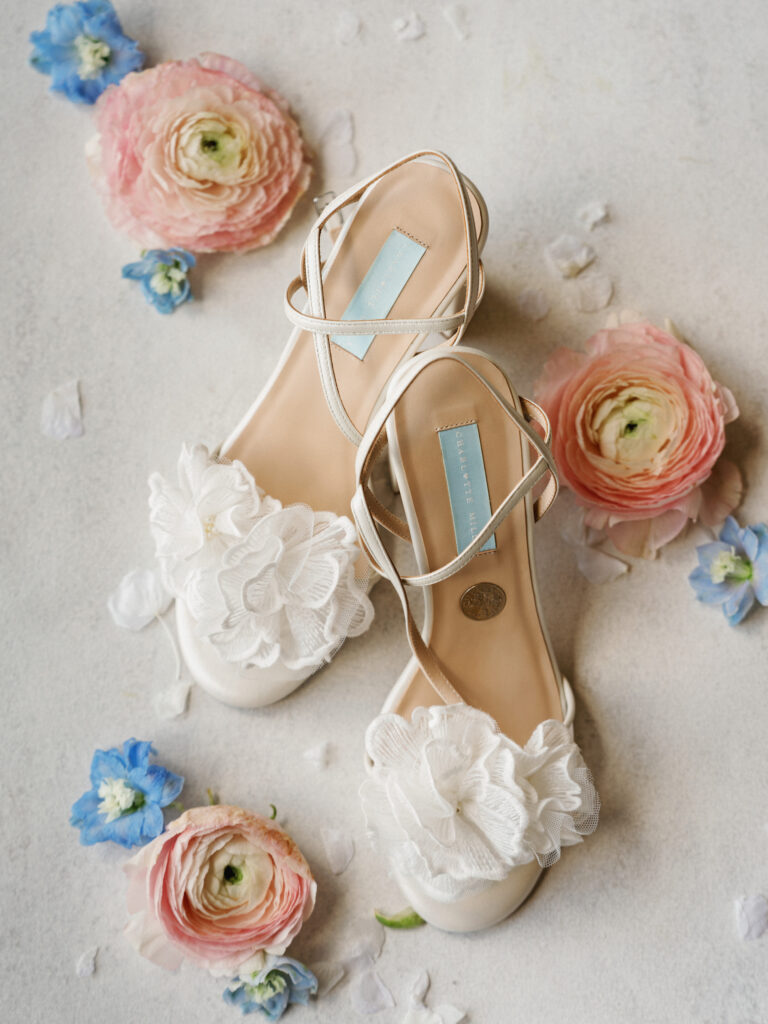
Shoes photograph individually and as a pair. A single shoe placed sole-down beside the invitation suite, or both shoes positioned together near the hem of the dress on a clean surface, creates an image that is part of the day’s visual set without requiring any staging beyond the placement.
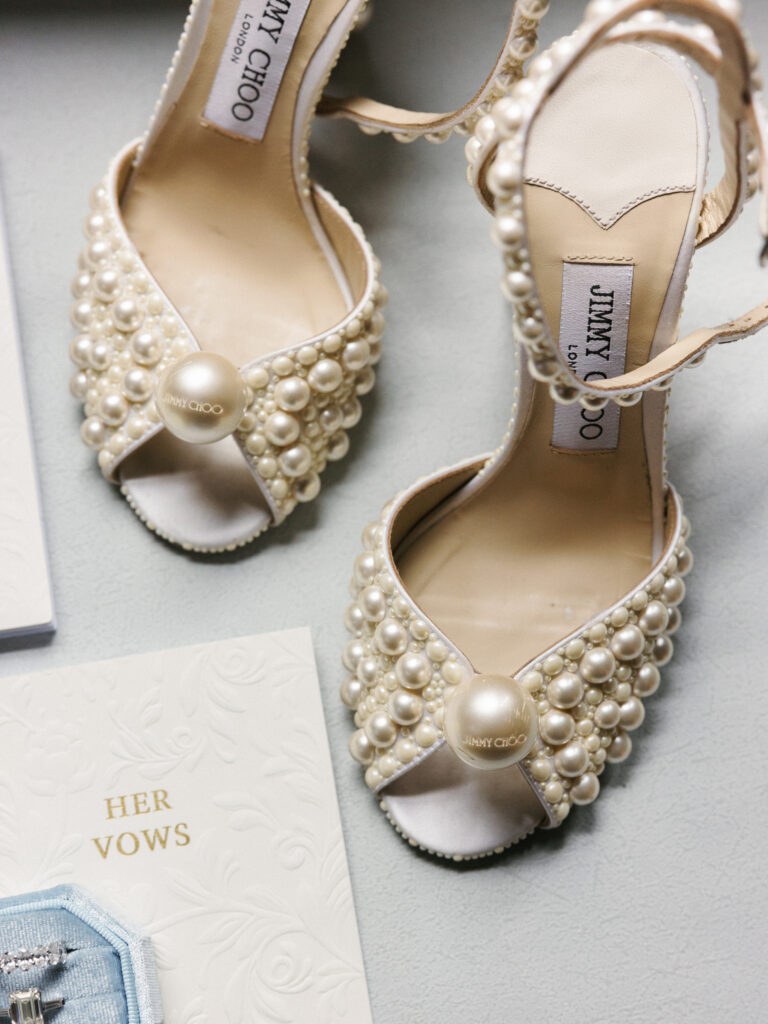
Shoes with interesting texture, embroidery, or personalization photograph with more detail variation than plain ones. If the shoes have been personalized, are vintage, or have a particular visual quality worth capturing, mention it.
Heirlooms
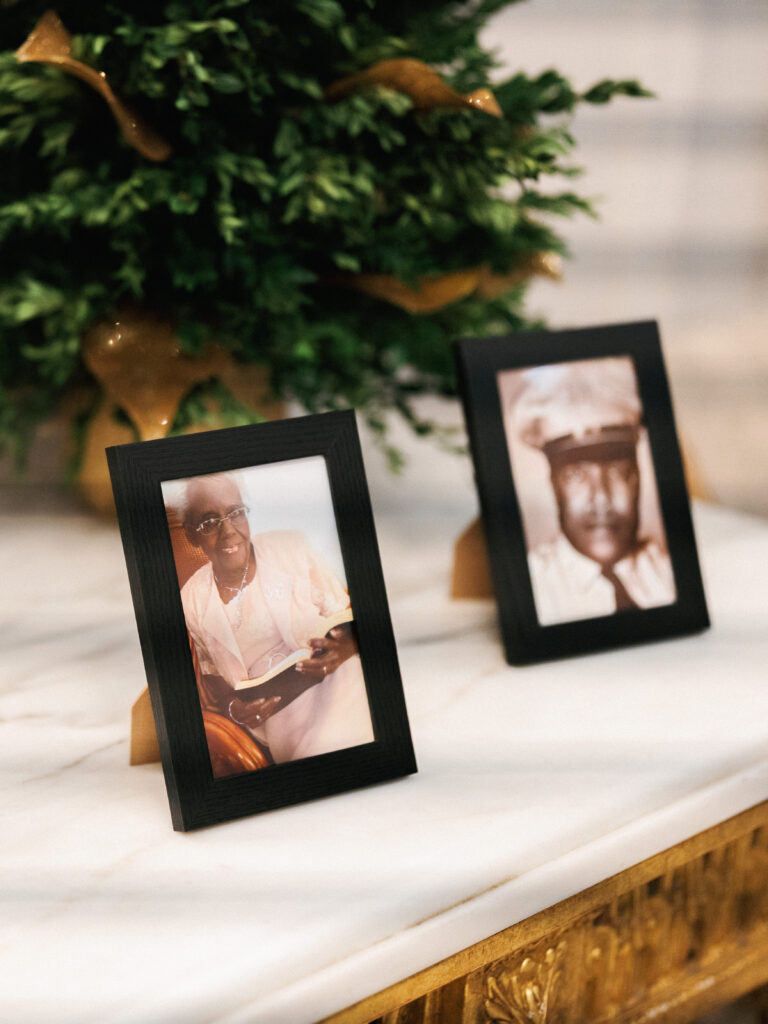
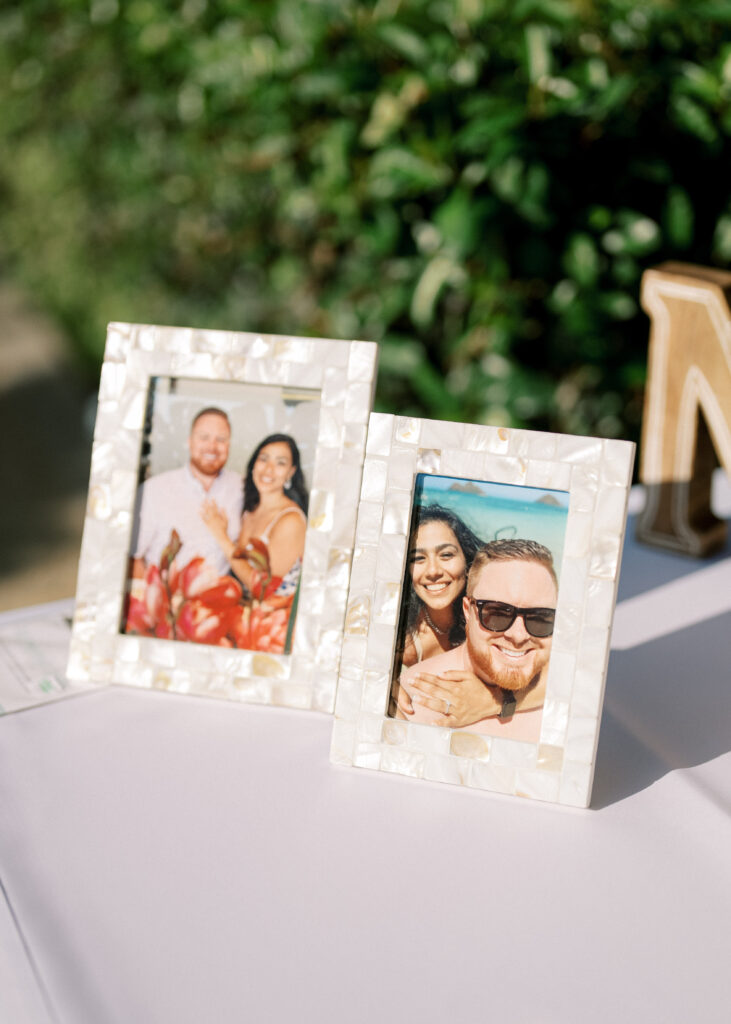
An heirloom object, something borrowed, something old, or something with family history, is worth photographing with the same attention as the rings. It may appear only briefly in the album or film, but it carries meaning that the other details do not.
If there is an heirloom being incorporated into the day, bring it to the getting ready location and mention it to the photographer. A brooch pinned to the bouquet, a piece of lace sewn into the dress, a photo carried in the bouquet: these are worth a specific photograph.
Timing, Light, and the Getting-Ready Space
Detail photography works best in the first thirty minutes at the getting ready location. Later in the morning, the pace increases as hair and makeup approach completion, the dress is about to go on, and family members begin arriving.
Natural light is the most useful light for editorial flat lays. Natural light coming from one direction creates depth and texture. Window light allows paper, fabric, glass, and metal to show their details more naturally than overhead room lighting. If possible, turn off artificial ceiling lights during this part of the coverage. Mixed lighting can change the appearance of colors and flatten the textures that make detail photographs feel dimensional. The room does not need to look like a styled editorial space. The goal is to create enough order that the photographer can work without spending time clearing everyday items from the frame.
If the getting-ready room has limited natural light, there are usually alternatives. A nearby window, hallway, balcony, or another brighter area of the venue may provide a better environment for photographing details. The best location is not always the most obvious one. It is the one that gives the objects enough light and space to be photographed well.
How Editorial Flat Lays Support the Album and Film
Detail photographs serve a different function in the album than celebration photographs do. They act as opening and transitional images: the invitation suite at the beginning of a chapter, the rings before the ceremony section, the shoes and jewelry as a prelude to the getting ready sequence.
In film, detail footage creates natural transitions between scenes. Close shots of an invitation, the movement of fabric, light reflecting on a ring, or the texture of flowers give the story visual breathing room and create a natural bridge between preparations, spoken moments, and the larger emotional scenes that follow.
The details chosen by a couple often reflect the venue, design, and overall feeling of the celebration. They help connect the opening moments of the day with the ceremony and reception that follow.
FAQ
What Are the Most Important Wedding Details to Photograph?
The invitation suite, both rings, the dress, the shoes, and any jewelry or heirloom objects being worn or carried during the day. Beyond these, anything with personal significance or visual interest: a perfume bottle, cufflinks, a handwritten note, an object brought as something borrowed or something old. The detail set does not need to be extensive. It needs to include the objects that represent the celebration and the people in it.
When Should Detail Photos Happen During the Wedding Day?
During the first thirty minutes of the photographer’s time at the getting ready location, before the pace of the morning accelerates. This window is the most available for unhurried detail work.
How Should We Prepare the Room for Wedding Detail Photos?
Gather all the objects you want photographed and place them near the best available natural light. A clean surface near a window is usually enough. There is no need to create a separate styled area, but removing unrelated items such as chargers, bags, and personal products helps the details stand out.
Do Detail Photos Appear in the Wedding Film?
Yes. Detail close-ups appear throughout wedding films as establishing shots, transitions, and visual breathing room between the emotional peaks of the day. A film team covering the wedding day will typically capture detail footage alongside the photography team’s work.
Should Extra Items Be Prepared Specifically for Wedding Flat Lays?
Usually, no.
The strongest detail photographs come from objects that already belong to the couple and the wedding day. Additional styling pieces can be included if they naturally connect to the design, but personal meaning is usually more valuable than adding more elements.
Planning Your Wedding Photography?
If you’re preparing your wedding details and would like guidance on how to photograph them naturally and beautifully, we’d be happy to help.